
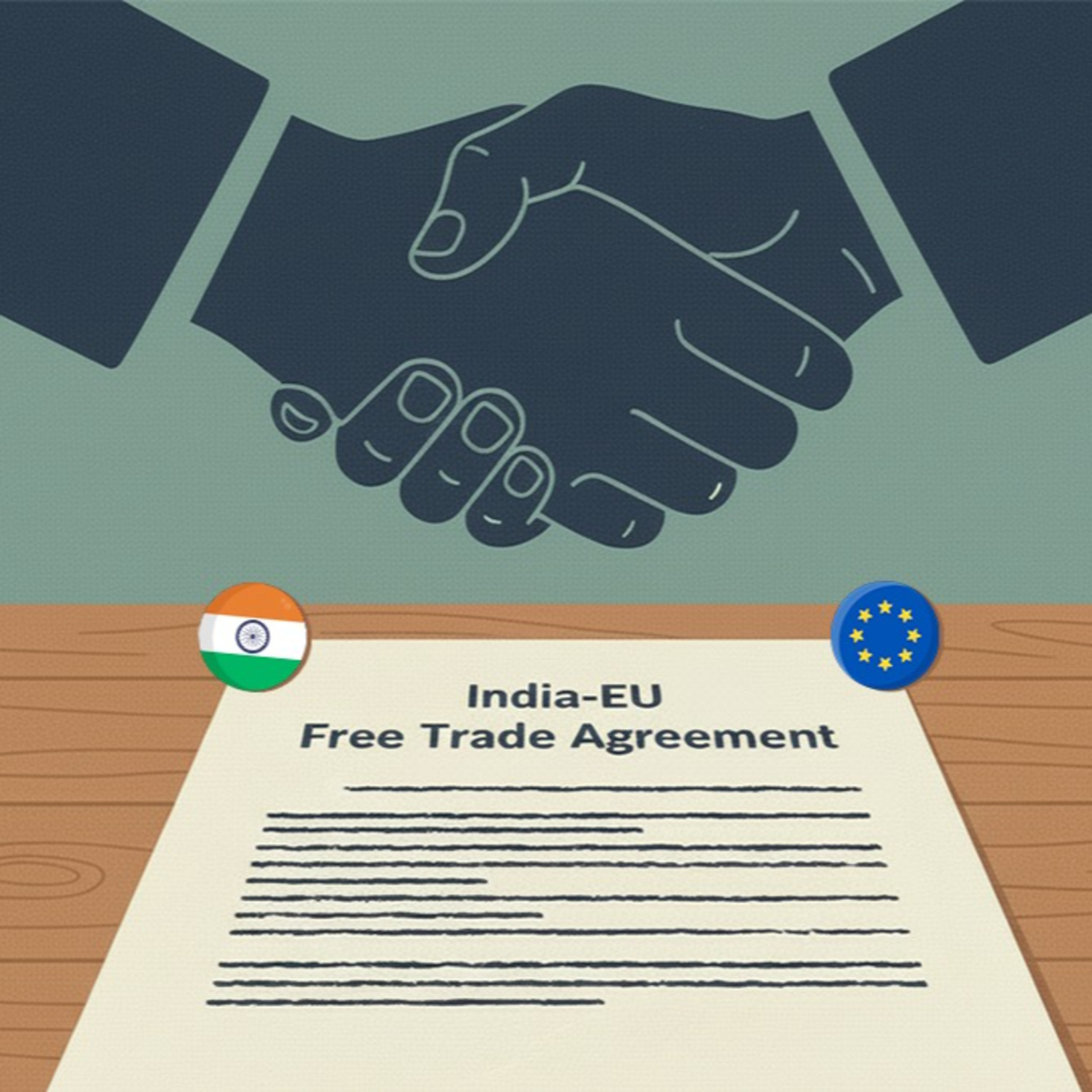
The Big New Trade Deal Between India and Europe Explained
The Main Idea in a Nutshell
- India and the European Union (EU) have signed a massive agreement to stop charging extra taxes on goods they sell to each other, making it much easier to trade products and for people to travel for work.
The Key Takeaways
- Cutting the Taxes: The main part of this deal is removing "tariffs," which are taxes paid when moving goods across borders. This makes selling Indian products in Europe (and vice versa) much cheaper.
- The Winners: Indian industries that require lots of workers—like making clothes, jewelry, leather, and medicines—will likely get more customers in Europe.
- The Challenge: Indian companies that make cars, expensive alcohol, and fancy foods will face tough competition because famous European brands will now be cheaper to buy in India.
- Easier Travel: It isn't just about objects; the deal makes it easier for Indian students, engineers, and doctors to get visas to study or work in Europe.
- Fun Facts & Key Numbers: Trade between India and the EU is already huge, worth about $137 billion. Under this new deal, the EU will remove import taxes on 99% of goods coming from India!
Important Quotes, Explained
- Quote: "> This FTA is the mother of all trade deals."
- What it Means: The speaker is saying this is the biggest, most significant agreement India has ever signed with another group of countries.
- Why it Matters: It shows that this isn't just a small change; it connects India to 25% of the entire world's economy.
- Quote: "> Trade policy is increasingly being driven by geopolitics rather than pure economics."
- What it Means: Countries aren't just trading with whoever is cheapest anymore; they are choosing to trade with countries they trust and have good political relationships with.
- Why it Matters: This explains why the deal happened now. India and Europe want to rely on each other rather than relying too much on other countries like China.
- Quote: "> This FTA is the mother of all trade deals."
The Main Arguments (The 'Why')
- First, the author argues that India and Europe want to build a "supply chain" (a network for making and selling things) that is safer and doesn't depend on just one country.
- Next, they provide evidence that removing taxes will help Indian factories that employ many people, like textile (fabric) mills, compete with countries like Vietnam.
- Finally, they point out that sharing "brain power" is crucial, allowing skilled workers and students to move back and forth to share knowledge.
Questions to Make You Think
- Q: Will Indian car companies go out of business because of this?
- A: The text says it will be challenging. Indian car makers will face "pressure" and might need to improve their technology or partner with other companies to stay alive against European car brands.
- Q: Is there a downside to making it easier for Indians to work in Europe?
- A: Yes. The text mentions a risk called "brain drain." This happens when smart, talented people leave India to work abroad and don't come back, which is a loss for India.
- Q: Why is this good for the rubber industry?
- A: India produces a lot of natural rubber. The text says India is already following rules to make rubber without destroying forests (deforestation), so European car tire makers will want to buy from India.
- Q: Will Indian car companies go out of business because of this?
Why This Matters & What's Next
- Why You Should Care: This deal could lower the prices of things you buy, like electronics, chocolate, or even cars in the future. Plus, if you plan on going to college or working in technology, it might be much easier for you to study or get a job in countries like Germany or France someday.
- Learn More: To understand how these taxes work, search for "What are Tariffs?" on YouTube (the channel "CrashCourse" has a great video on Economics that covers trade).