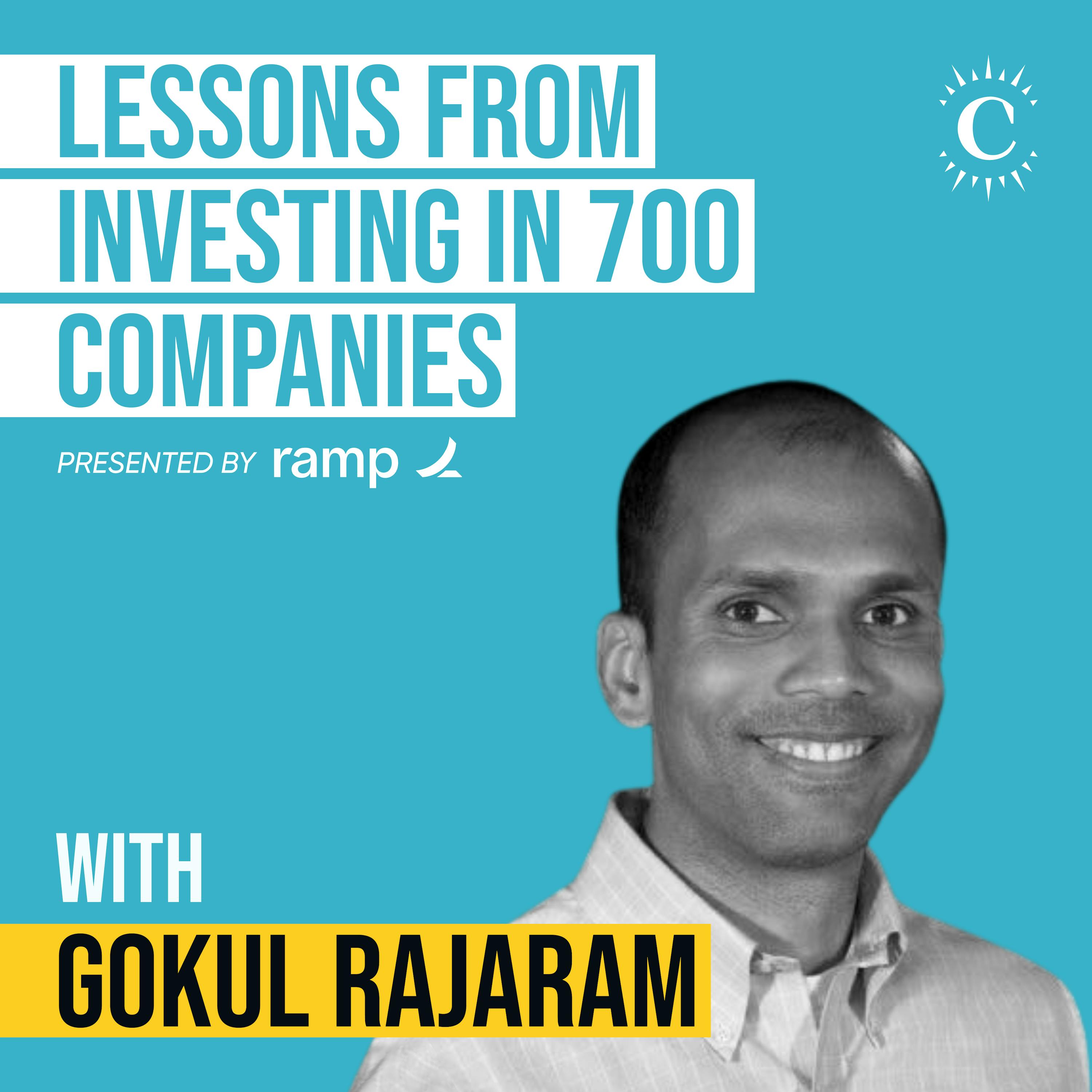
My guest today is Gokul Rajaram, Founding Partner at Marathon Management. Gokul is one of the most prolific product builders and investors of the last twenty years. He has built the core ad and product businesses at Google, Facebook, Square, and DoorDash, working at each company during its most formative scaling periods.
Alongside his operating career, Gokul has invested in more than 700 companies, giving him an unusually broad view into how products are built and scaled.
This conversation is about how product building is changing with AI. We discuss the one thing Gokul believes is truly future-proof in AI, why companies like Zendesk and Slack are more exposed than Salesforce or NetSuite, and the only sources of defensibility.
We also talk about everything Gokul has learned from helping build the most important ads businesses, including the only three ways an ad business can make money, how those constraints shape product decisions, and what consumer behavior change threatens every major platform.
Gokul shares lessons from working closely with Larry and Sergey, Mark Zuckerberg, Jack Dorsey, and Tony Xu.
Please enjoy my conversation with Gokul Rajaram.
For the full show notes, transcript, and links to mentioned content, check out the episode page here.
-----
This episode is brought to you by Ramp. Ramp’s mission is to help companies manage their spend in a way that reduces expenses and frees up time for teams to work on more valuable projects. Go to ramp.com/invest to sign up for free and get a $250 welcome bonus.
-----
This episode is brought to you by Vanta. Trusted by thousands of businesses, Vanta continuously monitors your security posture and streamlines audits so you can win enterprise deals and build customer trust without the traditional overhead. Visit vanta.com/invest.
-----
This episode is brought to you by Rogo. Rogo is an AI-powered platform that automates accounts payable workflows, enabling finance teams to process invoices faster and with greater accuracy. Learn more at Rogo.ai/invest.
-----
This episode is brought to you by WorkOS. WorkOS is a developer platform that enables SaaS companies to quickly add enterprise features to their applications. Visit WorkOS.com to transform your application into an enterprise-ready solution in minutes, not months.
-----
This episode is brought to you by Ridgeline. Ridgeline has built a complete, real-time, modern operating system for investment managers. It handles trading, portfolio management, compliance, customer reporting, and much more through an all-in-one real-time cloud platform. Visit ridgelineapps.com.
-----
Editing and post-production work for this episode was provided by The Podcast Consultant (https://thepodcastconsultant.com).
Timestamps
(00:00:00) Welcome to Invest Like The Best
(00:00:53) Meet Gokul Rajaram
(00:02:05) How Product Development is Changing with AI
(00:07:32) Philosophy of Product Management
(00:10:19) What is Future-Proof in AI Era
(00:11:25) Building AI Applications Today
(00:15:03) Systems of Record vs Agent Companies
(00:16:58) Which Legacy Software Companies Are Most Exposed
(00:22:15) Stickiness in the AI Era
(00:24:10) Learning from Larry Page and Sergey Brin
(00:28:15) Learning from Mark Zuckerberg
(00:31:31) Learning from Jack Dorsey
(00:35:40) The Art of Great Product Design
(00:36:49) Weekly CEO Communication
(00:40:27) Three Ways to Succeed in Advertising
(00:44:27) What Should Scare Major Ad Platforms
(00:48:24) North Star Metrics
(00:50:09) Self-Serve Products
(00:54:50) Careers in the AI Era
(00:59:03) Stay Long Enough to Have Impact
(01:00:10) Founder Authenticity and Superpowers
(01:02:21) Navigating the Idea Maze
(01:03:42) Role of Boards
(01:06:31) Excellence in Customer Acquisition
(01:09:11) The Kindest Thing