🇺🇸 United States Episodes

14994 episodes from United States

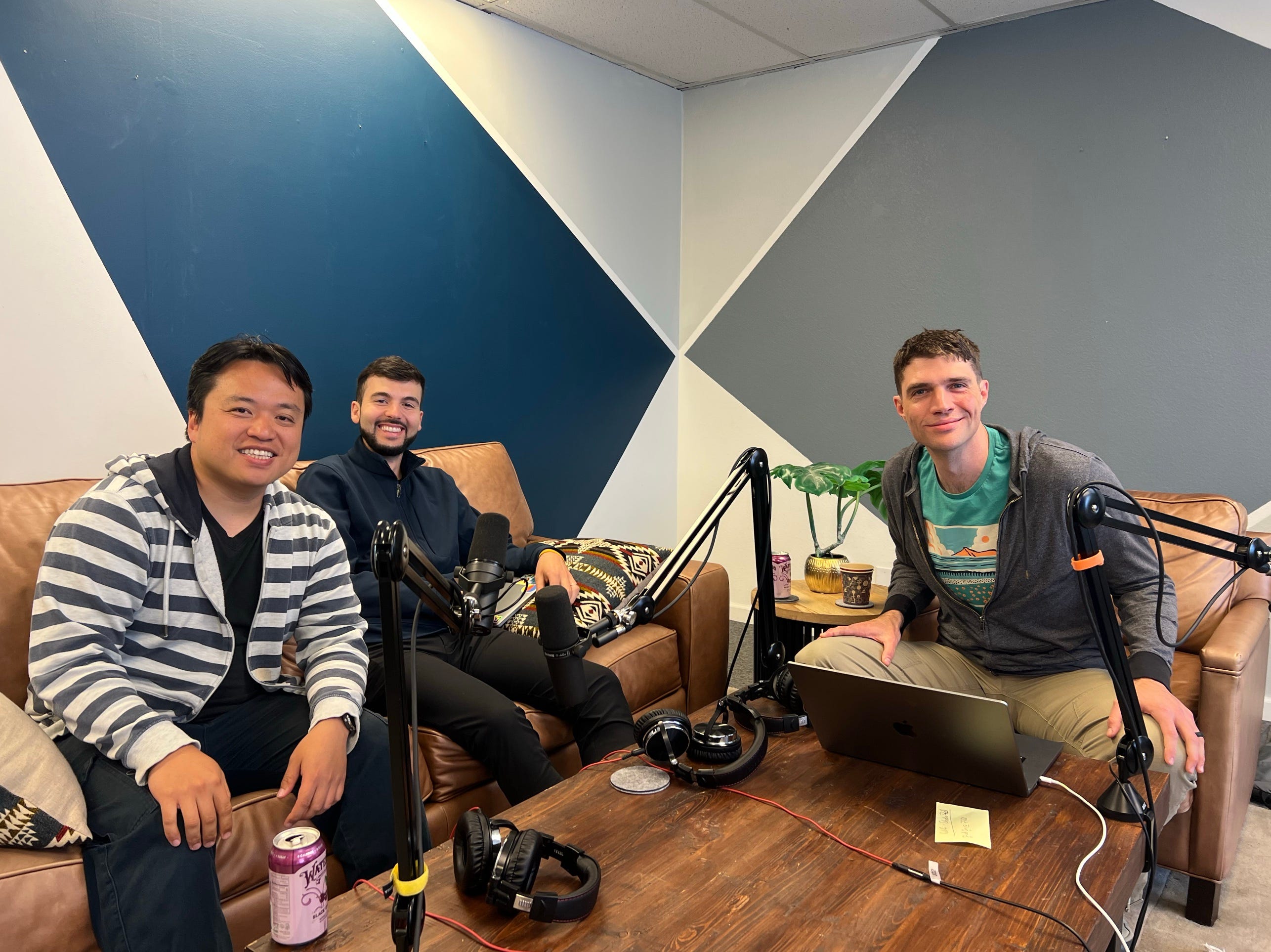
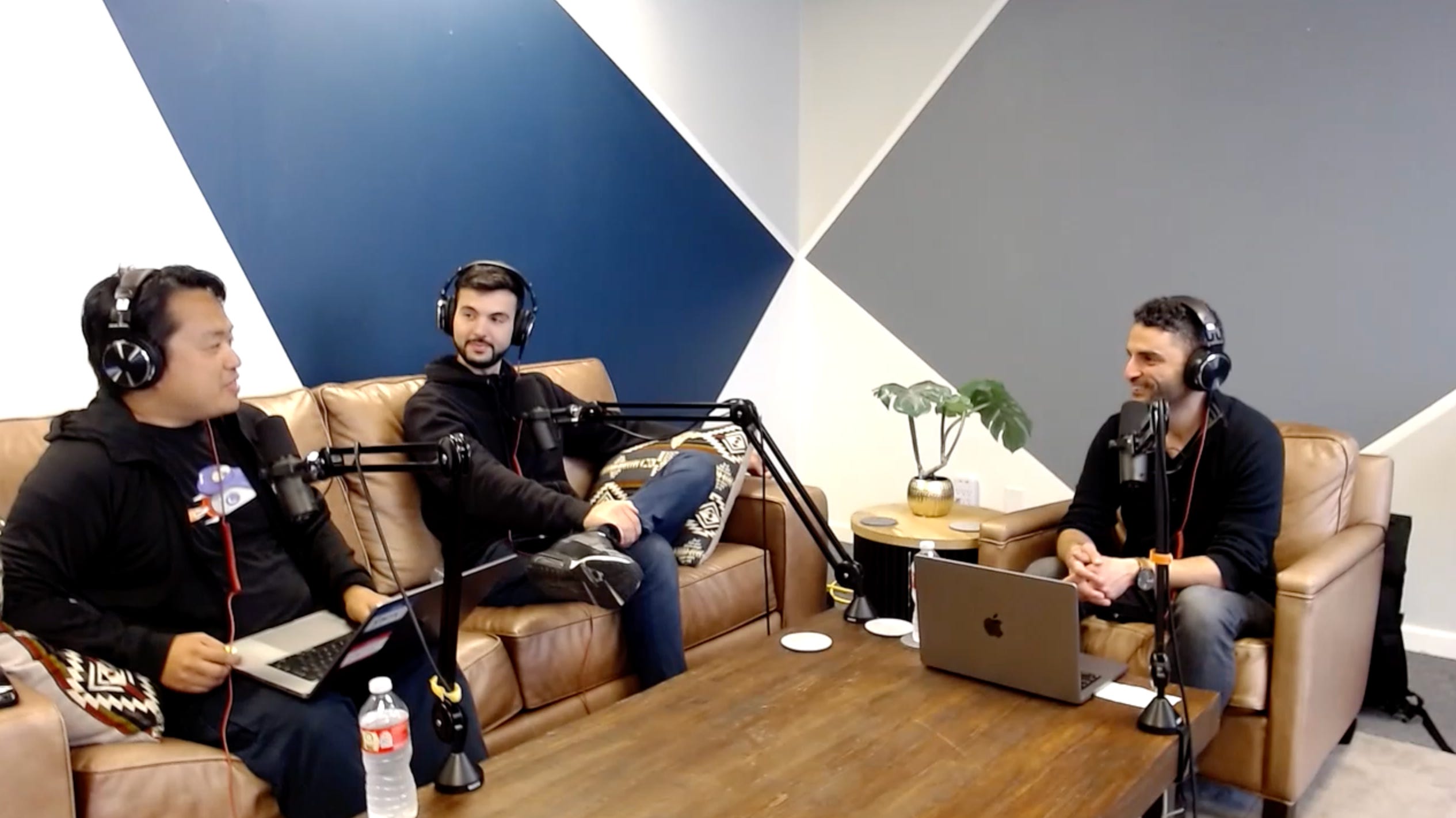
Training a SOTA Code LLM in 1 week and Quantifying the Vibes — with Reza Shabani of Replit

From Latent Space: The AI Engineer Podcast

Latent Space is popping off! Welcome to the over 8500 latent space explorers who have joined us. Join us this month at various events in SF and NYC, or start your own!This post spent 22 hours at the top of Hacker News.As announced during their Developer Day celebrating their $100m fundraise following their Google partnership, Replit is now open sourcing its own state of the art code LLM: replit-code-v1-3b (model card, HF Space), which beats OpenAI’s Codex model on the industry standard HumanEval benchmark when finetuned on Replit data (despite being 77% smaller) and more importantly passes AmjadEval (we’ll explain!)We got an exclusive interview with Reza Shabani, Replit’s Head of AI, to tell the story of Replit’s journey into building a data platform, building GhostWriter, and now training their own LLM, for 22 million developers!8 minutes of this discussion go into a live demo discussing generated code samples - which is always awkward on audio. So we’ve again gone multimodal and put up a screen recording here where you can follow along on the code samples!Recorded in-person at the beautiful StudioPod studios in San Francisco.Full transcript is below the fold. We would really appreciate if you shared our pod with friends on Twitter, LinkedIn, Mastodon, Bluesky, or your social media poison of choice!Timestamps* [00:00:21] Introducing Reza* [00:01:49] Quantitative Finance and Data Engineering* [00:11:23] From Data to AI at Replit* [00:17:26] Replit GhostWriter* [00:20:31] Benchmarking Code LLMs* [00:23:06] AmjadEval live demo* [00:31:21] Aligning Models on Vibes* [00:33:04] Beyond Chat & Code Completion* [00:35:50] Ghostwriter Autonomous Agent* [00:38:47] Releasing Replit-code-v1-3b* [00:43:38] The YOLO training run* [00:49:49] Scaling Laws: from Kaplan to Chinchilla to LLaMA* [00:52:43] MosaicML* [00:55:36] Replit's Plans for the Future (and Hiring!)* [00:59:05] Lightning RoundShow Notes* Reza Shabani on Twitter and LinkedIn* also Michele Catasta and Madhav Singhal* Michele Catasta’s thread on the release of replit-code-v1-3b* Intro to Replit Ghostwriter* Replit Ghostwriter Chat and Building Ghostwriter Chat* Reza on how to train your own LLMs (their top blog of all time)* Our Benchmarks 101 episode where we discussed HumanEval* AmjadEval live demo* Nat.dev* MosaicML CEO Naveen Rao on Replit’s LLM* MosaicML Composer + FSDP code* Replit’s AI team is hiring in North America timezone - Fullstack engineer, Applied AI/ML, and other roles!Transcript[00:00:00] Alessio Fanelli: Hey everyone. Welcome to the Latent Space podcast. This is Alessio, partner and CTO in residence at Decibel Partners. I'm joined by my co-host, swyx, writer and editor of Latent Space.[00:00:21] Introducing Reza[00:00:21] swyx: Hey and today we have Reza Shabani, Head of AI at Replit. Welcome to the studio. Thank you. Thank you for having me. So we try to introduce people's bios so you don't have to repeat yourself, but then also get a personal side of you.[00:00:34] You got your PhD in econ from Berkeley, and then you were a startup founder for a bit, and, and then you went into systematic equity trading at BlackRock in Wellington. And then something happened and you were now head of AI at Relet. What should people know about you that might not be apparent on LinkedIn?[00:00:50] One thing[00:00:51] Reza Shabani: that comes up pretty often is whether I know how to code. Yeah, you'd be shocked. A lot of people are kind of like, do you know how to code? When I was talking to Amjad about this role, I'd originally talked to him, I think about a product role and, and didn't get it. Then he was like, well, I know you've done a bunch of data and analytics stuff.[00:01:07] We need someone to work on that. And I was like, sure, I'll, I'll do it. And he was like, okay, but you might have to know how to code. And I was like, yeah, yeah, I, I know how to code. So I think that just kind of surprises people coming from like Ancon background. Yeah. Of people are always kind of like, wait, even when people join Relet, they're like, wait, does this guy actually know how to code?[00:01:28] Is he actually technical? Yeah.[00:01:30] swyx: You did a bunch of number crunching at top financial companies and it still wasn't[00:01:34] Reza Shabani: obvious. Yeah. Yeah. I mean, I, I think someone like in a software engineering background, cuz you think of finance and you think of like calling people to get the deal done and that type of thing.[00:01:43] No, it's, it's not that as, as you know, it's very very quantitative. Especially what I did in, in finance, very quantitative.[00:01:49] Quantitative Finance and Data Engineering[00:01:49] swyx: Yeah, so we can cover a little bit of that and then go into the rapid journey. So as, as you, as you know, I was also a quantitative trader on the sell side and the buy side. And yeah, I actually learned Python there.[00:02:01] I learned my, I wrote my own data pipelines there before airflow was a thing, and it was just me writing running notebooks and not version controlling them. And it was a complete mess, but we were managing a billion dollars on, on my crappy code. Yeah, yeah. What was it like for you?[00:02:17] Reza Shabani: I guess somewhat similar.[00:02:18] I, I started the journey during grad school, so during my PhD and my PhD was in economics and it was always on the more data intensive kind of applied economic side. And, and specifically financial economics. And so what I did for my dissertation I recorded cnbc, the Financial News Network for 10 hours a day, every day.[00:02:39] Extracted the close captions from the video files and then used that to create a second by second transcript of, of cmbc, merged that on with high frequency trading, quote data and then looked at, you know, went in and did some, some nlp, tagging the company names, and and then looked at the price response or the change in price and trading volume in the seconds after a company was mentioned.[00:03:01] And, and this was back in. 2009 that I was doing this. So before cloud, before, before a lot of Python actually. And, and definitely before any of these packages were available to make this stuff easy. And that's where, where I had to really learn to code, like outside of you know, any kind of like data programming languages.[00:03:21] That's when I had to learn Python and had to learn all, all of these other skills to work it with data at that, at that scale. So then, you know, I thought I wanted to do academia. I did terrible on the academic market because everyone looked at my dissertation. They're like, this is cool, but this isn't economics.[00:03:37] And everyone in the computer science department was actually way more interested in it. Like I, I hung out there more than in the econ department and You know, didn't get a single academic offer. Had two offer. I think I only applied to like two industry jobs and got offers from both of them.[00:03:53] They, they saw value in it. One of them was BlackRock and turned it down to, to do my own startup, and then went crawling back two and a half years later after the startup failed.[00:04:02] swyx: Something on your LinkedIn was like you're trading Chinese news tickers or something. Oh, yeah. I forget,[00:04:07] Reza Shabani: forget what that was.[00:04:08] Yeah, I mean oh. There, there was so much stuff. Honestly, like, so systematic active equity at, at BlackRock is, was such an amazing. Group and you just end up learning so much and the, and the possibilities there. Like when you, when you go in and you learn the types of things that they've been trading on for years you know, like a paper will come out in academia and they're like, did you know you can use like this data on searches to predict the price of cars?[00:04:33] And it's like, you go in and they've been trading on that for like eight years. Yeah. So they're, they're really ahead of the curve on, on all of that stuff. And the really interesting stuff that I, that I found when I went in was all like, related to NLP and ml a lot of like transcript data, a lot of like parsing through the types of things that companies talk about, whether an analyst reports, conference calls, earnings reports and the devil's really in the details about like how you make sense of, of that information in a way that, you know, gives you insight into what the company's doing and, and where the market is, is going.[00:05:08] I don't know if we can like nerd out on specific strategies. Yes. Let's go, let's go. What, so one of my favorite strategies that, because it never, I don't think we ended up trading on it, so I can probably talk about it. And it, it just kind of shows like the kind of work that you do around this data.[00:05:23] It was called emerging technologies. And so the whole idea is that there's always a new set of emerging technologies coming onto the market and the companies that are ahead of that curve and stay up to date on on the latest trends are gonna outperform their, their competitors.[00:05:38] And that's gonna reflect in the, in the stock price. So when you have a theory like that, how do you actually turn that into a trading strategy? So what we ended up doing is, well first you have to, to determine what are the emergent technologies, like what are the new up and coming technologies.[00:05:56] And so we actually went and pulled data on startups. And so there's like startups in Silicon Valley. You have all these descriptions of what they do, and you get that, that corpus of like when startups were getting funding. And then you can run non-negative matrix factorization on it and create these clusters of like what the various Emerging technologies are, and you have this all the way going back and you have like social media back in like 2008 when Facebook was, was blowing up.[00:06:21] And and you have things like mobile and digital advertising and and a lot of things actually outside of Silicon Valley. They, you know, like shale and oil cracking. Yeah. Like new technologies in, in all these different types of industries. And then and then you go and you look like, which publicly traded companies are actually talking about these things and and have exposure to these things.[00:06:42] And those are the companies that end up staying ahead of, of their competitors. And a lot of the the cases that came out of that made a ton of sense. Like when mobile was emerging, you had Walmart Labs. Walmart was really far ahead in terms of thinking about mobile and the impact of mobile.[00:06:59] And, and their, you know, Sears wasn't, and Walmart did well, and, and Sears didn't. So lots of different examples of of that, of like a company that talks about a new emerging trend. I can only imagine, like right now, all of the stuff with, with ai, there must be tons of companies talking about, yeah, how does this affect their[00:07:17] swyx: business?[00:07:18] And at some point you do, you do lose the signal. Because you get overwhelmed with noise by people slapping a on everything. Right? Which is, yeah. Yeah. That's what the Long Island Iced Tea Company slaps like blockchain on their name and, you know, their stock price like doubled or something.[00:07:32] Reza Shabani: Yeah, no, that, that's absolutely right.[00:07:35] And, and right now that's definitely the kind of strategy that would not be performing well right now because everyone would be talking about ai. And, and that's, as you know, like that's a lot of what you do in Quant is you, you try to weed out other possible explanations for for why this trend might be happening.[00:07:52] And in that particular case, I think we found that, like the companies, it wasn't, it wasn't like Sears and Walmart were both talking about mobile. It's that Walmart went out of their way to talk about mobile as like a future, mm-hmm. Trend. Whereas Sears just wouldn't bring it up. And then by the time an invest investors are asking you about it, you're probably late to the game.[00:08:12] So it was really identifying those companies that were. At the cutting edge of, of new technologies and, and staying ahead. I remember like Domino's was another big one. Like, I don't know, you[00:08:21] swyx: remember that? So for those who don't know, Domino's Pizza, I think for the run of most of the 2010s was a better performing stock than Amazon.[00:08:29] Yeah.[00:08:31] Reza Shabani: It's insane.[00:08:32] swyx: Yeah. Because of their investment in mobile. Mm-hmm. And, and just online commerce and, and all that. I it must have been fun picking that up. Yeah, that's[00:08:40] Reza Shabani: that's interesting. And I, and I think they had, I don't know if you, if you remember, they had like the pizza tracker, which was on, on mobile.[00:08:46] I use it[00:08:46] swyx: myself. It's a great, it's great app. Great app. I it's mostly faked. I think that[00:08:50] Reza Shabani: that's what I heard. I think it's gonna be like a, a huge I don't know. I'm waiting for like the New York Times article to drop that shows that the whole thing was fake. We all thought our pizzas were at those stages, but they weren't.[00:09:01] swyx: The, the challenge for me, so that so there's a, there's a great piece by Eric Falkenstein called Batesian Mimicry, where every signal essentially gets overwhelmed by noise because the people who wants, who create noise want to follow the, the signal makers. So that actually is why I left quant trading because there's just too much regime changing and like things that would access very well would test poorly out a sample.[00:09:25] And I'm sure you've like, had a little bit of that. And then there's what was the core uncertainty of like, okay, I have identified a factor that performs really well, but that's one factor out of. 500 other factors that could be going on. You have no idea. So anyway, that, that was my existential uncertainty plus the fact that it was a very highly stressful job.[00:09:43] Reza Shabani: Yeah. This is a bit of a tangent, but I, I think about this all the time and I used to have a, a great answer before chat came out, but do you think that AI will win at Quant ever?[00:09:54] swyx: I mean, what is Rentech doing? Whatever they're doing is working apparently. Yeah. But for, for most mortals, I. Like just waving your wand and saying AI doesn't make sense when your sample size is actually fairly low.[00:10:08] Yeah. Like we have maybe 40 years of financial history, if you're lucky. Mm-hmm. Times what, 4,000 listed equities. It's actually not a lot. Yeah, no, it's,[00:10:17] Reza Shabani: it's not a lot at all. And, and constantly changing market conditions and made laden variables and, and all of, all of that as well. Yeah. And then[00:10:24] swyx: retroactively you're like, oh, okay.[00:10:26] Someone will discover a giant factor that, that like explains retroactively everything that you've been doing that you thought was alpha, that you're like, Nope, actually you're just exposed to another factor that you're just, you just didn't think about everything was momentum in.[00:10:37] Yeah. And one piece that I really liked was Andrew Lo. I think he had from mit, I think he had a paper on bid as Spreads. And I think if you, if you just. Taken, took into account liquidity of markets that would account for a lot of active trading strategies, alpha. And that was systematically declined as interest rates declined.[00:10:56] And I mean, it was, it was just like after I looked at that, I was like, okay, I'm never gonna get this right.[00:11:01] Reza Shabani: Yeah. It's a, it's a crazy field and I you know, I, I always thought of like the, the adversarial aspect of it as being the, the part that AI would always have a pretty difficult time tackling.[00:11:13] Yeah. Just because, you know, there's, there's someone on the other end trying to out, out game you and, and AI can, can fail in a lot of those situations. Yeah.[00:11:23] swyx: Cool.[00:11:23] From Data to AI at Replit[00:11:23] Alessio Fanelli: Awesome. And now you've been a rep almost two years. What do you do there? Like what does the, the team do? Like, how has that evolved since you joined?[00:11:32] Especially since large language models are now top of mind, but, you know, two years ago it wasn't quite as mainstream. So how, how has that evolved?[00:11:40] Reza Shabani: Yeah, I, so when I joined, I joined a year and a half ago. We actually had to build out a lot of, of data pipelines.[00:11:45] And so I started doing a lot of data work. And we didn't have you know, there, there were like databases for production systems and, and whatnot, but we just didn't have the the infrastructure to query data at scale and to process that, that data at scale and replica has tons of users tons of data, just tons of ripples.[00:12:04] And I can get into, into some of those numbers, but like, if you wanted to answer the question, for example of what is the most. Forked rep, rep on rep, you couldn't answer that back then because it, the query would just completely time out. And so a lot of the work originally just went into building data infrastructure, like modernizing the data infrastructure in a way where you can answer questions like that, where you can you know, pull in data from any particular rep to process to make available for search.[00:12:34] And, and moving all of that data into a format where you can do all of this in minutes as opposed to, you know, days or weeks or months. That laid a lot of the groundwork for building anything in, in ai, at least in terms of training our own own models and then fine tuning them with, with replica data.[00:12:50] So then you know, we, we started a team last year recruited people from, you know from a team of, of zero or a team of one to, to the AI and data team today. We, we build. Everything related to, to ghostrider. So that means the various features like explain code, generate code, transform Code, and Ghostrider chat which is like a in context ide or a chat product within the, in the ide.[00:13:18] And then the code completion models, which are ghostwriter code complete, which was the, the very first version of, of ghostrider. Yeah. And we also support, you know, things like search and, and anything in terms of what creates, or anything that requires like large data scale or large scale processing of, of data for the site.[00:13:38] And, and various types of like ML algorithms for the site, for internal use of the site to do things like detect and stop abuse. Mm-hmm.[00:13:47] Alessio Fanelli: Yep. Sounds like a lot of the early stuff you worked on was more analytical, kind of like analyzing data, getting answers on these things. Obviously this has evolved now into some.[00:13:57] Production use case code lms, how is the team? And maybe like some of the skills changed. I know there's a lot of people wondering, oh, I was like a modern data stack expert, or whatever. It's like I was doing feature development, like, how's my job gonna change? Like,[00:14:12] Reza Shabani: yeah. It's a good question. I mean, I think that with with language models, the shift has kind of been from, or from traditional ml, a lot of the shift has gone towards more like nlp backed ml, I guess.[00:14:26] And so, you know, there, there's an entire skill set of applicants that I no longer see, at least for, for this role which are like people who know how to do time series and, and ML across time. Right. And, and you, yeah. Like you, you know, that exact feeling of how difficult it is to. You know, you have like some, some text or some variable and then all of a sudden you wanna track that over time.[00:14:50] The number of dimensions that it, that it introduces is just wild and it's a totally different skill set than what we do in a, for example, in in language models. And it's very it's a, it's a skill that is kind of you know, at, at least at rep not used much. And I'm sure in other places used a lot, but a lot of the, the kind of excitement about language models has pulled away attention from some of these other ML areas, which are extremely important and, and I think still going to be valuable.[00:15:21] So I would just recommend like anyone who is a, a data stack expert, like of course it's cool to work with NLP and text data and whatnot, but I do think at some point it's going to you know, having, having skills outside of that area and in more traditional aspects of ML will, will certainly be valuable as well.[00:15:39] swyx: Yeah. I, I'd like to spend a little bit of time on this data stack notion pitch. You were even, you were effectively the first data hire at rep. And I just spent the past year myself diving into data ecosystem. I think a lot of software engineers are actually. Completely unaware that basically every company now eventually evolves.[00:15:57] The data team and the data team does everything that you just mentioned. Yeah. All of us do exactly the same things, set up the same pipelines you know, shop at the same warehouses essentially. Yeah, yeah, yeah, yeah. So that they enable everyone else to query whatever they, whatever they want. And to, to find those insights that that can drive their business.[00:16:15] Because everyone wants to be data driven. They don't want to do the janitorial work that it comes, that comes to, yeah. Yeah. Hooking everything up. What like, so rep is that you think like 90 ish people now, and then you, you joined two years ago. Was it like 30 ish people? Yeah, exactly. We're 30 people where I joined.[00:16:30] So and I just wanna establish your founders. That is exactly when we hired our first data hire at Vilify as well. I think this is just a very common pattern that most founders should be aware of, that like, You start to build a data discipline at this point. And it's, and by the way, a lot of ex finance people very good at this because that's what we do at our finance job.[00:16:48] Reza Shabani: Yeah. Yeah. I was, I was actually gonna Good say that is that in, in some ways, you're kind of like the perfect first data hire because it, you know, you know how to build things in a reliable but fast way and, and how to build them in a way that, you know, it's, it scales over time and evolves over time because financial markets move so quickly that if you were to take all of your time building up these massive systems, like the trading opportunities gone.[00:17:14] So, yeah. Yeah, they're very good at it. Cool. Okay. Well,[00:17:18] swyx: I wanted to cover Ghost Writer as a standalone thing first. Okay. Yeah. And then go into code, you know, V1 or whatever you're calling it. Yeah. Okay. Okay. That sounds good. So order it[00:17:26] Replit GhostWriter[00:17:26] Reza Shabani: however you like. Sure. So the original version of, of Ghost Writer we shipped in August of, of last year.[00:17:33] Yeah. And so this was a. This was a code completion model similar to GitHub's co-pilot. And so, you know, you would have some text and then it would predict like, what, what comes next. And this was, the original version was actually based off of the cogen model. And so this was an open source model developed by Salesforce that was trained on, on tons of publicly available code data.[00:17:58] And so then we took their their model, one of the smaller ones, did some distillation some other kind of fancy tricks to, to make it much faster and and deployed that. And so the innovation there was really around how to reduce the model footprint in a, to, to a size where we could actually serve it to, to our users.[00:18:20] And so the original Ghost Rider You know, we leaned heavily on, on open source. And our, our friends at Salesforce obviously were huge in that, in, in developing these models. And, but, but it was game changing just because we were the first startup to actually put something like that into production.[00:18:38] And, and at the time, you know, if you wanted something like that, there was only one, one name and, and one place in town to, to get it. And and at the same time, I think I, I'm not sure if that's like when the image models were also becoming open sourced for the first time. And so the world went from this place where, you know, there was like literally one company that had all of these, these really advanced models to, oh wait, maybe these things will be everywhere.[00:19:04] And that's exactly what's happened in, in the last Year or so, as, as the models get more powerful and then you always kind of see like an open source version come out that someone else can, can build and put into production very quickly at, at, you know, a fraction of, of the cost. So yeah, that was the, the kind of code completion Go Strider was, was really just, just that we wanted to fine tune it a lot to kind of change the way that our users could interact with it.[00:19:31] So just to make it you know, more customizable for our use cases on, on Rep. And so people on Relet write a lot of, like jsx for example, which I don't think was in the original training set for, for cogen. And and they do specific things that are more Tuned to like html, like they might wanna run, right?[00:19:50] Like inline style or like inline CSS basically. Those types of things. And so we experimented with fine tuning cogen a bit here and there, and, and the results just kind of weren't, weren't there, they weren't where you know, we, we wanted the model to be. And, and then we just figured we should just build our own infrastructure to, you know, train these things from scratch.[00:20:11] Like, LMS aren't going anywhere. This world's not, you know, it's, it's not like we're not going back to that world of there's just one, one game in town. And and we had the skills infrastructure and the, and the team to do it. So we just started doing that. And you know, we'll be this week releasing our very first open source code model.[00:20:31] And,[00:20:31] Benchmarking Code LLMs[00:20:31] Alessio Fanelli: and when you say it was not where you wanted it to be, how were you benchmarking[00:20:36] Reza Shabani: it? In that particular case, we were actually, so, so we have really two sets of benchmarks that, that we use. One is human eval, so just the standard kind of benchmark for, for Python, where you can generate some code or you give you give the model a function definition with, with some string describing what it's supposed to do, and then you allow it to complete that function, and then you run a unit test against it and and see if what it generated passes the test.[00:21:02] So we, we always kind of, we would run this on the, on the model. The, the funny thing is the fine tuned versions of. Of Cogen actually did pretty well on, on that benchmark. But then when we, we then have something called instead of human eval. We call it Amjad eval, which is basically like, what does Amjad think?[00:21:22] Yeah, it's, it's exactly that. It's like testing the vibes of, of a model. And it's, it's cra like I've never seen him, I, I've never seen anyone test the model so thoroughly in such a short amount of time. He's, he's like, he knows exactly what to write and, and how to prompt the model to, to get you know, a very quick read on, on its quote unquote vibes.[00:21:43] And and we take that like really seriously. And I, I remember there was like one, one time where we trained a model that had really good you know, human eval scores. And the vibes were just terrible. Like, it just wouldn't, you know, it, it seemed overtrained. So so that's a lot of what we found is like we, we just couldn't get it to Pass the vibes test no matter how the, how[00:22:04] swyx: eval.[00:22:04] Well, can you formalize I'm jal because I, I actually have a problem. Slight discomfort with human eval. Effectively being the only code benchmark Yeah. That we have. Yeah. Isn't that[00:22:14] Reza Shabani: weird? It's bizarre. It's, it's, it's weird that we can't do better than that in some, some way. So, okay. If[00:22:21] swyx: I, if I asked you to formalize Mja, what does he look for that human eval doesn't do well on?[00:22:25] Reza Shabani: Ah, that is a, that's a great question. A lot of it is kind of a lot of it is contextual like deep within, within specific functions. Let me think about this.[00:22:38] swyx: Yeah, we, we can pause for. And if you need to pull up something.[00:22:41] Reza Shabani: Yeah, I, let me, let me pull up a few. This, this[00:22:43] swyx: is gold, this catnip for people.[00:22:45] Okay. Because we might actually influence a benchmark being evolved, right. So, yeah. Yeah. That would be,[00:22:50] Reza Shabani: that would be huge. This was, this was his original message when he said the vibes test with, with flying colors. And so you have some, some ghostrider comparisons ghost Rider on the left, and cogen is on the right.[00:23:06] AmjadEval live demo[00:23:06] Reza Shabani: So here's Ghostrider. Okay.[00:23:09] swyx: So basically, so if I, if I summarize it from a, for ghosting the, there's a, there's a, there's a bunch of comments talking about how you basically implement a clone. Process or to to c Clooney process. And it's describing a bunch of possible states that he might want to, to match.[00:23:25] And then it asks for a single line of code for defining what possible values of a name space it might be to initialize it in amjadi val With what model is this? Is this your, this is model. This is the one we're releasing. Yeah. Yeah. It actually defines constants which are human readable and nice.[00:23:42] And then in the other cogen Salesforce model, it just initializes it to zero because it reads that it starts of an int Yeah, exactly. So[00:23:51] Reza Shabani: interesting. Yeah. So you had a much better explanation of, of that than than I did. It's okay. So this is, yeah. Handle operation. This is on the left.[00:24:00] Okay.[00:24:00] swyx: So this is rep's version. Yeah. Where it's implementing a function and an in filling, is that what it's doing inside of a sum operation?[00:24:07] Reza Shabani: This, so this one doesn't actually do the infill, so that's the completion inside of the, of the sum operation. But it, it's not, it's, it, it's not taking into account context after this value, but[00:24:18] swyx: Right, right.[00:24:19] So it's writing an inline lambda function in Python. Okay.[00:24:21] Reza Shabani: Mm-hmm. Versus[00:24:24] swyx: this one is just passing in the nearest available variable. It's, it can find, yeah.[00:24:30] Reza Shabani: Okay. So so, okay. I'll, I'll get some really good ones in a, in a second. So, okay. Here's tokenize. So[00:24:37] swyx: this is an assertion on a value, and it's helping to basically complete the entire, I think it looks like an E s T that you're writing here.[00:24:46] Mm-hmm. That's good. That that's, that's good. And then what does Salesforce cogen do? This is Salesforce cogen here. So is that invalidism way or what, what are we supposed to do? It's just making up tokens. Oh, okay. Yeah, yeah, yeah. So it's just, it's just much better at context. Yeah. Okay.[00:25:04] Reza Shabani: And, and I guess to be fair, we have to show a case where co cogen does better.[00:25:09] Okay. All right. So here's, here's one on the left right, which[00:25:12] swyx: is another assertion where it's just saying that if you pass in a list, it's going to throw an exception saying in an expectedly list and Salesforce code, Jen says,[00:25:24] Reza Shabani: This is so, so ghost writer was sure that the first argument needs to be a list[00:25:30] swyx: here.[00:25:30] So it hallucinated that it wanted a list. Yeah. Even though you never said it was gonna be a list.[00:25:35] Reza Shabani: Yeah. And it's, it's a argument of that. Yeah. Mm-hmm. So, okay, here's a, here's a cooler quiz for you all, cuz I struggled with this one for a second. Okay. What is.[00:25:47] swyx: Okay, so this is a four loop example from Amjad.[00:25:50] And it's, it's sort of like a q and a context in a chat bot. And it's, and it asks, and Amjad is asking, what does this code log? And it just paste in some JavaScript code. The JavaScript code is a four loop with a set time out inside of it with a cons. The console logs out the iteration variable of the for loop and increasing numbers of of, of times.[00:26:10] So it's, it goes from zero to five and then it just increases the, the delay between the timeouts each, each time. Yeah.[00:26:15] Reza Shabani: So, okay. So this answer was provided by by Bard. Mm-hmm. And does it look correct to you? Well,[00:26:22] the[00:26:22] Alessio Fanelli: numbers too, but it's not one second. It's the time between them increases.[00:26:27] It's like the first one, then the one is one second apart, then it's two seconds, three seconds. So[00:26:32] Reza Shabani: it's not, well, well, so I, you know, when I saw this and, and the, the message and the thread was like, Our model's better than Bard at, at coding Uhhuh. This is the Bard answer Uhhuh that looks totally right to me.[00:26:46] Yeah. And this is our[00:26:47] swyx: answer. It logs 5 5 55, what is it? Log five 50. 55 oh oh. Because because it logs the state of I, which is five by the time that the log happens. Mm-hmm. Yeah.[00:27:01] Reza Shabani: Oh God. So like we, you know we were shocked. Like, and, and the Bard dancer looked totally right to, to me. Yeah. And then, and somehow our code completion model mind Jude, like this is not a conversational chat model.[00:27:14] Mm-hmm. Somehow gets this right. And and, you know, Bard obviously a much larger much more capable model with all this fancy transfer learning and, and and whatnot. Some somehow, you know, doesn't get it right. So, This is the kind of stuff that goes into, into mja eval that you, you won't find in any benchmark.[00:27:35] Good. And and, and it's, it's the kind of thing that, you know, makes something pass a, a vibe test at Rep.[00:27:42] swyx: Okay. Well, okay, so me, this is not a vibe, this is not so much a vibe test as the, these are just interview questions. Yeah, that's, we're straight up just asking interview questions[00:27:50] Reza Shabani: right now. Yeah, no, the, the vibe test, the reason why it's really difficult to kind of show screenshots that have a vibe test is because it really kind of depends on like how snappy the completion is, how what the latency feels like and if it gets, if it, if it feels like it's making you more productive.[00:28:08] And and a lot of the time, you know, like the, the mix of, of really low latency and actually helpful content and, and helpful completions is what makes up the, the vibe test. And I think part of it is also, is it. Is it returning to you or the, the lack of it returning to you things that may look right, but be completely wrong.[00:28:30] I think that also kind of affects Yeah. Yeah. The, the vibe test as well. Yeah. And so, yeah, th this is very much like a, like a interview question. Yeah.[00:28:39] swyx: The, the one with the number of processes that, that was definitely a vibe test. Like what kind of code style do you expect in this situation? Yeah.[00:28:47] Is this another example? Okay.[00:28:49] Reza Shabani: Yeah. This is another example with some more Okay. Explanations.[00:28:53] swyx: Should we look at the Bard one[00:28:54] Reza Shabani: first? Sure. These are, I think these are, yeah. This is original GT three with full size 175. Billion[00:29:03] swyx: parameters. Okay, so you asked GPC three, I'm a highly intelligent question answering bot.[00:29:07] If you ask me a question that is rooted in truth, I'll give you the answer. If you ask me a question that is nonsense I will respond with unknown. And then you ask it a question. What is the square root of a bananas banana? It answers nine. So complete hallucination and failed to follow the instruction that you gave it.[00:29:22] I wonder if it follows if one, if you use an instruction to inversion it might, yeah. Do what better?[00:29:28] Reza Shabani: On, on the original[00:29:29] swyx: GP T Yeah, because I like it. Just, you're, you're giving an instructions and it's not[00:29:33] Reza Shabani: instruction tuned. Now. Now the interesting thing though is our model here, which does follow the instructions this is not instruction tuned yet, and we still are planning to instruction tune.[00:29:43] Right? So it's like for like, yeah, yeah, exactly. So,[00:29:45] swyx: So this is a replica model. Same question. What is the square of bananas? Banana. And it answers unknown. And this being one of the, the thing that Amjad was talking about, which you guys are. Finding as a discovery, which is, it's better on pure natural language questions, even though you trained it on code.[00:30:02] Exactly. Yeah. Hmm. Is that because there's a lot of comments in,[00:30:07] Reza Shabani: No. I mean, I think part of it is that there's a lot of comments and there's also a lot of natural language in, in a lot of code right. In terms of documentation, you know, you have a lot of like markdowns and restructured text and there's also just a lot of web-based code on, on replica, and HTML tends to have a lot of natural language in it.[00:30:27] But I don't think the comments from code would help it reason in this way. And, you know, where you can answer questions like based on instructions, for example. Okay. But yeah, it's, I know that that's like one of the things. That really shocked us is the kind of the, the fact that like, it's really good at, at natural language reasoning, even though it was trained on, on code.[00:30:49] swyx: Was this the reason that you started running your model on hella swag and[00:30:53] Reza Shabani: all the other Yeah, exactly. Interesting. And the, yeah, it's, it's kind of funny. Like it's in some ways it kind of makes sense. I mean, a lot of like code involves a lot of reasoning and logic which language models need and need to develop and, and whatnot.[00:31:09] And so you know, we, we have this hunch that maybe that using that as part of the training beforehand and then training it on natural language above and beyond that really tends to help. Yeah,[00:31:21] Aligning Models on Vibes[00:31:21] Alessio Fanelli: this is so interesting. I, I'm trying to think, how do you align a model on vibes? You know, like Bard, Bard is not purposefully being bad, right?[00:31:30] Like, there's obviously something either in like the training data, like how you're running the process that like, makes it so that the vibes are better. It's like when it, when it fails this test, like how do you go back to the team and say, Hey, we need to get better[00:31:44] Reza Shabani: vibes. Yeah, let's do, yeah. Yeah. It's a, it's a great question.[00:31:49] It's a di it's very difficult to do. It's not you know, so much of what goes into these models in, in the same way that we have no idea how we can get that question right. The programming you know, quiz question. Right. Whereas Bard got it wrong. We, we also have no idea how to take certain things out and or, and to, you know, remove certain aspects of, of vibes.[00:32:13] Of course there's, there's things you can do to like scrub the model, but it's, it's very difficult to, to get it to be better at something. It's, it's almost like all you can do is, is give it the right type of, of data that you think will do well. And then and, and of course later do some fancy type of like, instruction tuning or, or whatever else.[00:32:33] But a lot of what we do is finding the right mix of optimal data that we want to, to feed into the model and then hoping that the, that the data that's fed in is sufficiently representative of, of the type of generations that we want to do coming out. That's really the best that, that you can do.[00:32:51] Either the model has. Vibes or, or it doesn't, you can't teach vibes. Like you can't sprinkle additional vibes in it. Yeah, yeah, yeah. Same in real life. Yeah, exactly right. Yeah, exactly. You[00:33:04] Beyond Code Completion[00:33:04] Alessio Fanelli: mentioned, you know, co being the only show in town when you started, now you have this, there's obviously a, a bunch of them, right.[00:33:10] Cody, which we had on the podcast used to be Tap nine, kite, all these different, all these different things. Like, do you think the vibes are gonna be the main you know, way to differentiate them? Like, how are you thinking about. What's gonna make Ghost Rider, like stand apart or like, do you just expect this to be like table stakes for any tool?[00:33:28] So like, it just gonna be there?[00:33:30] Reza Shabani: Yeah. I, I do think it's, it's going to be table stakes for sure. I, I think that if you don't if you don't have AI assisted technology, especially in, in coding it's, it's just going to feel pretty antiquated. But but I do think that Ghost Rider stands apart from some of, of these other tools for for specific reasons too.[00:33:51] So this is kind of the, one of, one of the things that these models haven't really done yet is Come outside of code completion and outside of, of just a, a single editor file, right? So what they're doing is they're, they're predicting like the text that can come next, but they're not helping with the development process quite, quite yet outside of just completing code in a, in a text file.[00:34:16] And so the types of things that we wanna do with Ghost Rider are enable it to, to help in the software development process not just editing particular files. And so so that means using a right mix of like the right model for for the task at hand. But but we want Ghost Rider to be able to, to create scaffolding for you for, for these projects.[00:34:38] And so imagine if you would like Terraform. But, but powered by Ghostrider, right? I want to, I put up this website, I'm starting to get a ton of traffic to it and and maybe like I need to, to create a backend database. And so we want that to come from ghostrider as well, so it can actually look at your traffic, look at your code, and create.[00:34:59] You know a, a schema for you that you can then deploy in, in Postgres or, or whatever else? You know, I, I know like doing anything in in cloud can be a nightmare as well. Like if you wanna create a new service account and you wanna deploy you know, nodes on and, and have that service account, kind of talk to those nodes and return some, some other information, like those are the types of things that currently we have to kind of go, go back, go look at some documentation for Google Cloud, go look at how our code base does it you know, ask around in Slack, kind of figure that out and, and create a pull request.[00:35:31] Those are the types of things that we think we can automate away with with more advanced uses of, of ghostwriter once we go past, like, here's what would come next in, in this file. So, so that's the real promise of it, is, is the ability to help you kind of generate software instead of just code in a, in a particular file.[00:35:50] Ghostwriter Autonomous Agent[00:35:50] Reza Shabani: Are[00:35:50] Alessio Fanelli: you giving REPL access to the model? Like not rep, like the actual rep. Like once the model generates some of this code, especially when it's in the background, it's not, the completion use case can actually run the code to see if it works. There's like a cool open source project called Walgreen that does something like that.[00:36:07] It's like self-healing software. Like it gives a REPL access and like keeps running until it fixes[00:36:11] Reza Shabani: itself. Yeah. So, so, so right now there, so there's Ghostrider chat and Ghostrider code completion. So Ghostrider Chat does have, have that advantage in, in that it can it, it knows all the different parts of, of the ide and so for example, like if an error is thrown, it can look at the, the trace back and suggest like a fix for you.[00:36:33] So it has that type of integration. But the what, what we really want to do is is. Is merge the two in a way where we want Ghost Rider to be like, like an autonomous agent that can actually drive the ide. So in these action models, you know, where you have like a sequence of of events and then you can use you know, transformers to kind of keep track of that sequence and predict the next next event.[00:36:56] It's how, you know, companies like, like adapt work these like browser models that can, you know, go and scroll through different websites or, or take some, some series of actions in a, in a sequence. Well, it turns out the IDE is actually a perfect place to do that, right? So like when we talk about creating software, not just completing code in a file what do you do when you, when you build software?[00:37:17] You, you might clone a repo and then you, you know, will go and change some things. You might add a new file go down, highlight some text, delete that value, and point it to some new database, depending on the value in a different config file or in your environment. And then you would go in and add additional block code to, to extend its functionality and then you might deploy that.[00:37:40] Well, we, we have all of that data right there in the replica ide. And and we have like terabytes and terabytes of, of OT data you know, operational transform data. And so, you know, we can we can see that like this person has created a, a file what they call it, and, you know, they start typing in the file.[00:37:58] They go back and edit a different file to match the you know, the class name that they just put in, in the original file. All of that, that kind of sequence data is what we're looking to to train our next model on. And so that, that entire kind of process of actually building software within the I D E, not just like, here's some text what comes next, but rather the, the actions that go into, you know, creating a fully developed program.[00:38:25] And a lot of that includes, for example, like running the code and seeing does this work, does this do what I expected? Does it error out? And then what does it do in response to that error? So all, all of that is like, Insanely valuable information that we want to put into our, our next model. And and that's like, we think that one can be way more advanced than the, than this, you know, go straighter code completion model.[00:38:47] Releasing Replit-code-v1-3b[00:38:47] swyx: Cool. Well we wanted to dive in a little bit more on, on the model that you're releasing. Maybe we can just give people a high level what is being released what have you decided to open source and maybe why open source the story of the YOLO project and Yeah. I mean, it's a cool story and just tell it from the start.[00:39:06] Yeah.[00:39:06] Reza Shabani: So, so what's being released is the, the first version that we're going to release. It's a, it's a code model called replica Code V1 three B. So this is a relatively small model. It's 2.7 billion parameters. And it's a, it's the first llama style model for code. So, meaning it's just seen tons and tons of tokens.[00:39:26] It's been trained on 525 billion tokens of, of code all permissively licensed code. And it's it's three epox over the training set. And And, you know, all of that in a, in a 2.7 billion parameter model. And in addition to that, we, for, for this project or, and for this model, we trained our very own vocabulary as well.[00:39:48] So this, this doesn't use the cogen vocab. For, for the tokenize we, we trained a totally new tokenize on the underlying data from, from scratch, and we'll be open sourcing that as well. It has something like 32,000. The vocabulary size is, is in the 32 thousands as opposed to the 50 thousands.[00:40:08] Much more specific for, for code. And, and so it's smaller faster, that helps with inference, it helps with training and it can produce more relevant content just because of the you know, the, the vocab is very much trained on, on code as opposed to, to natural language. So, yeah, we'll be releasing that.[00:40:29] This week it'll be up on, on hugging pace so people can take it play with it, you know, fine tune it, do all type of things with it. We want to, we're eager and excited to see what people do with the, the code completion model. It's, it's small, it's very fast. We think it has great vibes, but we, we hope like other people feel the same way.[00:40:49] And yeah. And then after, after that, we might consider releasing the replica tuned model at, at some point as well, but still doing some, some more work around that.[00:40:58] swyx: Right? So there are actually two models, A replica code V1 three B and replica fine tune V1 three B. And the fine tune one is the one that has the 50% improvement in in common sense benchmarks, which is going from 20% to 30%.[00:41:13] For,[00:41:13] Reza Shabani: for yes. Yeah, yeah, yeah, exactly. And so, so that one, the, the additional tuning that was done on that was on the publicly available data on, on rep. And so, so that's, that's you know, data that's in public res is Permissively licensed. So fine tuning on on that. Then, Leads to a surprisingly better, like significantly better model, which is this retuned V1 three B, same size, you know, same, very fast inference, same vocabulary and everything.[00:41:46] The only difference is that it's been trained on additional replica data. Yeah.[00:41:50] swyx: And I think I'll call out that I think in one of the follow up q and as that Amjad mentioned, people had some concerns with using replica data. Not, I mean, the licensing is fine, it's more about the data quality because there's a lot of beginner code Yeah.[00:42:03] And a lot of maybe wrong code. Mm-hmm. But it apparently just wasn't an issue at all. You did[00:42:08] Reza Shabani: some filtering. Yeah. I mean, well, so, so we did some filtering, but, but as you know, it's when you're, when you're talking about data at that scale, it's impossible to keep out, you know, all of the, it's, it's impossible to find only select pieces of data that you want the, the model to see.[00:42:24] And, and so a lot of the, a lot of that kind of, you know, people who are learning to code material was in there anyway. And, and you know, we obviously did some quality filtering, but a lot of it went into the fine tuning process and it really helped for some reason. You know, there's a lot of high quality code on, on replica, but there's like you, like you said, a lot of beginner code as well.[00:42:46] And that was, that was the really surprising thing is that That somehow really improved the model and its reasoning capabilities. It felt much more kind of instruction tuned afterward. And, and you know, we have our kind of suspicions as as to why there's, there's a lot of like assignments on rep that kind of explain this is how you do something and then you might have like answers and, and whatnot.[00:43:06] There's a lot of people who learn to code on, on rep, right? And, and like, think of a beginner coder, like think of a code model that's learning to, to code learning this reasoning and logic. It's probably a lot more valuable to see that type of, you know, the, the type of stuff that you find on rep as opposed to like a large legacy code base that that is, you know, difficult to, to parse and, and figure out.[00:43:29] So, so that was very surprising to see, you know, just such a huge jump in in reasoning ability once trained on, on replica data.[00:43:38] The YOLO training run[00:43:38] swyx: Yeah. Perfect. So we're gonna do a little bit of storytelling just leading up to the, the an the developer day that you had last week. Yeah. My understanding is you decide, you raised some money, you decided to have a developer day, you had a bunch of announcements queued up.[00:43:52] And then you were like, let's train the language model. Yeah. You published a blog post and then you announced it on Devrel Day. What, what, and, and you called it the yolo, right? So like, let's just take us through like the[00:44:01] Reza Shabani: sequence of events. So so we had been building the infrastructure to kind of to, to be able to train our own models for, for months now.[00:44:08] And so that involves like laying out the infrastructure, being able to pull in the, the data processes at scale. Being able to do things like train your own tokenizes. And and even before this you know, we had to build out a lot of this data infrastructure for, for powering things like search.[00:44:24] There's over, I think the public number is like 200 and and 30 million res on, on re. And each of these res have like many different files and, and lots of code, lots of content. And so you can imagine like what it must be like to, to be able to query that, that amount of, of data in a, in a reasonable amount of time.[00:44:45] So we've You know, we spent a lot of time just building the infrastructure that allows for for us to do something like that and, and really optimize that. And, and this was by the end of last year. That was the case. Like I think I did a demo where I showed you can, you can go through all of replica data and parse the function signature of every Python function in like under two minutes.[00:45:07] And, and there's, you know, many, many of them. And so a and, and then leading up to developer day, you know, we had, we'd kind of set up these pipelines. We'd started training these, these models, deploying them into production, kind of iterating and, and getting that model training to production loop.[00:45:24] But we'd only really done like 1.3 billion parameter models. It was like all JavaScript or all Python. So there were still some things like we couldn't figure out like the most optimal way to to, to do it. So things like how do you pad or yeah, how do you how do you prefix chunks when you have like multi-language models, what's like the optimal way to do it and, and so on.[00:45:46] So you know, there's two PhDs on, on the team. Myself and Mike and PhDs tend to be like careful about, you know, a systematic approach and, and whatnot. And so we had this whole like list of things we were gonna do, like, oh, we'll test it on this thing and, and so on. And even these, like 1.3 billion parameter models, they were only trained on maybe like 20 billion tokens or 30 billion tokens.[00:46:10] And and then Amjad joins the call and he's like, no, let's just, let's just yolo this. Like, let's just, you know, we're raising money. Like we should have a better code model. Like, let's yolo it. Let's like run it on all the data. How many tokens do we have? And, and, and we're like, you know, both Michael and I are like, I, I looked at 'em during the call and we were both like, oh God is like, are we really just gonna do this?[00:46:33] And[00:46:34] swyx: well, what is the what's the hangup? I mean, you know that large models work,[00:46:37] Reza Shabani: you know that they work, but you, you also don't know whether or not you can improve the process in, in In important ways by doing more data work, scrubbing additional content, and, and also it's expensive. It's like, it, it can, you know it can cost quite a bit and if you, and if you do it incorrectly, you can actually get it.[00:47:00] Or you, you know, it's[00:47:02] swyx: like you hit button, the button, the go button once and you sit, sit back for three days.[00:47:05] Reza Shabani: Exactly. Yeah. Right. Well, like more like two days. Yeah. Well, in, in our case, yeah, two days if you're running 256 GP 100. Yeah. Yeah. And and, and then when that comes back, you know, you have to take some time to kind of to test it.[00:47:19] And then if it fails and you can't really figure out why, and like, yeah, it's, it's just a, it's kind of like a, a. A time consuming process and you just don't know what's going to, to come out of it. But no, I mean, I'm Judd was like, no, let's just train it on all the data. How many tokens do we have? We tell him and he is like, that's not enough.[00:47:38] Where can we get more tokens? Okay. And so Michele had this you know, great idea to to train it on multiple epox and so[00:47:45] swyx: resampling the same data again.[00:47:47] Reza Shabani: Yeah. Which, which can be, which is known risky or like, or tends to overfit. Yeah, you can, you can over overfit. But you know, he, he pointed us to some evidence that actually maybe this isn't really a going to be a problem.[00:48:00] And, and he was very persuasive in, in doing that. And so it, it was risky and, and you know, we did that training. It turned out. Like to actually be great for that, for that base model. And so then we decided like, let's keep pushing. We have 256 TVs running. Let's see what else we can do with it.[00:48:20] So we ran a couple other implementations. We ran you know, a the fine tune version as I, as I said, and that's where it becomes really valuable to have had that entire pipeline built out because then we can pull all the right data, de-dupe it, like go through the, the entire like processing stack that we had done for like months.[00:48:41] We did that in, in a matter of like two days for, for the replica data as well removed, you know, any of, any personal any pii like personal information removed, harmful content, removed, any of, of that stuff. And we just put it back through the that same pipeline and then trained on top of that.[00:48:59] And so I believe that replica tune data has seen something like 680. Billion tokens. And, and that's in terms of code, I mean, that's like a, a universe of code. There really isn't that much more out there. And, and it, you know, gave us really, really promising results. And then we also did like a UL two run, which allows like fill the middle capabilities and and, and will be, you know working to deploy that on, on rep and test that out as well soon.[00:49:29] But it was really just one of those Those cases where, like, leading up to developer day, had we, had we done this in this more like careful, systematic way what, what would've occurred in probably like two, three months. I got us to do it in, in a week. That's fun. It was a lot of fun. Yeah.[00:49:49] Scaling Laws: from Kaplan to Chinchilla to LLaMA[00:49:49] Alessio Fanelli: And so every time I, I've seen the stable releases to every time none of these models fit, like the chinchilla loss in, in quotes, which is supposed to be, you know, 20 tokens per, per, what's this part of the yo run?[00:50:04] Or like, you're just like, let's just throw out the tokens at it doesn't matter. What's most efficient or like, do you think there's something about some of these scaling laws where like, yeah, maybe it's good in theory, but I'd rather not risk it and just throw out the tokens that I have at it? Yeah,[00:50:18] Reza Shabani: I think it's, it's hard to, it's hard to tell just because there's.[00:50:23] You know, like, like I said, like these runs are expensive and they haven't, if, if you think about how many, how often these runs have been done, like the number of models out there and then, and then thoroughly tested in some forum. And, and so I don't mean just like human eval, but actually in front of actual users for actual inference as part of a, a real product that, that people are using.[00:50:45] I mean, it's not that many. And, and so it's not like there's there's like really well established kind of rules as to whether or not something like that could lead to, to crazy amounts of overfitting or not. You just kind of have to use some, some intuition around it. And, and what we kind of found is that our, our results seem to imply that we've really been under training these, these models.[00:51:06] Oh my god. And so like that, you know, all, all of the compute that we kind of. Through, with this and, and the number of tokens, it, it really seems to help and really seems to to improve. And I, and I think, you know, these things kind of happen where in, in the literature where everyone kind of converges to something seems to take it for for a fact.[00:51:27] And like, like Chinchilla is a great example of like, okay, you know, 20 tokens. Yeah. And but, but then, you know, until someone else comes along and kind of tries tries it out and sees actually this seems to work better. And then from our results, it seems imply actually maybe even even lla. Maybe Undertrained.[00:51:45] And, and it may be better to go even You know, like train on on even more tokens then and for, for the[00:51:52] swyx: listener, like the original scaling law was Kaplan, which is 1.7. Mm-hmm. And then Chin established 20. Yeah. And now Lama style seems to mean 200 x tokens to parameters, ratio. Yeah. So obviously you should go to 2000 X, right?[00:52:06] Like, I mean, it's,[00:52:08] Reza Shabani: I mean, we're, we're kind of out of code at that point, you know, it's like there, there is a real shortage of it, but I know that I, I know there are people working on I don't know if it's quite 2000, but it's, it's getting close on you know language models. And so our friends at at Mosaic are are working on some of these really, really big models that are, you know, language because you with just code, you, you end up running out of out of context.[00:52:31] So Jonathan at, at Mosaic has Jonathan and Naveen both have really interesting content on, on Twitter about that. Yeah. And I just highly recommend following Jonathan. Yeah,[00:52:43] MosaicML[00:52:43] swyx: I'm sure you do. Well, CAGR, can we talk about, so I, I was sitting next to Naveen. I'm sure he's very, very happy that you, you guys had such, such success with Mosaic.[00:52:50] Maybe could, could you shout out like what Mosaic did to help you out? What, what they do well, what maybe people don't appreciate about having a trusted infrastructure provider versus a commodity GPU provider?[00:53:01] Reza Shabani: Yeah, so I mean, I, I talked about this a little bit in the in, in the blog post in terms of like what, what advantages like Mosaic offers and, and you know, keep in mind, like we had, we had deployed our own training infrastructure before this, and so we had some experience with it.[00:53:15] It wasn't like we had just, just tried Mosaic And, and some of those things. One is like you can actually get GPUs from different providers and you don't need to be you know, signed up for that cloud provider. So it's, it kind of detaches like your GPU offering from the rest of your cloud because most of our cloud runs in, in gcp.[00:53:34] But you know, this allowed us to leverage GPUs and other providers as well. And then another thing is like train or infrastructure as a service. So you know, these GPUs burn out. You have note failures, you have like all, all kinds of hardware issues that come up. And so the ability to kind of not have to deal with that and, and allow mosaic and team to kind of provide that type of, of fault tolerance was huge for us.[00:53:59] As well as a lot of their preconfigured l m configurations for, for these runs. And so they have a lot of experience in, in training these models. And so they have. You know, the, the right kind of pre-configured setups for, for various models that make sure that, you know, you have the right learning rates, the right training parameters, and that you're making the, the best use of the GPU and, and the underlying hardware.[00:54:26] And so you know, your GPU utilization is always at, at optimal levels. You have like fewer law spikes than if you do, you can recover from them. And you're really getting the most value out of, out of the compute that you're kind of throwing at, at your data. We found that to be incredibly, incredibly helpful.[00:54:44] And so it, of the time that we spent running things on Mosaic, like very little of that time is trying to figure out why the G P U isn't being utilized or why you know, it keeps crashing or, or why we, you have like a cuda out of memory errors or something like that. So like all, all of those things that make training a nightmare Are are, you know, really well handled by, by Mosaic and the composer cloud and and ecosystem.[00:55:12] Yeah. I was gonna[00:55:13] swyx: ask cuz you're on gcp if you're attempted to rewrite things for the TPUs. Cause Google's always saying that it's more efficient and faster, whatever, but no one has experience with them. Yeah.[00:55:23] Reza Shabani: That's kind of the problem is that no one's building on them, right? Yeah. Like, like we want to build on, on systems that everyone else is, is building for.[00:55:31] Yeah. And and so with, with the, with the TPUs that it's not easy to do that.[00:55:36] Replit's Plans for the Future (and Hiring!)[00:55:36] swyx: So plans for the future, like hard problems that you wanna solve? Maybe like what, what do you like what kind of people that you're hiring on your team?[00:55:44] Reza Shabani: Yeah. So We are, we're currently hiring for for two different roles on, on my team.[00:55:49] Although we, you know, welcome applications from anyone that, that thinks they can contribute in, in this area. Replica tends to be like a, a band of misfits. And, and the type of people we work with and, and have on our team are you know, like just the, the perfect mix to, to do amazing projects like this with very, very few people.[00:56:09] Right now we're hiring for the applied a applied to AI ml engineer. And so, you know, this is someone who's. Creating data pipelines, processing the data at scale creating runs and and training models and you know, running different variations, testing the output running human evals and, and solving a, a ton of the issues that come up in the, in the training pipeline from beginning to end.[00:56:34] And so, you know, if you read the, the blog post we'll be going into, we'll be releasing additional blog posts that go into the details of, of each of those different sections. You know, just like tokenized training is incredibly complex and you can write, you know, a whole series of blog posts on that.[00:56:50] And so the, those types of really challenging. Engineering problems of how do you sample this data at, at scale from different languages in different RDS and pipelines and, and feed them to you know, sense peace tokenize to, to learn. If you're interested in working in that type of, of stuff we'd love to speak with you.[00:57:10] And and same for on the inference side. So like, if you wanna figure out how to make these models be lightning fast and optimize the the transformer layer to get like as much out of out of inference and reduce latency as much as possible you know, you'd be, you'd be joining our team and working alongside.[00:57:29] Bradley, for example, who was like he, I always embarrass him and he's like the most humble person ever, but I'm gonna embarrass him here. He was employee number seven at YouTube and Wow. Yeah, so when I met him I was like, why are you here? But that's like the kind of person that joins Relet and, you know, he, he's obviously seen like how to scale systems and, and seen, seen it all.[00:57:52] And like he's like the type of person who works on like our inference stack and makes it faster and scalable and and is phenomenal. So if you're just a solid engineer and wanna work on anything related to LLMs In terms of like training inference, data pipelines the applied AI ML role is, is a great role.[00:58:12] We're also hiring for a full stack engineer. So this would be someone on my team who does both the model training stuff, but, but is more oriented towards bringing that AI to to users. And so that could mean many different things. It could mean you know, on the front end building the integrations with the workspace that allow you to, to receive the code completion models.[00:58:34] It means working on Go rider chats, like the conversational ability between. Ghost Writer and what you're trying to do, building the various agents that we want replica to have access to. Creating embeddings to allow people to ask questions about you know, docs or or, or their own projects or, or other teams, projects that they're collaborating with.[00:58:55] All of those types of things are in the, in the kind of full stack role that that I'm hiring for on my team as well. Perfect. Awesome.[00:59:05] Lightning Round[00:59:05] Alessio Fanelli: Yeah, let's jump into Lining Ground. We'll ask you Factbook questions give us a short answer. I know it's a landing ground, but Sean likes to ask follow up questions to the landing ground questions.[00:59:15] So be ready.[00:59:18] swyx: Yeah. This is an acceleration question. What is something you thought would take much longer, but it's already here.[00:59:24] It's coming true much faster than you thought.[00:59:27] Reza Shabani: Ai I mean, it's, it's like I, I know it's cliche, but like every episode of Of Black Mirror that I watched like in the past five years is already Yeah. Becoming true, if not, will become true very, very soon. I remember that during there was like one episode where this, this woman, her boyfriend dies and then they train the data on, they, they go through all of his social media and train a, a chat bot to speak like him.[00:59:54] And at the, and you know, she starts speaking to him and, and it speaks like him. And she's like, blown away by this. And I think everyone was blown away by that. Yeah. That's like old news. That's like, it's, and, and I think that that's mind blowing. How, how quickly it's here and, and how much it's going to keep changing.[01:00:13] Yeah.[01:00:14] swyx: Yeah. Yeah. And, and you, you mentioned that you're also thinking about the social impact of some of these things that we're doing.[01:00:19] Reza Shabani: Yeah. That that'll be, I think one of the. Yeah, I, I think like another way to kind of answer that question is it's, it's forcing us, the, the speed at which everything is developing is forcing us to answer some important questions that we might have otherwise kind of put off in terms of automation.[01:00:39] I think like one of the there's a bit of a tangent, but like, one, one of the things is I think we used to think of AI as these things that would come and take blue collar jobs. And then now, like with a lot of white collar jobs that seem to be like at risk from something like chat G B T all of a sudden that conversation becomes a lot, a lot more important.[01:00:59] And how do we it, it suddenly becomes more important to talk about how do we allow AI to help people as opposed to replace them. And and you know, what changes we need to make over the very long term as a society to kind of Allow you know, people to enjoy the kind of benefits that AI brings to an economy and, and to a society and not feel threatened by it instead.[01:01:23] Alessio Fanelli: Yeah. What do you think a year from now, what will people be the most[01:01:26] Reza Shabani: surprised by? I think a year from now, I'm really interested in seeing how a lot of this technology will be applied to domains outside of chat. And, and I think we're kind of just at the beginning of, of that world you know, chat, G B T, that that took a lot of people by surprise because it was the first time that people started to, to actually interact with it and see what the the capabilities were.[01:01:54] And, and I think it's still just a, a chatbot for many people. And I think that once you start to apply it to actual products, businesses use cases, it's going to become incredibly Powerful. And, and I don't think that we're kind of thinking of the implications for, for companies and, and for the, for the economy.[01:02:14] You know, if you, for example, are like traveling and you want to be able to ask like specific questions about where you're going and plan out your trip, and maybe you wanna know if like if there are like noise complaints in the Airbnb, you just are thinking of booking. And, and you might have like a chat bots actually able to create a query that goes and looks at like, noise complaints that were filed or like construction permits that are filed that are fall within the same date range of your stay.[01:02:40] Like I, I think that that type of like transfer learning when applied to like specific industries and specific products is gonna be incredibly powerful. And I don't think. Anyone has like that much clue in terms of like what's what's going to be possible there and how much a lot of our favorite products might, might change and become a lot more powerful with this technology.[01:03:00] swyx: Request for products or request for startups. What is an AI thing you would pay for if somebody built it with their personal work?[01:03:08] Reza Shabani: Oh, man. The, the, there's a lot of a lot of this type of stuff, but or, or a lot of people trying to build this type of, of thing, but a good L l m IDE is kind of what, what we call it in You mean the one, like the one you work on?[01:03:22] Yeah, exactly. Yeah. Well, so that's why we're trying to build it so that people Okay. Okay. Will pay for it. No, I, but, but I mean, seriously, I think that I, I, I think something that allows you to kind of. Work with different LLMs and not have to repeat a lot of the, the annoyance that kind of comes with prompt engineering.[01:03:44] So think, think of it this way. Like I want to be able to create different prompts and and test them and against different types of models. And so maybe I want to test open AI's models. Google's models. Yeah. Cohere.[01:03:57] swyx: So the playground, like from[01:03:59] Reza Shabani: net Devrel, right? Exactly. So, so like think Nat dot Devrel for Yeah.[01:04:04] For, well, for anything I guess. So Nat, maybe we should say what Nat dot Devrel is for people don't know. So Nat Friedman, Nat Friedman former GitHub ceo. CEO and, and or not current ceo, right? No. Former. Yeah. Went on replica Hired a bounty and, and had a bounty build this website for him.[01:04:25] Yeah. That allows you to kind of compare different language models and and get a response back. Like you, you add one prompt and then it queries these different language models, gets the response back. And it, it turned into this really cool tool that people were using to compare these models.[01:04:39] And then he put it behind a paywall because people were starting to bankrupt him as a result of using it. But but something like that, that allows you to test different models, but also goes further and lets you like, keep the various responses that were, that were generated with these various parameters.[01:04:56] And, and, you know, you can do things like perplexity analysis and how, how widely The, the, the responses differ and over time and using what prompts, strategies and whatnot, I, I do think something like that would be really useful and isn't really built into most ides today. But that's definitely something, especially given how much I'm playing around with prompts and and language models today would be incredibly useful to have.[01:05:22] I[01:05:22] swyx: perceive you to be one layer below prompts. But you're saying that you actually do a lot of prompt engineering yourself because you, I thought you were working on the model, not the prompts, but maybe I'm wrong.[01:05:31] Reza Shabani: No, I, so I work on, on everything. Both, yeah. On, on everything. I think most people still work with pro, I mean, even a code completion model, you're still working with prompts to Yeah.[01:05:40] When you're, when you're you know running inference and, and whatever else. And, you know, instruction tuning, you're working with prompts. And so like, there's There's still a big need for for, for prompt engineering tools as well. I, I do, I guess I should say, I do think that that's gonna go away at some point.[01:05:59] That's my, that's my like, hot take. I don't know if, if you all agree on that, but I do kind of, yeah. I think some of that stuff is going to, to go away at[01:06:07] swyx: some point. I'll, I'll represent the people who disagree. People need problems all the time. Humans need problems all the time. We, you know, humans are general intelligences and we need to tell them to align and prompts our way to align our intent.[01:06:18] Yeah. So, I don't know the, it's a way to inject context and give instructions and that will never go away. Right. Yeah.[01:06:25] Reza Shabani: I think I think you're, you're right. I totally agree by the way that humans are general intelligences. Yeah. Well, I was, I was gonna say like one thing is like as a manager, you're like the ultimate prompt engineer.[01:06:34] Prompt engineer.[01:06:35] swyx: Yeah. Any executive. Yeah. You have to communicate extremely well. And it is, it is basically akin of prompt engineering. Yeah. They teach you frameworks on how to communicate as an executive. Yeah.[01:06:45] Reza Shabani: No, absolutely. I, I completely agree with that. And then someone might hallucinate and you're like, no, no, this is, let's try it this way instead.[01:06:52] No, I, I completely agree with that. I think a lot of the more kind of I guess the algorithmic models that will return something to you the way like a search bar might, right? Yeah. I think that type of You wanted to disappear. Yeah. Yeah, exactly. And so like, I think that type of prompt engineering will, will go away.[01:07:08] I mean, imagine if in the early days of search when the algorithms weren't very good, imagine if you were to go create a middleware that says, Hey type in what you're looking for, and then I will turn it into the set of words that you should be searching for. Yes. To get back the information that's most relevant, that, that feels a little like what prompt engineering is today.[01:07:28] And and sure that would've been really useful. But like then, you know, Google slash yahoo slash search engine Yeah. Would kind of removes that. Like that benefit by improving the, the underlying model. And so I do think that there's gonna be improvements in, in transformer architecture and the models themselves to kind of reduce Like overly yeah.[01:07:51] Like different types of prompt engineering as we know them today. But I completely agree that for the way larger, kind of like more human-like models Yeah. That you'll always need to, we'll talk some form of, of prompt engineering. Yeah. Okay.[01:08:04] Alessio Fanelli: Awesome. And to wrap this up, what's one thing you want everyone to take away about ai?[01:08:09] Both. It can be about work, it can be about personal life and the[01:08:13] Reza Shabani: societal impact. Learn how to use it. I, I would say learn how to learn how to use it, learn how it can help you and, and benefit you. I think there's like a lot of fear of, of ai and, and how it's going to impact society. And I think a lot of that might be warranted, but it, it's in the same way that pretty much anything new that comes along changes society in that way, and it's very powerful and very fundamental.[01:08:36] Like the internet. Change society in a lot of ways. And, and sure kids can go like cheat on their homework by finding something online, but there's also plenty of good that kind of comes out of opening up the the world to, to everyone. And I think like AI's gonna be just another iteration of, of that same thing.[01:08:53] Another example of, of that same thing. So I think the, the people who will be really successful are the ones that kind of understand it know how to use it, know its limitations and, and know how it can make them more productive and, and better at anything they want to do. Awesome. Well, thank[01:09:08] Alessio Fanelli: you so much for coming on.[01:09:10] This was[01:09:10] Reza Shabani: great. Of course. Thank you. Get full access to Latent.Space at www.latent.space/subscribe

Super Soul Special: Sister Joan Chittister: The Time is Now

From Oprah's Super Soul

Original Air Date: May 27th, 2019 Author, activist and Benedictine nun Sister Joan Chittister discusses her book, The Time Is Now: A Call to Uncommon Courage. In a powerful conversation, Sister Joan defines what it means to be a prophet in today's modern world, and challenges us to combat complacency and apathy in our own lives. She outlines the key steps we can all take to lift America (and the world) out of its current state of polarization and political disarray. Rather than wait for others to solve the problems of inequality, injustice and poverty, Sister Joan explains why it is both our moral and spiritual responsibility to take action ourselves, making the world a better place for all. Want more podcasts from OWN? Visit https://bit.ly/OWNPods You can also watch Oprah’s Super Soul, The Oprah Winfrey Show and more of your favorite OWN shows on your TV! Visit https://bit.ly/find_OWN

#1980 - Michio Kaku

From Joe Rogan Experience

Dr. Michio Kaku, PhD, is a professor of theoretical physics, host of the "Science Fantastic" radio program, and author of several books. His latest is "Quantum Supremacy: How the Quantum Computer Revolution Will Change Everything." It is available now.www.mkaku.org Learn more about your ad choices. Visit podcastchoices.com/adchoices

The science behind how parents affect child development | Yuko Munakata

From TED Talks Daily

Parents, take a deep breath: how your kids turn out isn't fully on you. Of course, parenting plays an important role in shaping who children become, but psychologist Yuko Munakata offers an alternative, research-backed reality that highlights how it's just one of many factors that influence the chaotic complexity of childhood development. A rethink for anyone wondering what made them who they are today and what it means to be a good parent.Learn more about our flagship conference happening this April at attend.ted.com/podcast Hosted on Acast. See acast.com/privacy for more information.

Disruption Isn't the Only Path to Innovation

From HBR IdeaCast

Disruptive innovation has proven such a powerful idea that many people now equate innovation with market disruption. But INSEAD strategy professor Renée Mauborgne says there's a powerful way to create new markets without destroying jobs, companies, and communities: "nondisruptive creation." She explains how some entrepreneurs and companies have been able to grow billion-dollar businesses that are new markets rather than displacements of existing ones. Two examples are the microfinance industry and the firm Square. And she explains how leaders can seek out these opportunities to foster profitable growth with less social harm. With fellow INSEAD professor W. Chan Kim, Mauborgne wrote the new book Beyond Disruption: Innovate and Achieve Growth without Displacing Industries, Companies, or Jobs.

From Promise to Reality: Inside a16z's Data and AI Forum

From a16z Podcast

Nvidia’s CEO Jensen Huang declared in a recent keynote, “we are in the iPhone moment of AI.” This special episode will give you an inside look into a16z’s Data and AI Forum, hosted the day GPT-4 came out, featuring many of the most influential builders in the space – from the companies building foundational models like OpenAI to those building the underlying infrastructure like AWS.

Recap Live Event, The Art Of Hosting, Obsession With Time & More

From My First Million

Episode 450: Sam Parr (@TheSamParr) and Shaan Puri (@ShaanVP) recap their live event in Austin, who they met, learning how to host, managing time, and the legend of Jerry Springer. Want to see more MFM? Subscribe to the MFM YouTube channel here. Check Out Sam's Stuff: * Hampton * Ideation Bootcamp * Copy That Check Out Shaan's Stuff: * Power Writing Course * Daily Newsletter ----- Links: *CEO Document *Boom and Bucket *Nick Gray * Do you love MFM and want to see Sam and Shaan's smiling faces? Subscribe to our Youtube channel. ------ Show Notes: (01:25) - Live Event recap (07:30) - The most interesting people we met (12:25) - Franchise businesses (19:00) - Nick Gray and the art of hosting (32:15) - Giving Simple Advice (39:05) - Time obsession (50:30) - Jerry Springer ------ Past guests on My First Million include Rob Dyrdek, Hasan Minhaj, Balaji Srinivasan, Jake Paul, Dr. Andrew Huberman, Gary Vee, Lance Armstrong, Sophia Amoruso, Ariel Helwani, Ramit Sethi, Stanley Druckenmiller, Peter Diamandis, Dharmesh Shah, Brian Halligan, Marc Lore, Jason Calacanis, Andrew Wilkinson, Julian Shapiro, Kat Cole, Codie Sanchez, Nader Al-Naji, Steph Smith, Trung Phan, Nick Huber, Anthony Pompliano, Ben Askren, Ramon Van Meer, Brianne Kimmel, Andrew Gazdecki, Scott Belsky, Moiz Ali, Dan Held, Elaine Zelby, Michael Saylor, Ryan Begelman, Jack Butcher, Reed Duchscher, Tai Lopez, Harley Finkelstein, Alexa von Tobel, Noah Kagan, Nick Bare, Greg Isenberg, James Altucher, Randy Hetrick and more. ----- Additional episodes you might enjoy: • #224 Rob Dyrdek - How Tracking Every Second of His Life Took Rob Drydek from 0 to $405M in Exits • #209 Gary Vaynerchuk - Why NFTS Are the Future • #178 Balaji Srinivasan - Balaji on How to Fix the Media, Cloud Cities & Crypto * #169 - How One Man Started 5, Billion Dollar Companies, Dan Gilbert's Empire, & Talking With Warren Buffett • ​​​​#218 - Why You Should Take a Think Week Like Bill Gates • Dave Portnoy vs The World, Extreme Body Monitoring, The Future of Apparel Retail, "How Much is Anthony Pompliano Worth?", and More • How Mr Beast Got 100M Views in Less Than 4 Days, The $25M Chrome Extension, and More

Uber’s Dara Khosrowshahi — Bringing a culture back from the brink

From Masters of Scale

Early-stage startups are a lot like pirate ships — they need a buccaneering spirit to survive. But every startup needs to shed its pirate nature at some point, and evolve into something more akin to a navy — no less heroic, but more disciplined. Dara Khosrowshahi, as Uber CEO, took on the most extreme pirate-to-navy transition in startup history. Though Uber blitzscaled to become the most valuable startup in the world, it was also notorious for its toxic culture — and Dara turned the company around. His method? Truth-telling and doing the right thing"All-Star Episodes" are part of a special series designed to center some of the most timely — and timeless — business wisdom in the Masters of Scale feed. These episodes best encapsulate the kind of transformative, unconventional insights you hear in the series." Have an idea for an All-Star Episode from our library? Let us know at [email protected] a transcript of this episode: https://mastersofscale.com/Subscribe to the Masters of Scale weekly newsletter: https://mastersofscale.com/subscribeSee Privacy Policy at https://art19.com/privacy and California Privacy Notice at https://art19.com/privacy#do-not-sell-my-info.

Bessemer Venture Partners - Building a VC Firm that Lasts Centuries

My guests this week are Jeremy Levine, Kent Bennett, and Brian Feinstein. They are partners at one of the oldest and most storied venture firms in the world, Bessemer Venture Partners. Our conversation is split into two parts. First, we explore Bessemer itself. It’s over 100 years old and has a unique operating model with lessons for every investment firm in the market. We then discuss Jeremy, Kent, and Brian’s investing styles and outlook. What they look for in businesses, their thoughts on various sectors like vertical market software, and we close with a discussion about AI and defensibility. Please enjoy this great conversation.  Listen to Founders Podcast Founders Episode 136 - Estee Lauder Founders Episode 288 - Ralph Lauren For the full show notes, transcript, and links to mentioned content, check out the episode page here. ----- This episode is brought to you by Tegus, the modern research platform for leading investors. Tired of running your own expert calls to get up to speed on a company? Tegus lets you ramp faster and find answers to critical questions more efficiently than any alternative method. The gold standard for research, the Tegus platform delivers unmatched access to timely, qualitative insights through the largest and most differentiated expert call transcript database. With over 55,000 transcripts spanning 22,000 public and private companies, investors can accelerate their fundamental research process by discovering highly-differentiated and reliable insights that can’t be found anywhere else in the market. As a listener, drive your next investment thesis forward with Tegus for free at tegus.co/patrick. ----- Invest Like the Best is a property of Colossus, LLC. For more episodes of Invest Like the Best, visit joincolossus.com/episodes.  Past guests include Tobi Lutke, Kevin Systrom, Mike Krieger, John Collison, Kat Cole, Marc Andreessen, Matthew Ball, Bill Gurley, Anu Hariharan, Ben Thompson, and many more. Stay up to date on all our podcasts by signing up to Colossus Weekly, our quick dive every Sunday highlighting the top business and investing concepts from our podcasts and the best of what we read that week. Sign up here. Follow us on Twitter: @patrick_oshag | @JoinColossus Show Notes (00:03:14) - (First question) - The unique history of Bessemer and how the firm stays current (00:08:55) - The role of heritage and cooperative partnership in Bessemer’s model (00:14:36) - How giving each partner autonomy and commissions can lead to better personal and company outcomes (00:17:18) - The extent of freedom a partner has in terms of the style of investments made (00:20:38) - Retro-analyzing the effectiveness of their investment roadmaps and core insights (00:25:10) - What conflict typically looks like in partners’ conversations and how they resolve it (00:27:06) - How they enable their junior staff using apprenticeship and open dialogue (00:31:31) - Their different taste in investment targets  (00:35:11) - How they each evaluate companies based on their unique interests (00:42:32) - Their thoughts on valuations and how they have dealt with with run-ups in the tech market (00:45:46) - What they anticipate in the future of early-stage investing (00:49:43) - The significance of Centaur companies that have hit $100-million in revenue (00:52:38) - The success of Bessemer’s writing and online content (00:55:13) - Where the vertical market software industry is in its life cycle (00:59:12) - How the next wave of innovation may revolutionize software or even depart from it (01:02:33) - Advice they give to companies looking to prepare for future shifts in tech and AI (01:04:46) - What excites them and what scares them within the development of LLMs (01:08:18) - Defensibility of an LLM-based company, given the high level of competition  (01:10:39) - How their firm deals with terminating partners if and when they aren’t a good fit (01:14:53) - The kindest thing anyone has ever done for each of them

How AI could save (not destroy) education | Sal Khan

From TED Talks Daily

Sal Khan, the founder and CEO of Khan Academy, thinks artificial intelligence could spark the greatest positive transformation education has ever seen. He shares the opportunities he sees for students and educators to collaborate with AI tools -- including the potential of a personal AI tutor for every student and an AI teaching assistant for every teacher -- and demos some exciting new features for their educational chatbot, Khanmigo.Learn more about our flagship conference happening this April at attend.ted.com/podcast Hosted on Acast. See acast.com/privacy for more information.

How Smells Influence Our Hormones, Health & Behavior | Dr. Noam Sobel

From Huberman Lab

In this episode, my guest is Noam Sobel, PhD, professor of neurobiology in the department of brain sciences at the Weizmann Institute of Science. Dr. Sobel explains his lab’s research on the biological mechanisms of smell (“olfaction”) and how sensing odorants and chemicals in our environment impacts human behavior, cognition, social connections, and hormones. He explains how smell is a crucial component of “social sensing” and how we use olfaction when meeting new people to determine things about their physiology and psychology, and he explains how this impacts friendships and romantic partners. He explains how smell influences emotions, hormone levels, memories and the relationship between breathing and autonomic homeostasis. He describes how smell-based screening tests can aid disease diagnosis and explains his lab’s work on digitization of smell — which may soon allow online communication to include “sending of odors” via the internet. Dr. Sobel’s work illustrates how sensitive human olfaction is and how it drives much of our biology and behavior. For the full show notes, visit hubermanlab.com. Thank you to our sponsors AG1: https://athleticgreens.com/huberman LMNT: https://drinklmnt.com/hubermanlab Waking Up: https://wakingup.com/huberman Momentous: https://livemomentous.com/huberman Timestamps (00:00:00) Dr. Noam Sobel (00:04:03) Sponsors: LMNT & Waking Up (00:06:46) Olfaction Circuits (Smell) (00:14:49) Loss & Regeneration of Smell, Illness (00:21:39) Brain Processing of Smell (00:24:40) Smell & Memories (00:25:11) Sponsor: AG1 (00:29:07) Humans & Odor Tracking (00:39:25) The Alternating Nasal Cycle & Autonomic Nervous System (00:48:18) Cognitive Processing & Breathing (00:54:47) Neurodegenerative Diseases & Olfaction (01:00:12) Congenital Anosmia (01:06:19) Handshaking, Sharing Chemicals & Social Sensing (01:15:07) Smelling Ourselves & Smelling Others (01:22:02) Odors & Romantic Attraction (01:24:58) Vomeronasal Organ, “Bruce Effect” & Miscarriage (01:40:20) Social Chemo-Signals, Fear (01:50:26) Chemo-Signaling, Aggression & Offspring (02:03:57) Menstrual Cycle Synchronization (02:12:11) Sweat, Tears, Emotions & Testosterone (02:27:46) Science Politics (02:37:54) Food Odors & Nutritional Value (02:45:34) Human Perception & Odorant Similarity (02:52:12) Digitizing Smell, COVID-19 & Smell (03:05:50) Medical Diagnostic Future & Olfaction Digitization (03:10:55) Zero-Cost Support, YouTube Feedback, Spotify & Apple Reviews, Sponsors, Momentous, Social Media, Neural Network Newsletter Disclaimer Learn more about your ad choices. Visit megaphone.fm/adchoices

"The Russo Brothers"

From SmartLess

The bread market is skyrocketing this week at a dollar a slice and 50 cents for the heels, ‘cause we’ve got Anthony and Joseph Russo on the poddy. We learn how to make a show for 2 corned-beef sandwiches, we go deep and get Arrested, and we get pitched on The Great Lakes Avengers. So put on your see-through Fendi raincoat and squeeze some juice-os… it’s time to tease some Russos. Please support us by supporting our sponsors.

#622 - David Geary - Why Science Says Men & Women Will Never Be The Same

From Modern Wisdom

David Geary is a cognitive developmental and evolutionary psychology professor at The University of Missouri and an author. Men and women are different. This should not be a controversial statement, and yet it is. Thankfully David has spent a career assessing differences between men and women in every domain from physical to psychological and behavioural to cognitive. Expect to learn the real reason why women are underrepresented in STEM, why achieving true gender equality in prosperous countries is impossible, the massive differences between men's and women's brains, why strength is not the most compelling argument against trans athletes in female sports, why there has been such a rapid increase in transgender youths and much more... Extra Stuff: Check out David's writing - https://quillette.com/author/david-c-geary/  Get my free Reading List of 100 books to read before you die → https://chriswillx.com/books/ To support me on Patreon (thank you): https://www.patreon.com/modernwisdom - Get in touch. Instagram: https://www.instagram.com/chriswillx Twitter: https://www.twitter.com/chriswillx YouTube: https://www.youtube.com/modernwisdompodcast Email: https://chriswillx.com/contact/  Learn more about your ad choices. Visit megaphone.fm/adchoices

#1979 - Dr. Aseem Malhotra

From Joe Rogan Experience

Dr. Aseem Malhotra, MD, is an NHS Trained Consultant Cardiologist, and visiting Professor of Evidence-Based Medicine, Bahiana School of Medicine and Public Health, Salvador, Brazil. He is the author of several books, including "The Pioppi Diet", "The 21-day Immunity Plan", and "A Statin-free Life". www.doctoraseem.com Learn more about your ad choices. Visit podcastchoices.com/adchoices

Stanford Students Pitch Us Their Startups For $3500 In Prize Money

From My First Million

Episode 449: Shaan Puri (https://twitter.com/ShaanVP) and Sam Parr (https://twitter.com/theSamParr) judge the second My First Million college pitch competition with students at Stanford University for a prize of $3,500. The future is being built from dorm rooms - find out who wins the cash! Want to see more MFM? Subscribe to the MFM YouTube channel here. ------ Links: • Transcribe Glass (Empowering the deaf with AR Glasses) - https://www.transcribeglass.com/ | [email protected] • Admit Yogi (Democratizing college admissions with AI) - https://www.admityogi.com | [email protected] • Candid (AI driven soft therapy through video) - https://www.candidsocial.app/ | [email protected] • Simplify (A common application for jobs and internships) - https://simplify.jobs/ | [email protected] • Bobby Housel, Host (Want to see more startups like these - College Startup Syndicate ) - https://founderscupid.com/ | [email protected] • Ananth Veluvali, Host (Stanford Entrepreneur Community Lead) - [email protected] • Entrepreneur Student Founder Community - https://www.entrepreneurpowerhour.com/ Join the community ^^ https://tinyurl.com/JoinPowerHourNow ------ Show Notes: (00:00) - Intro (00:40) - Bobby Firehouse intro (03:35) - #1 Transcribe Glasses (18:55) - #2 Admityogi (36:24) - #3 Candid (48:46) - #4 Simplify ------ Check Out Sam's Stuff: * Hampton * Ideation Bootcamp * Copy That Check Out Shaan's Stuff: * Power Writing Course * Daily Newsletter ------ Past guests on My First Million include Rob Dyrdek, Hasan Minhaj, Balaji Srinivasan, Jake Paul, Dr. Andrew Huberman, Gary Vee, Lance Armstrong, Sophia Amoruso, Ariel Helwani, Ramit Sethi, Stanley Druckenmiller, Peter Diamandis, Dharmesh Shah, Brian Halligan, Marc Lore, Jason Calacanis, Andrew Wilkinson, Julian Shapiro, Kat Cole, Codie Sanchez, Nader Al-Naji, Steph Smith, Trung Phan, Nick Huber, Anthony Pompliano, Ben Askren, Ramon Van Meer, Brianne Kimmel, Andrew Gazdecki, Scott Belsky, Moiz Ali, Dan Held, Elaine Zelby, Michael Saylor, Ryan Begelman, Jack Butcher, Reed Duchscher, Tai Lopez, Harley Finkelstein, Alexa von Tobel, Noah Kagan, Nick Bare, Greg Isenberg, James Altucher, Randy Hetrick and more. ----- Additional episodes you might enjoy: • #224 Rob Dyrdek - How Tracking Every Second of His Life Took Rob Drydek from 0 to $405M in Exits • #209 Gary Vaynerchuk - Why NFTS Are the Future • #178 Balaji Srinivasan - Balaji on How to Fix the Media, Cloud Cities & Crypto * #169 - How One Man Started 5, Billion Dollar Companies, Dan Gilbert's Empire, & Talking With Warren Buffett • ​​​​#218 - Why You Should Take a Think Week Like Bill Gates • Dave Portnoy vs The World, Extreme Body Monitoring, The Future of Apparel Retail, "How Much is Anthony Pompliano Worth?", and More • How Mr Beast Got 100M Views in Less Than 4 Days, The $25M Chrome Extension, and More

#621 - David Laid - Why Getting Shredded Won’t Make You Happy

From Modern Wisdom

David Laid is a fitness model, influencer, Creative Director at Gymshark and YouTuber. Being young, jacked and famous is a desire almost every 17-year-old guy can probably confess to wanting at one point. But what if the glamour isn’t all it’s made out to be? What happens when injuries threaten to take away the foundation of your self-worth? And what do you do when you need to grow up? Expect to learn how David uncovered self-worth beyond aesthetics, the setbacks that led to his lowest point in life, how to mentally deal with injuries, the biggest influences on his mindset, David's perspective on modern dating, how to harness adversity, what gymbros should envision beyond fitness and much more... Sponsors: Get 10% discount on all Gymshark’s products at https://bit.ly/sharkwisdom (use code: MW10) Get $100 off plus an extra 15% discount on Qualia Mind at https://neurohacker.com/modernwisdom (use code MW15) Get 20% discount & free shipping on your Lawnmower 4.0 at https://manscaped.com/modernwisdom (use code MODERNWISDOM) Extra Stuff: Follow David on YouTube - https://www.youtube.com/@DavidLaid Follow David on Instagram - https://www.instagram.com/davidlaid  Get my free Reading List of 100 books to read before you die → https://chriswillx.com/books/ To support me on Patreon (thank you): https://www.patreon.com/modernwisdom - Get in touch. Instagram: https://www.instagram.com/chriswillx Twitter: https://www.twitter.com/chriswillx YouTube: https://www.youtube.com/modernwisdompodcast Email: https://chriswillx.com/contact/  Learn more about your ad choices. Visit megaphone.fm/adchoices

Mapping the future of *truly* Open Models and Training Dolly for $30 — with Mike Conover of Databricks

From Latent Space: The AI Engineer Podcast

The race is on for the first fully GPT3/4-equivalent, truly open source Foundation Model! LLaMA’s release proved that a great model could be released and run on consumer-grade hardware (see llama.cpp), but its research license prohibits businesses from running it and all it’s variants (Alpaca, Vicuna, Koala, etc) for their own use at work. So there is great interest and desire for *truly* open source LLMs that are feasible for commercial use (with far better customization, finetuning, and privacy than the closed source LLM APIs).The previous leading contenders were Eleuther’s GPT-J and Neo on the small end (<6B parameters), and Google’s FLAN-T5 (137B), PaLM (540B), and BigScience’s BLOOM (176B) on the high end. But Databricks is to my knowledge the first to release not just a cleanly licensed, high quality LLM that can run on affordable devices, but also a simple Databricks notebook that can be customized to be finetuned for your data/desired style - for $30 in 30 minutes on one machine!Mike Conover tells the story of how a small team of Applied AI engineers got convinced Ali Ghodsi and 5,000 of their coworkers to join in the adventure of building the first open source, instruction-following LLM, fine-tuned on a human-generated instruction dataset licensed for research and commercial use. He also indulges our questions on other recent open source LLM projects, CerebasGPT and RedPajama, though we recorded this a week before Stability’s StableLM release. Stick around to the end for some easter eggs featuring AI Drake!Recorded in-person at the beautiful StudioPod studios in San Francisco.Full transcript is below the fold.Show Notes* Mike Conover LinkedIn and Twitter* Dolly 1.0* Dolly 2.0* CICERO and Diplomacy* Dolly and Deepspeed* LLMops: * https://nat.dev/* PromptLayer* HumanLoop* Spreadsheets??* Quadratic* Alessio’s Email GPT Drafter* Open Models* Open Assistant* Cerebras GPT* RedPajama* Reflexion, Recursive Criticism and Improvement* Lightning Round* AI Product: Google Maps* AI People: EleutherAI, Huggingface’s Stas Bekman* AI Prediction: Open LLaMA reproduction, AI Twins of People (AI Drake), Valuing Perplexity * Request for Startups: LLMOps/Benchmarks, Trail MappingTimestamps* [00:00:21] Introducing Mike Conover* [00:03:10] Dolly 1.0* [00:04:18] Making Dolly* [00:06:12] Dolly 2.0* [00:09:28] Gamifying Instruction Tuning* [00:11:36] Summarization - Thumbnails for Language* [00:15:11] CICERO and Geopolitical AI Agents* [00:17:09] Datasets vs Intentional Design* [00:21:44] Biological Basis of AI* [00:23:27] Training Your Own LLMs* [00:28:21] You May Not Need a Large Model* [00:29:59] Good LLM Use cases* [00:31:33] Dolly Cost $30 on Databricks* [00:36:06] Databricks Open Source* [00:37:31] LLMOps and Prompt Tooling* [00:42:26] "I'm a Sheets Maxi"* [00:44:19] AI and Workplace Productivity* [00:47:02] OpenAssistant* [00:47:41] CerebrasGPT* [00:51:35] RedPajama* [00:54:07] Why Dolly > OpenAI GPT* [00:56:19] Open Source Licensing for AI Models* [00:57:09] Why Open Source Models?* [00:58:05] Moving Models* [01:00:34] Learning in a Simulation* [01:01:28] Why Model Reflexion and Self Criticism Works* [01:03:51] Lightning RoundTranscripts[00:00:00] Hey everyone. Welcome to the Latent Space Podcast. This is Alessio Partner and CT and Residence and Decibel Partners. I'm Joan Bama, cohost swyx Brighter and Editor of Space. Welcome, Mike.[00:00:21] Introducing Mike Conover[00:00:21] Hey, pleasure to be here. Yeah, so[00:00:23] we tend to try to introduce you so that you don't have to introduce yourself. Yep.[00:00:27] But then we also ask you to fill in the blanks. So you are currently a, uh, staff software engineer at Databricks. Uh, but you got your PhD at Indiana on the University of Bloomington in Complex Systems analysis where you did some, uh, analysis of clusters on, on Twitter, which I found pretty interesting.[00:00:43] Yeah. Uh, I highly recommend people checking that out if you're interested in getting information from indirect sources or I, I don't know how you describe it. Yes. Yeah. And then you went to LinkedIn working on. Homepage News, relevance, and then SkipFlag, which is a smart enterprise knowledge graph, which was then acquired, uh, by Workday, where you became director of machine learning engineering and now your Databricks.[00:01:06] So that's the quick bio and we can kind of go over Yeah. Step by step. But, uh, what's not on your LinkedIn that people[00:01:12] should know about you? So, because I worked at LinkedIn, that's actually how new hires introduce themselves at LinkedIn is this question. So I, okay. I have a pat answer to it. Uhhuh. Um, I love getting off trail in the backcountry.[00:01:25] Okay. And I, you know, I think that the sort of like radical responsibility associated to that is clarifies the mind. And I think that the, the things that I really like about machine learning engineering and sort of the topology of high-dimensional spaces kind of manifest when you think about a topographic mat as a contour plot.[00:01:44] You know, it's a two-dimensional projection of a three-dimensional space and it's very much like looking at information visualizations and you're trying to relate your. Localized perception of the environment around you and the contours of, uh, ridges that you see, or basins that you might go into and you're like, there's that little creek down there.[00:02:04] And relate that to the projection that you see on the map. I think it's physically demanding. It's intellectually challenging. It's natural. Beauty is a big part of it, and you're generally spending time with friends, and so I just, I love that. I love that these are camping trips. Uh, multi-day. Yeah. Yeah.[00:02:21] Camping. I, I hunt too, you know, I, um, shoot archery, um, big game back country hunting, but yeah. You know, sometimes it's just, let's take a walk in the woods and see where it goes.[00:02:32] Oh yeah. You ever think about going on one of those, um, journeys in the, uh, the Australian Outbacks? Like where people find themselves?[00:02:40] I'm[00:02:40] a mountain. I'm a mountain guy. I like to You're mountain guy. I like to fly fish. I like to, you like to hill climb? Yeah. Like the outback seems beautiful. I think eight of the 10 most deadly snakes live in Australia. Like I'm, uh, yeah, you're good. You're good. Yeah. Yeah.[00:02:52] Yeah. Any lessons from like, Real hill climbing[00:02:55] versus machine learning, hill climbing.[00:02:56] Great Dude. It's a lot like gradient descent. Yeah, for sure, man. Um, yeah, I that I have remarked on that to myself before for sure. Yeah, I don't, I'm not sure. This is like least resistance, please.[00:03:10] Dolly 1.0[00:03:10] That's awesome. So Dolly, you know, it's kind of come up in the last three weeks you went from a brand new project at Databricks to one of the hottest open source things out there.[00:03:19] So March 24th you had Dolly 1.0. It was a 6 billion parameters model based on GPT-J 6 billion and you saw alpaca training set to train it. First question is, why did you start with GPT-J instead of LLaMA, which was what everybody else was kind of starting from[00:03:34] at the time. Yeah, well, I mean, so, you know, we had talked about this a little before the show, but LLaMA's hard to get.[00:03:40] We had requested the model weights and had just not heard back. And you know, I think our experience with the, um, The original email alias for Dolly, before it was available on hugging face, you get hundreds of people asking for it, and I think it's like, it's easy to just not be able to handle the inbound.[00:03:56] Mm-hmm. And so like, I mean, there was a practical consideration, which is that, you know, we did not have the LLaMA weights, but additionally I think it's like much more interesting if anybody can build it. Right. And so I think that was our, um, and I had worked with the GPT-J model in the past and, and knew it to be high quality from a grammatical ness standpoint.[00:04:15] And so I think it was a reasonable choice. Mm-hmm. Yeah.[00:04:18] Making Dolly[00:04:18] Yeah. Maybe we should, we can also go into the impetus of why you started work on Dolly. Uh, you had been at Databricks for about a year. Mm-hmm. Was there, was this like a top-down directive? Was this your idea? We'll see, uh,[00:04:31] what happened? I've been working in N L P and language understanding for a fair while now.[00:04:36] I mean certainly since Skip flag back in 20 16, 20 17, we can introduce Skip flag is that's, if that's, sorry. You know, we don't have to focus too much on it, but like, this is a, an area how information moves through networks of people is a longstanding interest of mine. And we built a hack day project and I just slacked it to our c e o and I was, you know, this was when ChatGPT came out and it was an integration into the developer experience.[00:05:02] And I was like, as a user, this should exist. I want this. Mm-hmm. We should build this. It doesn't have to be us. And I mean, to our, uh, our leadership team is like 10 years into this journey, probably more than that at Databricks. And they are still. So hungry. It's wild. It's just wild to see these, these people in action, you know, this like this far into the marathon.[00:05:23] And, um, he's like, great, build it. Do make it. So, you know, and I, we had have, uh, full-time responsibilities and infrastructure forecasting and infrastructure optimization. And so we did, you know, and, um, we just started building and, you know, so we'd been working on this class of technologies for, um, several months.[00:05:46] And we had a stack that in part how we were able to kind of pivot on the balls of our feet. Uh, we repurposed a lot of existing code that we had built up, you know, in the past several quarters, um, to, to create Dolly and, and just to[00:05:58] be clear, like is this an internal stack or is this, uh, externally available as data?[00:06:02] Much of what we open sourced what, you know, like that that is a, that is the, the, it's, I mean, no, it's not the exhaustive stack by any account, but it's, it's some of the core components. Okay. Yeah.[00:06:12] Dolly 2.0[00:06:12] It only took 19 days to go from 1.0 to 2.0. Yeah. So 2.0 is 12 billion. So twist the number of parameters. You base this on the model family from Elu.[00:06:23] I instead, and I think the, the biggest change is like instead of using the alpaca turning set, which is change generated, so it has its own limitations, you created a brand new, uh, training data set created by the Databricks employees. So I would love to talk about how you actually made that happen. You know, did you just go around and say, Hey guys, I just need to like today, spend your day coming up with the instruction set?[00:06:47] Or like, did people volunteer to be a part of this?[00:06:50] Yeah, I mean, so again, like a lot of credit to our founding team, they see it, I think as much as anybody you'll talk to who is a new founder or somebody trying to work in this space, like our executives have the fire and will see a, a bright neon meta future that, uh, Databricks will confidently lead.[00:07:12] The world into. And so Ali just sent emails twice a day. Do it, do it. You know, we put together, you know, we, we use the InstructGPT sort of task families, you know, gen content generation, brainstorming close qa, open qa, paraphrasing, things like this, and basically put together these Google forms.[00:07:34] You know, just like, how can we build this as quickly as possible? We see this need, you know, the alpaca trick is amazing that it works. It's amazing that we're highly non-obvious that, you know, for GPT-J or even lLLaMA, you know, hundreds of billions of tokens into the train, this whisper of new data, you know, sort of moves it in, moves the parameter, uh, tensors into a new part of the state space.[00:08:02] I think, you know, my background is roughly in statistical physics related areas, and I think kind of like a phase transition. Mm-hmm. Like ice and water. It's like they're. Very, very little separates the two, but they could not be more different. And so Ali just kept haranging, like a huge email list of people.[00:08:21] Um, thousands and thousands of people. And, um, it worked. The other thing is, you know, to our employees credit, people see the moment and they wanna be part of something. And I think there's just passion and enthusiasm for. Doing this. So it was easier than you would expect[00:08:37] The answer is, so you put some answers in the blog post.[00:08:40] Yeah. And they're pretty comprehensive. Cuz one of the questions was like, how do I build a campfire? Yeah. And then the response was four paragraphs[00:08:46] of actual Truly, and I think Yeah, true. Yeah. And I think part of it is that because of the rapid adoption of these technologies like that, you have hundreds of millions of people, you know, who knows what the numbers are.[00:08:58] But on ChatGPT. People have become educated in terms of, and opinionated about what they expect from these tools. And so I think, you know, a lot of the answers are like, written in the style of what you would want from one of these assistants. And I think just to kind of like riff on how this question of like how the composition, cuz this is really re relevant to our enterprise customers, how the composition of the dataset qualitatively shapes the resulting behaviors of the fine-tuned models that are exposed to that stimulus.[00:09:28] Gamifying Instruction Tuning[00:09:28] You know, you look at a dataset like flan, which is a really, really large dataset that is, I think thousand plus tasks. Um, that's, you know, kind of this. Gold standard instruction data set, and a lot of it's synthesized the responses and we'll talk about evaluation, but the responses are very brief. You know, it's like emit the word positive or negative in relation to the, you know, as a judgment of the sentiment of this utterance.[00:09:52] And so it's, it's very multitask and I think like having thousands of different task types perform sort of irregular, you can't overfit to one specific behavior and so you have to compress and like do many things reasonably well. And so that I think you, you have to kind of wind up in interpolating between different types of behaviors that way.[00:10:12] But there's also like the question of like, when do you predict the end of sequence token? And if your completions, particularly for instruction tuning are short. Our empirical observation is that the fine tune model emits shorter results. And so having how to build a campfire. And like a narrative thoughtful human-like description.[00:10:36] I think it requires that demonstration to get that behavior from the model. And you had a, you had a leaderboard, um, who did[00:10:43] what, uh, any fun shenanigans that came out of, uh, the gamification?[00:10:46] Well, so the thing is like, you know, I think you can just ask people like be helpful. Uh, you know, like, like some people always take it too far and then Sure.[00:10:55] Yeah. Well, so you definitely see a long tail distribution. I think I was looking at the open assistant paper last night, and I think, I mean, don't quote me on this, but something like 12 people accounted for 10% of the total responses, which is super, that's just human systems have that long tail distribution terms of activity thing.[00:11:12] Yeah, yeah, exactly. So it's not surprising. And we see that to a some degree in our data set as well, but, um, not in the way that you would if you opened it up to the, like internet at large. So I, I think people are incentivized coworkers. Yeah. Do the right thing and you know, it's, you know, and also it's our company.[00:11:29] Like we. Want it to actually be useful, not just a performance of usefulness. And I think people got that.[00:11:36] Summarization - Thumbnails for Language[00:11:36] Is there a task[00:11:37] that you found like particularly hard to get data on? Like good data summarization?[00:11:41] Oh, because it's like a, it's both like long, uh, it's long and requires thought, you know, you have to synthesize and as opposed to name all the people in places in this passage from Wikipedia that's like, I can kind of do that while I'm watching television, but like writing an essay.[00:11:59] Yeah, it's a compare is hard. Yeah, there's probably more structure and like in terms of um, like an information theoretic standpoint, how much new signal each record introduces into the model. I expect that summarization is actually. A very demanding task and would not soon become overfit. We're developing our, our, I don't have like definitive answers to how that works because we're still, it's an open research project for the, for the business.[00:12:27] Yeah. Well, I, you know, just categorically, I think sum summarization is becoming more important, the more generative ai. For freights because we kind of need to expand and we see the contract again, in terms of what, uh, what we consume in terms of, uh,[00:12:41] information. Truly. I mean, like, to kind of riff on that, I think the, there's just so much material at your business.[00:12:48] You think about like, uh, PRDs, like, or, you know, product requirement stocks, you know, reasonable people. You kind of want like a zoom lens on language and you want the ability to see the high level structure of something and then be able to get details on demand like you would pan or like, you know, zoom into an information visualization.[00:13:09] I was talking with. Um, The head of AI at Notion about this and who, you know, you guys probably know and as a really remarkable person, and this idea of like, what does a thumbnail for language look like? Because like your visual cortex is structured such that like it's highly evolutionarily conserved to be able to glance at something and perceive its essence.[00:13:28] And that makes seeing a field of thumbnails. Like you guys I think are gonna speak with, um, Lexi folks here shortly. And you can see us like the field of images in response to a query and get a sense for like, oh, these are all like moody cyber punk scenes. Mm-hmm. What is that for language? And maybe it's like, maybe it doesn't exist.[00:13:52] Maybe it's the case. Stop me if I'm getting too far afield here. But you think about clothes as a technology that has shaped our physiology. Right. Like, and our, our phen, our phenotypic expression, we used to be covered in hair. We evolved this technology fire would also be in this class, and our bodies changed in response to it on the very long time scale of human history.[00:14:15] Mm-hmm. It may be the case that AI in the way that the visual cortex has been evolutionarily conserved to be able to rapidly perceive things, shapes how we process information. I don't know. What to do about language right now. It looks like reading a lot of samples from different models and seeing how they perform as we move through the loss curve.[00:14:34] That makes[00:14:34] sense. I mean, if you think about images in text, you don't really have like peripheral vision. You know, when you're like seeing something, you focus on the main thing and then you kind of like start to expand to see the rest. Yes. Like text is kind of like a, the density is like the same across the tax.[00:14:49] Like nothing jumps out when you see a wall of tax versus when you see an NI image. Just like something usually jumps out first. Yes. So I don't have the answer either. Was gonna say, I'm really curious word[00:14:58] clouds, which, but that, that's the thing is like, that's such a joke, right? Wait for me. Yeah, it's like punchline.[00:15:06] You must have[00:15:06] done, you know, your, your Twitter[00:15:08] work. I've cut a few word clouds in my day.[00:15:11] CICERO and Geopolitical AI Agents[00:15:11] Um, you know, I also think like this question of like, what are you most excited about in ai? Like what do you see as the sort of like grandest potential? And one of the things that I reflect on is, is the. Possibility of having agents that are able to, to negotiate intractable geopolitical problems.[00:15:31] So like if you look at like, the Cicero paper from, from Meta, can you recap for those who are making Yeah. So I mean it's, you know, I don't wanna like represent somebody else's work as like you're just talking Yeah, exactly. But like, um, my understanding is that diplomacy is a, um, turn-based negotiating game, like risk where you are all making the decision in simultaneously and you're trying to convince people that you're going to do or not do something.[00:15:56] And, uh, this paper was co-authored with one of the top diplomacy players and Meta built a system that was very, very capable at this negotiating game. I. Can envision nation states operating ais that find game theoretically optimal and sort of non exploitable steady states basically. Mm-hmm. That, you know, if you think about a lot of the large scale geopolitical disputes where it's just like human mediators are unable to find a compromise, ais may be able to satisfying conditions that you're like, yeah, actually I don't, that works for me.[00:16:36] Mm-hmm. And to your point about like how the phobia and attention generally, but like how the actual visual cortex works, the idea that like a great writer says something in a way and it hits unique structures in your brain and you have that chemical cascade, which is understanding, we may be able to design systems that compress very long documents on a per person basis so as to maximize information transfer, and maybe that's what the thumbnail looks like.[00:17:03] Mm-hmm.[00:17:04] Yeah, maybe it's emojis all the way down. I dunno.[00:17:08] Yeah.[00:17:09] Datasets vs Intentional Design[00:17:09] Obviously the dataset is like one of the, the big things in Dolly. Yeah. But you talked about some of these technologies being like discover, not designed, like maybe talk a bit about the process that took it to Dolly and like the experimentation[00:17:21] there.[00:17:22] So it's not my, my friend, my dear friend, Jacob Burk kind of had this insight, which is that AI is you, you design a jet turbine, like for sure you make a plan. Mm-hmm. And you, you know, have some working model of aerodynamics and you execute on the jet turbine. I think that with ai, generally we see. You know, this instruction following behavior that we saw in Dolly was not present in the, the base model.[00:17:53] It, you know, effectively will, it's a, you know, very powerful base model, but it will just complete the prefix as though it's random page on the internet. We had Databricks, but also the community with Alpaca discovered that you can perturb them just, just so, and get quite different behavior. That was not really a design.[00:18:13] I mean, it's designed in the sense that you had an intent and then you saw it happen. But we do not like choose the parameters they are arrived upon. And the question that I have is, what other capabilities are latent in these models, right? GPT-J was two years old. Can it do anything else? That's surprising?[00:18:36] Probably so, and I think you look at, you know, particularly, and this is why the Pithia Suite is so cool, is that, and you know, a ton of credit to, for. Having this vision, and I think it will probably take some time for the research community to, to understand what to do with these artifacts that they've created.[00:18:54] But it's effectively like this matrix of model checkpoints and sizes where you say, I'm gonna take from I think 110 million all the way up to 12 billion, which is what Dolly two is based on. And then at every checkpoint through the training run under, I think it's 2 million. Yeah. Tokens. Yeah. Well, so the, I think the Pithia suite is just trained on the pile, so it's like three, 400 million, which is probably undertrained.[00:19:18] And did you guys see this red? I think it's red Pajama released this morning. They've reproduced the lLLaMA training data set. So, so it's 1.2 trillion tokens and it's, um, I mean, you know, a separate topic, but we looked pretty hard at what it would take to reproduce the LLaMA data set. And it's like, Non-trivial.[00:19:35] I mean, bringing Common Crawl online and then d near de-duping it and you know, filtering it for quality. So the, the Common Crawl data set in LLLaMA is they fit a model to predict whether a page in common crawl is likely to be a reference on Wikipedia. And so that's like a way to like, I don't want lists of phone numbers, for example, or like ads.[00:19:58] All of that is a lot of work. And so anyway, with Pit, I think we can start to ask questions like through this, this matrix with size and like checkpoint depth. We have these different model parameters. How do behaviors emerge through that training process? And at different scales, you know, maybe it will be less of a discovery process.[00:20:22] Maybe we will get more intentional about, like, I want to elicit the fol, I want summarization, I want closed form, question answering. Those are the only things that matter to me. How much data do I need to. Generate or buy, how many parameters do I need to solve that compression problem? And maybe it will become much more deterministic, but right now it feels a lot like we're just trying things and seeing if it works, which is quite different from a lot of engineering disciplines.[00:20:51] I'm curious, does that reflect your experiences? Like Yeah, I[00:20:54] think like we had a whole episode on, um, kind of like scaling loss and everything with Varun from Exafunction. And I feel like the, when the Chinch paper came out, a lot of teams look at their work and they were like, we're just kind of throwing darts.[00:21:07] Exactly. That's now one,[00:21:10] 1.2 to, uh, 1.7 tokens, uh, you know, per, uh, per parameter. And, uh, now we're redoing everything with[00:21:16] 20 tokens. It's exciting, but also as like, you know, I'm, I'm a, an engineer and a hacker, like I'm not a scientist, but I, you know, used to pretend to be a scientist. Not, you know, not really pretend, but like I respect the, I respect the craft and like, It's also very exciting to have something you really don't understand that well, because that's an opportunity to create knowledge.[00:21:41] So that's part of why it's such an exciting time in the field. There's some work[00:21:44] Biological Basis of AI[00:21:44] on with, um, understanding the development of AI progress, uh, using biological basis. Mm-hmm. So in, in some sense, we're a speed running evolution Yeah. With training. Yeah. So in a sense that of just natural discovery of things and, and just kind of throwing epox at it Yeah.[00:22:02] Is, makes intuitive sense to me. But, uh, I do think that it is unintuitive to estimate how different artificial life might evolve differently[00:22:12] from biological life. Yeah. I, so like Richard Dawkins had, um, this sort of toy model called bio morphs. Which, uh, no, I haven't heard of it. Yeah, it's, I think it was dates to the eighties.[00:22:25] So it's a pretty old school demonstration of capabilities. But the idea is that you have, imagine they look, they're little insects that look like vector art. And the parameters of how they are rendered are governed by, you know, it's parametric, right? So some of them have long antennas and some of them have wide bodies and some of them have 10 legs, some of them have four legs.[00:22:46] And the underlying method is, is genetic algorithms where you take subsets of the parameters and kind of recombine them. And you're presented as a user with a three by three grid, and you click based on what you find subjectively beautiful. And so the fitness function, then they're re combined and you render a new set of nine by nine, some of which are mutated.[00:23:05] And so the fitness function is your perception of aesthetic beauty. That is the pressure from the environment. And I think like with things like RLHF where you're having this preference learning task, that is a little different from next token prediction in terms of like what is synthetic life and how are our preferences reflected there?[00:23:23] I think it's a very sort of interesting, yeah, interesting area. Okay. So a[00:23:27] Training Your Own LLMs[00:23:27] lot of people are very inspired by work with Dolly. Obviously Databricks, uh, is doing it. Partially out of the kindness of your hearts, but also to advertise Databricks capabilities. Uh, how should businesses who want to do the similar things for their own data sets and companies, uh, how, how should they think about[00:23:43] going about this?[00:23:44] I really would actually say that it's probably less about advertising our capabilities. I mean, that, you know, we're exercising our capabilities, but I, I really think that to the extent that we can help define some of the moves that reasonable teams would make in creating technologies like this, it, it helps everybody understand more clearly what needs to be done to make it useful and not just interesting.[00:24:08] And so, one, you know, one of the canonical examples that we had in the original Dolly was write a love letter, ed Growlin Poe. Yep. Which is super cool and like very moody. You know, I, I dunno if you guys remember the particulars of it, but it was like, I. The person, the imagined person writing this letter was like, I, I basically couldn't, like, I couldn't stand you, but I can't stop thinking about you, you know, which is a very like, gothic, uh, kinda, uh, mood in, in a letter like that not relevant to the enterprise context.[00:24:39] Right. So, you know, like it's neat that it does it, but if I don't have to buy training data that gets it to write moody, gothic letters to Edgar and Poe, and if I can be choosy about how I invest my token budget, that is useful to many businesses. And so, you know, one of the things that. We're trying to understand more clearly is I, we talked a little bit about like different tasks require that you compress in a way that generalizes, you know, if you think about it, the, the parameters as compressing language and also world knowledge.[00:25:15] The question is like, for a given model size, how many demonstrations of summarization, for example, are required in order to get a really useful, grounded QA bot? And so I think in building these kinds of solutions and sort of seeing how the. Categories of behaviors in the instruction tuning or sort of fine tuning data sets are related to those behaviors, I think will develop a playbook for startups in the enterprise that makes it, um, so that you can move with an economy of motion.[00:25:44] And this is related to evaluations as well. So one of the things that we had talked about sort of before we started recording was the using the EleutherAI evaluation benchmarks, and I think helm and the, you know, there's a bunch of other batteries that you can push your models through. But the metrics that we looked at first when we built the first version of Dolly, and this is on our hanging face page, you can go see this yourself.[00:26:08] The GPT-J model. And the fine-tuned dolly model have almost identical benchmark scores, but the qualitative character of the model just couldn't be any more different. And so I think that it requires better ways to measure the desired behavior, and especially in these enterprise contexts where it's like, is this a good summary and how can I determine that without asking a person?[00:26:37] And maybe it's kind of like you train reward bottles where you, you know, you have sort of a learned preferences and then you show, you know, you take kind of an active learning approach where you show the ones that it's most uncertain about to crowd workers and it's kind of like human in the loop.[00:26:52] Would this be p p o ish?[00:26:54] I mean, potential. That's, so this, that's not an area of expertise in mine yet. You know, this is something that we're also trying to, uh, more deeply understand kind of what the applicability of that stack is to, like, I'm just trying to ship. Mm-hmm. You know, my understanding is that that's somewhat challenging to bring online and also requires a fair number of labels.[00:27:14] And so it's like from an active learning standpoint, uh, my thinking would be more like, You have a reward model that you've trained and you said like, this is based on human judgments from my employees or some crowd workers, what I want from a summarization or a close, close form question answering. And then you basically, you choose new examples to show to humans that are close to the decision boundary and that are like maximally confusing.[00:27:38] It's like, I'm just really not sure rather than things that are far from the decision boundary. And it's, it's kind of like, I actually think there's gonna be, in terms of value creation in the next, let's say 18 to 36 months, there's still room for like old tricks. You know, like not everything has to be generative AI for it to be very valuable and very useful.[00:27:56] And maybe, maybe these models and, and zero shot prompting just eats everything. But it's probably the case that like an ensemble of techniques will be valuable and that you don't have to, you know, establish like room temperature fusion to like, you know, create value in the world, at least for, you know, another year and a half.[00:28:20] You know, like[00:28:21] You May Not Need a Large Model[00:28:21] just, just to spell it out for people trying to, uh, go deep on stuff. Um, maybe leave breadcrumbs. Um, sure. When you say techniques, you don't just mean prompting.[00:28:29] Oh, I mean even like named entity recognition, like Yeah, there's just like classic NLP stuff, you know, like supervised learning. I mean, multi-class classifi.[00:28:37] I have customer support tickets. I want to know whether this is going to be flagged as. P zero. Like that's just, it's not a complicated problem to solve, but it's still very valuable in these models that can deeply understand the essence of something and not necessarily generate language. But understand, I expect that you will see like s because, so for example, inference right now is time consuming.[00:29:04] Mm-hmm. Just, you know, it's like, unless you are really rigorous, and I think it, one of the things I'm excited about at Databricks is that we're, our inference stack is very, very fast. Like orders of magnitude faster than you would get if you took the naive approach. And that leads to very qualitative, like a very different way that you interact with these models.[00:29:22] You can explore more and understand their behavior more when it doesn't take 30 or 40 seconds to generate a sample and it's instead 1800 milliseconds. You know, that's something that's very exciting. But if you need to spend your compute budget, Efficiently and you have tens of thousands of possible things that you could summarize, but you can really only, you know, in a day do so many.[00:29:45] Having some stack ranking of them with a classical machine learning model is just valuable. And I, I expect that you'll see like an ecosystem of tools and that it's not all going to be necessarily agents talking to agents. I could be proven wrong on that. Like, I, I don't know. We'll see. Hey,[00:29:59] Good LLM Use cases[00:29:59] going back to the evolutionary point, I feel like people think that the generative AI piece is like the one with the most like, uh, possible branches of the tree still to explore.[00:30:09] So they're all focusing on that. But like you said, we're probably gonna stop at some point and be like, oh. That thing we were doing is just as good. Let's pair them together and like use that instead of just like trying to make this model do everything.[00:30:22] Yeah. And there, yeah, there are things like categorically that only generative models can accomplish.[00:30:28] And I do think, I mean, one of the reasons that at Databricks we see so much value for companies is that you can, with zero shot prompting, you can say, given this customer support ticket, for example, give me a summary of the key issues represented in it. And then simply by changing that prefix, say, write a thoughtfully composed reply that addresses these issues in the tone and voice of our company.[00:30:53] And imagine you have a model that's been fine tuned on the tone voice that's in your, in your, uh, from your support team. Both of those problems historically would've taken like a reasonable machine learning team, six to eight weeks to build. And frankly, the right, the response, I'm not sure you can do it without generative techniques.[00:31:13] And now your director of sales can do that. You know, and it's like, the thing that might make me look foolish in retrospect is that. Orders of magnitudes cheaper to do it with prompting. And maybe it's like, well, sure the inference costs are non-trivial, but it's just we've saved all of that in time. I don't know.[00:31:33] Dolly Cost $30 on Databricks[00:31:33] We'll see. I'm[00:31:34] always interested in, uh, more economics of, um, of these things. Uh, and one of the headline figures that you guys put out for Dolly was the $30 training cost. Yes. How did you get that number? Was it. Much lower than you expected and just let's just go as deep[00:31:50] as you want. Well, you just think about, so you know, we trained the original dolly on a 100 s and so one of the cool things about this is we're doing this all on Databricks clusters, right?[00:32:00] So this like, this works out of the box on Databricks and like turns out, you know, I think you would probably need slightly different configurations if you were going to do your own full pre-training run on, you know, trillions of tokens. You have to think about things like network interconnect and like placement groups in the data center in a more like opinionated way than you might for spark clusters.[00:32:23] But for multi-node distributed fine tuning, the Databricks stack is great out of the box. That was wonderful to find.[00:32:32] You've been building the perfect fine tuning architecture the whole[00:32:34] time. Yeah. You know, may, maybe it's not perfect yet, but like, It's pretty good. And I think, so for the original Dolly, it was just a single node, and so you can bring up an eight node, a 100 machine, and I'm, you know, I thinking of just the off the rack pricing from the cloud providers, it's about 30 bucks.[00:32:55] I think the actual number's probably less than $30. For How long are you for? It was less than an hour to train the thing. It's 50, I mean it's 50 thou alpacas, 50,000 records. Right.[00:33:04] And you've open sourced the, the notebook, which people can check out what[00:33:07] gonna show notes. There's. The risk that I am making this up is zero.[00:33:11] Yeah. No, no, no. I'm not, I'm[00:33:12] not saying the I know you're not. I'm just saying I'm, I'm, I'm leaving break rooms for people to say, Hey, it, it's 30[00:33:17] bucks, takes an hour. Go do it. It's, it's crazy. And, and that's like the, I mean, you think about, I yeah, I, I, I know for a fact that you're not suggesting that, but it's just like, what's nuts is that you can just try it.[00:33:28] You know, you can, if you have 30 bucks, you can stand this thing up and, um, on a single machine, execute this training run. And I think I talked about like this idea that it's kind of like a phase transition. What's surprising about it, if you were to say, Hey, given a corpus of millions of instruction pairs, you can for.[00:33:50] $10,000, which is still an order of magnitude less than it cost to train the thing, get this qualitatively different behavior. I'd be like, yeah, that that sounds about right. And it's like, yeah, if you have an afternoon, like you can do this. That was not certainly, it was not obvious to me that that was true.[00:34:08] I think especially like, you know, like with libraries, like deep speed that, you know, so deep speed is a, is a library that gives you many different options for dealing with models that don't fit in memory and helping increase the effective batch size by, you know, for example, putting the entire model on a GP on several different GPUs and then having device local batches that are then the gradients are, are accumulated, are sort of aggregated for those, those from those different devices to get an effective batch or sharding the actual different model submodules across GPUs.[00:34:43] And this is all available in the notebook and the, the model that we train does not fit on a single device. And so you have to shard the model across the GPUs to run the training, you know, an incredible time that like this technology is just like free and open source and it's like the Microsoft team and the, you know, the hugging face team have made it so easy.[00:35:04] To accomplish things that even just two years ago really required a PhD. And so it's like level of effort, capital expenditure, substantially less than I would've expected. Yeah.[00:35:17] And you, you sort of co-evolve this cuz you also happen to work on the infrastructure optimization[00:35:21] team. Yeah, I mean that's kind of, um, like, you know, this is really kind of a separate project at Databricks, which is like making sure that we have a great customer experience and that we have the resources that are required for all of our customers.[00:35:37] You can push a button, get a computer, uh, get a Spark cluster. And I think when you look to a world where everybody is using GPUs on Databricks, making sure that we are running as efficiently as possible so that we can make Databricks a place that is extremely cost effective to train and operate these models.[00:35:55] I think you have to solve both problems simultaneously. And I think the company that does that effectively is, um, is gonna create a lot of value for the market.[00:36:06] Databricks Open Source[00:36:06] Yeah. You mentioned Spark, obviously Databricks, you know, Started, like the founders of Databricks created a spark. Yeah. At Berkeley. Then, you know, from an open source project, you start thinking about the enterprise use cases.[00:36:18] You end up building a whole platform. Yeah. You still had a lot of great open source projects like uh, ML Flow, Delta Lakes. Yeah. Um, yeah. Things like that. How are you thinking about that was kind of the ML ops phase. Yeah. Right. As you think about the l lm ops, like needs, you know, like obviously. We can think of some of these models as the spark, so to speak, of this new generation.[00:36:39] Like what are some of the things that you see needed in infrastructure and that maybe you're thinking about building?[00:36:44] Yeah, I mean, um, so kind of first to address this, this matter of open source. I think, you know, Databricks has done a lot of things that, and has released into the public domain a lot of technologies where a reasonable person could have said, you should.[00:37:00] Treat that as IP that you and no one else has. And I think time and again, the story has been more, is better and we all succeed together. And when you create a new class, people rush in to fill it with ideas and use cases and that it's, it's really powerful. It's both good business and it's good for the community.[00:37:21] And Dolly I think is very much a natural extension of that urge, which just, I think reflects our founders tastes and beliefs about markets and, and technology[00:37:31] LLMOps and Prompt Tooling[00:37:31] when it comes to LM ops, which is not a phrase that rolls off the tongue. We'll, we're gonna need something better than that. We, this kinda gets back to like what is a thumbnail for text.[00:37:43] Mm-hmm. One of the things that my team winds up doing a fair amount of right now is like slacking back and forth examples of like generated samples. Okay. Because like these evaluation benchmarks do not capture the behaviors of interest. And so we often have like a reference battery of prompts. Let's say 50 to a hundred.[00:38:03] Write a love letter to Edgar and Poe. Yeah. Give me a list of ins. Like what are, what are one of our things is what are considerations? Like it should keep in mind when planning for a backcountry backpacking trip can you generate a list of reasonable suggestions for a backpacking trip. And you see, as you kind of move the model through the loss curve under instruction tuning that um, that behavior emerges and that like you kind of wind up qualitatively evaluating is the model doing what I want in respect to these prompts that I've seen many different models answer this model or this, this instruction tuning data set is generating shorter completions.[00:38:40] This one is generating the. Wackier completions, you know, this one is much likelier to produce lists all of these things. I don't know if you've seen Nat Devrel. Mm-hmm. I'm sure, of course you have that idea of the grid of like, I want to run inference in parallel on arbitrary prompts and compare and contrast, like tooling like that is going to make it, and especially with a fast inference layer, and this is where I think Databricks has a lot of opportunity to create value for people is being able to serve, interact, and measure the behavior of the model as it changes over time and subject it not only to quantitative.[00:39:19] Benchmarks, but also qualitative subjective benchmarks plus human in the loop feedback where imagine that I burn a model checkpoint and every thousand steps, I send it off to an annotation team and I get a hundred pieces of human feedback on the results. And it's like there's kind of like what is the right volume of human feedback to get to statistical significance?[00:39:43] But I think there is. An ensemble, you know, each of these is like a different perspective on the behavior of the model. A quantitative, qualitative, and then human, uh, feedback at scale. Somebody's going to build a product that does these things well in a delightful user form factor. And that is fast and um, addresses the specific needs of AI developers.[00:40:04] And I think that business will be very successful and I would like for it to be Databricks. Ah, okay.[00:40:10] Teasing what you might be[00:40:11] building. Interesting. You know, and this, not to make forward-looking statements, but it's just like, make sense as obvious as a person, you wanna do it? Mm-hmm. I need that. Yeah.[00:40:19] Yeah. I need that. Yeah. I happen to work at a company.[00:40:21] Yeah. So just to push on, uh, uh, this one a little bit, cuz I have spent some time looking into this. Sure. Have you come across prompt layer? That would be one of the leading tools. And then I think Human Loop has a little bit of it, but yes, it's not a course focus of theirs, is it?[00:40:34] Prompt layer? Yeah. I'll, okay. Send And happy to drop that reference cuz uh, he has reached out to me and I, I looked at his demo video and it, yeah, it kind of is, isn't that in the ballpark? And I think there are a lot of people, uh, zeroing in on it. But the reason I have not done anything in, in, in this area at all is because I could just do it in a spreadsheet.[00:40:51] Like all you need to do is Yeah.[00:40:53] Spreadsheet function that you can, but I mean like editing text and Google Sheets is a drag. Is it? Yeah. I, I mean mm-hmm. What's missing? You know? Oh, so a, like the text editing experience in it, like you're trying to wrap these cells. Okay. And so now you gotta like double click to get into the editing mode.[00:41:12] I think they struggle with large record sets. So like the spreadsheets slow down, you kind of want, this is not some, like a, this specific question of like, how does Google Sheets fail to meet the need is something that, you know, I don't have a talk track around Sure. But like linking it to an underlying data source where it's sort of like persisted.[00:41:34] Cuz now I'm, now I have a bunch of spreadsheets that I'm managing and it's like, those live on in Google Drive, which has kind of a garbage ui. Or is it on my local machine? Am I sending those around? Like, if, can I lock the records so that they can't be annotated later? How do I collect multiple evaluations from different people?[00:41:50] How do I compute summary statistics across those evaluations? Listen, I'm the first person to like, fire up sublime. Yeah. You know, like, keep it simple, right? Yeah. Just for sure. I feel like the, the way that I have talked with colleagues about it is it's like we are emailing around. Photocopies of signed printouts of PDFs and DocuSign doesn't exist yet, and nobody realizes that they're doing this like ridiculous dance.[00:42:16] And I get it. I too have used Google Sheets to solve this problem, and I believe that they're, there's maybe something better. I've Stockholm Syndrome.[00:42:26] "I'm a Sheets Maxi"[00:42:26] So there's a couple more that I would highlight, uh, which is Quadra. Uh, okay. Uh, full disclosure, an investment of mine, but basically Google Sheets implement, implemented a web assembly.[00:42:35] Yeah. And a, and a canvas. Okay. And it speaks Python and sql. Yeah. Yeah. And, uh, and Scala. Yeah. Uh, so I, I think, I think, yeah, there, there's some people working on interesting hearings[00:42:46] at those. And what you could do is like, like imagine that you have a Google Sheets type ui, the ability to select like a column or a range and subject all of those values to a prompt.[00:42:59] Yes. And like say like, I have template filling and I want, that's what I want. My problem[00:43:04] with most other SaaS attempts is people tend to build UIs that get in your way of just free range experimentation. Yes. And I'm a sheet's, uh, maxi. Like if I can do it in a sheet, I'll do[00:43:16] in a sheet, you know? Yeah. Well, and I mean, kind of to continue, like on the sheets, sort of mining that vein, you know, on the, sort of like how does AI impact the workplace and like human productivity?[00:43:29] I think like a, I really like the metaphor, which is comparing, uh, AI technologies to the development, the advent of spreadsheets in the eighties, and this idea that like you had a lot of professionals who were like well educated, like serious people doing serious accounting and finance work, who saw as their kind of core job function manually calculating.[00:43:53] Values in forecasts on paper as like, this is how I create value for the business. And spreadsheets came along and I think. There was a lot of concern that like, what am I gonna do? Yeah. With my days? And it turns out that like I think of it sometimes, like being in a warm bath and you don't notice how nice the water is until you wiggle your toes a little bit.[00:44:14] You kind of get used to your circumstances and you stop noticing the things that would stand out.[00:44:19] AI and Workplace Productivity[00:44:19] So on the subject of how artificial intelligence technologies will shape productivity in the workplace, you have, I think, a good metaphor in comparing this to spreadsheets and the Adventist spreadsheets In the eighties, I think you had a lot of really serious people who were taking, making an earnest effort to be as productive and effective as possible in their lives, who were not making it their business to waste time.[00:44:42] Saw spreadsheet technology come out and it's like, man, well what am I gonna do? I'm the person that calculates things. Like I write it all down and that's how I create value. And then like you start using this new tool and it's like, oh, it turns out that was the Ted most tedious and least rewarding part of my job.[00:44:58] And I'm just so, you know, like I have, like, I still have that human drive to create. You just kind of point it at like more pressing and important problems. And I think that, that we probably don't, especially, and even when it comes to writing, which feels like a very like quintessentially human and creative act, there's a lot of just formulaic writing that you have to do.[00:45:22] Oh yeah. And it's like, maybe I shouldn't be spending my time on all of that kind of boiler plate. And, you know, there's a question of like, should we be spending our time reading boilerplate? And if so, why is there so much boiler plate? But I, I think that humans are incredibly resourceful and incredibly perceptive as to how they can be effective.[00:45:43] And that, you know, the, I think it will free us up to do much more useful things with our time. I think right now[00:45:50] there's still a, a bit of a stigma around, you know, you're using the model mm-hmm. To generate some of the text. But I built a open source, like a email drafter. Yeah. So for all of my emails, I get a G PT four pre-draft response.[00:46:04] And a lot of them I just sent, but now I'm still pretending to be me.[00:46:07] Okay. So that's why I'm talking to you[00:46:09] When I talk to you, you need to fine tune it. Right.[00:46:12] But in the future, maybe it's just gonna be acceptable that it's like, Hey, we don't actually need to spend this time, you and I talking. Yes. It's like, let the agents like cash it out and then come back to us and say, this[00:46:22] is what you're gonna do next.[00:46:23] Articulate your preferences and then you, I think this like trustworthiness is a piece of this here where like hallucinations, T b D, whether it is like actually attractable problem or whether you need other affordances like grounded methods to, to sort of. Is a hallucination, just a form of creativity, like, we'll see.[00:46:42] But um, I do think eventually we'll get to a point where we can, we trust these things to act on our behalf. And that scenario of like calendaring, for example, or just like, you know, even working out contract details, it's like, Just let me tell you exactly what I want and you make sure that you faithfully represent my interests.[00:47:00] That'll be really powerful.[00:47:02] OpenAssistant[00:47:02] So we haven't run this by you, but uh, I think you have a lot of opinions about, you know, the projects that are out there, uh mm-hmm. And three that are, are on mine. For one, you've already mentioned Open Assistant two, cereus, G B T also came out roughly in the same timeframe. I'm not sure if you want to comment on it, I'd like to compare because they, they also had a similar starting point as as you guys, and then three Red Pajama, which, uh, was just out this morning.[00:47:24] Yeah. We might, as might as well get a soundbite from you on your thoughts. So yeah, if you want to pick one, what was the first one? Uh, open Assistant.[00:47:30] Yeah. So, I mean, open Assistant is awesome. I love what they've done. I will be eager to use their free and open data set, uh, to improve the quality of Dolly three.[00:47:41] CerebrasGPT[00:47:41] Yeah, but also just like we're seeing the, the training is, so Cerus is a good example of, you know, I think they were, my understanding, and I don't know that team or really, you know, I haven't looked too closely at the technology, but I have worked with the model is that it's a demonstration of their capabilities on this unique chip that they've designed where they don't have to federate the models out to multiple cards.[00:48:04] But I think if you look at some of the benchmarks, it is on par or maybe a little shy of some of the Ethe I models. And I think that one of the things that you may see here is that the market for foundation models and like the importance of having your own foundation model is actually not that great.[00:48:27] That like you have a few. Core trains that people, I think of these kind of like stem cells where, you know, a stem cell is a piece of is, is a cell that can become more like its surrounding context. It can become anything upon differentiation when it's exposed to eye tissue or kidney tissue. These foundation models sort of are archetypal and then under fine tuning become the specific agent that you have a desire for.[00:48:53] And so I think they're expensive to train. They take a long time to train. Even with thousands of GPUs, I think you're still looking at like a month to stand up some of these really big models, and that's assuming everything goes correctly. And so what Open Assistant is doing is. I think representative of the next stage, which is like open data sets, and that's what the Dolly release is also about, is, I kind of think of it like an upgrade in a video game.[00:49:21] I don't play a ton of video games, but I, you know, I, I used to, and I'm familiar with the concept of like, your character can now double jump. Mm-hmm. Right. Great. You know, it's like, here's a data set that gives it the ability to talk to you. Hmm. Here's a data set that gives it the ability to answer questions over passages from a vector index.[00:49:38] I think anybody who's listening, I think there's a tremendous opportunity to create a lot of value for people by going through this exercise of the unsexy work, of just writing it down and figuring out ways to do that at scale. Some of that looks like semi-synthetic methods, so something I would love to see from the Dolly data set.[00:49:58] Is paraphrasing of all the prompts. So basically you now have multiple different ways of saying the same thing and you have the completions which are correct answers to different variants of the question. I think that will act as like a regular, it's kind of like image augmentation. I was gonna say, you flip it.[00:50:13] Yeah. Yeah. I believe that that will work for language. Like one of the things you could do. Cause we, we saw that within 24 hours the dataset had been translated into Spanish and Japanese. The dolly dataset. Yeah, it was, I mean, you know, it's maybe, yeah. Yeah. Right. Yeah. So that's super cool. Um, and also something that is only possible with open data.[00:50:31] Well, it's only useful with open data, but I just last night was thinking like, I wonder if you could to paraphrase, cuz it's not obvious to me like what the best and state of the most state-of-the-art paraphrasing model is. You could use Google Translate potentially and take the prompt. Translate it to Spanish and then translate it back to English, you get a slightly different way of saying the same thing.[00:50:54] Ah, right. So I think the self instruct paper is really about like few shot prompting to get more prompts and then using large models to get completions and then using human annotators to judge or train a reward model. I think that bootstrapping loop on the back of these open data sets is going to create multimillion scale training corpuses.[00:51:14] And so I, what Open Assistant has done is a, it's a great model. I don't know if you've tried their interactive chat, but it's just really quite an impressive accomplishment. But that the gesture towards open data that you know, the Dolly dataset and the open assistant dataset represent, I think is probably gonna define the next six to nine months of.[00:51:35] RedPajama[00:51:35] Work in this space. Um, and then the red, a red pajama. Red pajama, I mean, yeah, it's like I said, you can do a close read of the LLaMA paper. There's the dataset section and I think they use seven distinct data sets, archive, and I think maybe Stack exchange and common crawl.[00:51:50] Okay. So they have common crawl.[00:51:52] Yep. C4, which is Common crawl, but filtered subset. Yeah. Uh, GitHub archive books. Wikipedia Stack Exchange.[00:51:59] Yes. So, you know, take Common Crawl, for example, when you read the lLLaMA paper. So a common crawl I think is three terabytes in the lLLaMA paper. It's not something you just download from, like it's, you have to produce this data set, or at least the CC net, um, implementation that they reference there.[00:52:18] And you have like a single paragraph in this research paper dedicated to how they produce Common Crawl and they do near de-duplication. They train a model to predict whether something is likely to be a link, a reference link on Wikipedia. And there's just a bunch of other stuff that. Not only from like a, where do you get the model to predict whether something is a link as a reference on Wikipedia when you train it and then like where's your cut point?[00:52:41] You know, now you have kinda this precision recall trade off and it's like those decisions have material impacts on the quality and the character of the model that you learn. But also just from a scale standpoint, like building Common Crawl locally requires like a non-trivial distributed systems left.[00:52:59] And so I think Red Pajama is, and I think it's Mila and Chris Ray's lab hazy research, I think, or at least he's attached and together and I think together is kind of leading. There's a bunch of great teams behind that and so I have no reason to think they didn't do. The hard, difficult work correctly.[00:53:21] Yeah. And now is this major piece of the lift if you're wanting to do a lLLaMA repro in public. And I think that's would very naturally be the next step. And I would be kind of surprised if a train was not currently underway. Everybody agrees. LLLaMA is very, very strong. Also, we agree that it is not open incentives for somebody to spend a couple million bucks and produce it and then be the team that opened this architecture is, are quite high.[00:53:50] Mm-hmm. So I, I think in the next, you know, you asked for like predictions. I think we're five months at most away from a open LLaMA clone that is as high quality as, as what meta is produced. I will be disappointed if that's not the case.[00:54:07] Why Dolly > OpenAI GPT[00:54:07] And I think like there's the big distinction between what is open and what is like, Open in a way that is commercially usable.[00:54:13] Yeah. After that, I know the Dolly two post, you mentioned that you had a lot of inbound with Dolly. Yeah. 1.0. But a lot of businesses could not use it. Yeah. Because of where the data training data came from. Yes. What are some of the use cases that people have? There is, uh, a lot of it kind of like talking to your data.[00:54:30] Are there like, uh, other things that are maybe people are not thinking about using it for?[00:54:34] Yeah, so I mean, we have a number of customers who have reached out with really concrete use cases around customer support ticket resolution. One of the things that a lot of business open AI's models are incredibly powerful, and Databricks wants to be a business where you can use the right tool for the job.[00:54:55] Like if you have information from the public web, let's say you have forum posts, right, that you need to synthesize and process, that's just not sensitive information. You should be able to use truly whatever model. That might be a fine-tuned model that is like laser focused on your problem. It might be a general instruction following model and, and sort of whatever kind of intelligence GPT4 is, it's, you know, it's quite powerful.[00:55:20] You should be able to use those tools. There are definitely use cases in the enterprise where it's like, I either just, I'm not interested in sharing this ip. You know, these are effectively our state secrets. Or from a regulatory and compliance standpoint. I just can't send this data to a third party sub-process or something.[00:55:38] Even as quotidian is like, I just really don't want to go through procurement on this. You know, like it's kind of around those, um, I have some reasons to keep this in house. A lot of use cases like that and that, you know, I'm not a lawyer and so I won't speculate on the sort of actual licensing considerations or the actual obligations, but it's just like people like to be able to move confidently and what we've done with Dolly is make it super clear.[00:56:09] This model and this data set are licensed for commercial use. You can build a business on the back of this. And that, I think is a big part of why the response has been so positive.[00:56:19] Open Source Licensing for AI Models[00:56:19] Hugging face has, uh, the rail license responsible, um mm-hmm. AI license, which isn't recognized as open source yet. So that was the whole problem with stable diffusion, that it's just unclear cuz this, this is completely new license that is, uh, unproven.[00:56:32] But I just find it interesting that the existing open source licensing regime is mostly around code. And right now, you know, the, the value has shifted from code to the waits.[00:56:43] Yes. I think we can go on a three hour rant about the open source initiative and like who decides what an open source license is.[00:56:51] But I think there's a, I think the approach of like, hey, We know what commercial uses. Like this is good for it. Yes, it's good. You're not gonna have to worry about us suing you. It's like, you know, the semantics of it. Clear is always better. Exactly. It's like we don't need to be approved by the osi. Yeah.[00:57:07] You're gonna be okay. Just[00:57:09] Why Open Source Models?[00:57:09] to kind of like continue, like why open source? Yeah. I think that like it is with many eyes, all bugs are shallow. I think the reality is that like we do not know what the challenges we face with AI systems will be. Mm-hmm. And that the likelihood that we can get it a representative and comprehensive solution to the challenges they present by putting it in public and creating research artifacts that people who deal with ethics bias, ai, safety, security, these really sort of thorny issues, that they can take a hard look at how the actual thing is built and how it works and study it comprehensively rather than, Hey, we've got a team for that.[00:57:50] You're gonna mm-hmm. Just, you're just, we're just gonna need you to trust our work. I think I wanna be in that the former future rather than sort of like, I, I hope that people have done this correctly. I hope that this is somebody is taking care of this.[00:58:05] Moving Models[00:58:05] When people[00:58:06] evaluate this, how do you think about moving between models?[00:58:10] You know, obviously we talked about how the data set kind of shapes how the model behaves. Hmm. There's obviously people that might start on open AI and now they wanna try dollies. Yeah. Like what are some of the infrastructure there that maybe needs to be built to allow people to move their prompts from model to model?[00:58:26] Like to figure out, uh, how that works.[00:58:28] That's really interesting. Um, because you see even like moving between GPT3.5 and GPT4 that the behavior, like some things that were not possible on three five are No, I mean, many, many things that were not possible on three five are not possible on four, but you kind of want like slightly different problem formula, like slightly different prompt formulations or.[00:58:51] It's kind of like you want regression tests for prompts, and you could see like an automated system, which is uh, helps design a prompt such that the output of this new model is isomorphic to the outputs of the previous model. And sort of like using a language model to iterate on the prompt. So it just kind of evolves it to like adapt to the new model.[00:59:13] I have two beautiful boys who are, they're just incredible humans and my friend Ben and I built them a, an interactive choose your own adventure storytelling book that uses ChatGPT to generate stories and then options within those stories, and then uses open AI's image generation model Dolly to illustrate.[00:59:36] Those options. And then the kids can kind of choose their way through these stories. And the thing that you really like when you start to really push these things for more than just like single turn prompt response and I'm, I'm, you know, it's fine if it's language and you really need it to be like an api.[00:59:52] Is that like 19 times out, 20 it's like an p i and then the 20th generation. It's like just a totally different format. And he just like, you really like try to in the system prompt really seriously. I just only want you to give me three options. Yeah. And letter A, B, C, you know, I think that from a regression test standpoint, how do you know, like if I run this prompt a hundred times does a hundred out of a hun, does it come back a hundred out of a hundred in the format and sort of character that I require?[01:00:21] That's not something a person can really do effectively, and so I think you do need sort of model meta models that judge the outputs and that manage those migrations. Mm-hmm. Yeah, so I had, that's an interesting. Product class. I hadn't thought about it too much. Yeah.[01:00:34] Learning in a Simulation[01:00:34] When you mentioned before the example of the, you know, back country trip, I was like, yeah, it would be so cool if you had a, like a simulation where like, okay, this is the list you had.[01:00:44] Now I have this game where like I'm putting a character with that inventory and see if they survive in the back country. Cause you can like, you know, the first time I went to Yellowstone to camp, I forgot to pack like a fly for my tent and obviously it rained. That's because, you know, you get punished[01:00:58] right away.[01:00:59] Yeah. That's the environment providing you with a gradient. Exactly. Update your model eight. You should be grateful to have such an excellent Yeah. Mini[01:01:06] these models like the, the evolutionary piece that is missing is like, these models cannot. Die. They cannot break a arm. They cannot, when they make suggestions, like they don't actually Yeah.[01:01:16] Have any repercussion on them. Um, so I'm really curious if in the future, you know, okay, you wanna make a poem, uh, you know, I love poem. Now we're gonna send this structural people. Yeah. And if you get rejected, your model's gonna[01:01:28] Why Model Reflexion and Self Criticism Works[01:01:28] die. So I think like one of the things that's cool about Lang Chain, for example, we all know they're doing awesome work and building useful tools, but these models can tell if they're wrong.[01:01:38] So you can, like, you can ask a model to generate an utterance. And that next token prediction loss function may not capture. You may hallucinate something, you may make something up, but then you can show that generation to the same model. And ask it to tell you if it's correct or not. And it can, it can recognize that it's not, and I think that is a directly a function of the attention weights and that you can attend to the entire.[01:02:03] Whereas like for next token prediction, all I can see is the prefix and I'm just trying to choose and choosing sarcastically. Right. You're f frequently, like it's a weighted sample from the distribution over that soft softmax output vector, which does not have any. Reference to factuality, but when you resubmit to the model and you give it like, here's the entire generated passage, judge it in its completeness.[01:02:25] Well now I can attend to all of the token simultaneously, and it's just a much, much easier problem to solve. And so I think that like, oh, that's a cool insight. Yeah. Yeah. I mean it's, yeah. It's just, this is reflection. Yeah. You, you can just see what you said and like the model may contain enough information to judge it.[01:02:41] And so it's kind of like subject your plan mm-hmm. To an environment and see how it performs. I think like you could probably ask the model, I mean, we can try this today. Here's my plan for a trip. Critique it. Mm-hmm. Right? Like, what are, what are the things that could go wrong with this inventory? And I think that there's one scenario, there's one trajectory for this class of technologies, which would be like self-reflexive models where it is not super linear.[01:03:10] You don't get anything more than what is already contained in the models, and you just kind of saturate and it's like, okay, you need human feedback. There's another scenario, which is the alpha go scenario where models can play themselves and in observing their behavior and interactions they. Get stronger and better and more capable.[01:03:31] That's a much more interesting scenario and this idea that like in considering the entire generated sample, I have more insight than just when I'm sampling the next token. Mm-hmm. Suggests that there may. Be that escape potential in terms of getting super, you know, unsaturated returns on quality.[01:03:51] Lightning Round[01:03:51] Yeah, this was great, Mike kind of we're where a time, maybe we can jump into landing ground next.[01:03:55] We'll read you the questions again. Okay. If you wanna think about it. So, okay. Favorite AI[01:04:00] product? This is a boring answer, but it's true. Google Maps. Ah. And it's, how is it AI A, they're recently doing stuff with Nerf so that you can using Yeah. Multiple different photos. You can explore the interior of a business.[01:04:15] They are also undoubtedly, I mean like, I don't know the team at Google doing this, but digesting the sum total of human knowledge about each entity in their graph to like process that language and make judgements about what is this business? And listen, it's not an AI product, but it is a machine learning product categorically, and it's also an amazing product.[01:04:37] You forget how much you use it. I was at the coffee shop around the corner. I used it to figure out where to come. It was literally 150 meter walk, you know, it's just like that reflexive, but it's also from a, an information visualization. So I love maps. Mm-hmm. I opened our conversation saying that I think a lot about maps, that it is adaptive at multiple scales and will corson and refine the, the information that's displayed requires many, many judgements to be made and sim simultaneously about what is relevant and it's personalized.[01:05:08] It will take your intent. Are you driving? Okay, well show me parking garages preferentially. So it's very adaptive in such subtle ways that we don't notice it. And I think that's like great product design is like good editing. You don't notice it when it's good. Mm-hmm. And so I think Google Maps is an incredible AI ml.[01:05:28] Product accomplishment. Google Maps. Yeah. It's a great pick. Great. Well, and they need the help. Yeah.[01:05:36] It is actually the best ad uh, real estate, right? Like, there should be a ton of people buying ads specifically on Google Maps. Yeah. So they just show up and I, I don't know how big that business is, but it's gotta be huge.[01:05:45] Yeah. And, and then my subsequent thing is like, there should be Google Maps optimization, where you would name your business like Best Barbershop and it would show up as Best Barbershop when you look at it. Yeah,[01:05:55] of course. Right? Yeah. It's like AAA lock picks. Yeah. Right at the front of the Yellow Pages.[01:06:01] Favorite[01:06:01] AI people and communities you wanna shout out?[01:06:03] You know, I don't think that I have necessarily anything super original to say on this front. Um, The best of my understanding, this is an all volunteer effort and it's, you know, incredible what they have been able to accomplish. And it's like kind of in the constellation of projects.[01:06:20] You know, the additionally, I think these are what you would say and answer in response to this question, I think like the hugging face group is, it's kind of like Google Maps in a way, in the sense that you like, forget how complicated the thing that it's doing is, and I think they have. You see like specific people, I was thinking of STAs STAs, who works on the, works on a lot of the deep speed stuff, just super conscientious and like engaged with the community and like that the entire team at Hugging face is incredible and you know, they, you know, have made a lot of what is happening possible in the industry at large.[01:06:53] And so, um, and I think, yeah, this is like the power of open source ultimately Transformers, library, diffusers, all of it. It's just great. It's a great, it's a delightful product experience.[01:07:03] I think a lot of people, like I had, I once had hugging Face explained to me as Free, get LFS hosting. And I think they've, uh, they've moved beyond that in, in[01:07:11] recent years.[01:07:11] Yeah. A bit. Yeah. It's, it's quite strong work. Yeah.[01:07:14] Yeah. A year from now, what will people be the most surprised by in ai? You already[01:07:19] hinted[01:07:19] at? Uh, yeah, but I think that's not, like, I think that won't be surprising, I think as we're on a ballistic trajectory to having like a, an open lLLaMA reproduction. So here's something I think that will happen that we are not, like socially, we don't have a lot of priors for how to deal with, so this ghost writer track just came out this Kanye West Weekend.[01:07:40] Mm-hmm. AI collaboration. He has thoughts, Drake? Yeah. His thoughts. It's not really, Dave has thoughts. It's not really like, I, I like a different breed of hiphop, but like, it's. For an example of the class, it's like that does sound like a thing I might hear on the radio. So there's a world in, so skip flag was this knowledge graph that's builds itself from your workplace communication.[01:08:02] Think about all of the times that you have expressed your position and intent around a given topic in workplace communication or on the internet at large. I think like character AI is going in this direction where you're going to be able to talk to high fidelity avatars that represent the beliefs and intents of people around you, and that it will be both useful and convincing.[01:08:27] I don't know that like society has good models for how to sort of adapt to that existing and that it will, I suspect just on the basis of like what people are doing. Happened rather quickly at first.[01:08:41] Listen, you can definitely tell it's really good. Mm-hmm. I'm really curious what the long-term results are gonna be, because once you listen it once or twice, you can tell that it's like, it's not really like a coherent song kind of written.[01:08:55] But to me that the funniest thing is that actually, so Drake and the Weekend that never made a song together again because they kinda had a, a follow up between then and, and the Weekend at One song where he said, if you made me then replace me. Because Drake basically hinting that like if he didn't put the weekend on his album, he would've never become popular.[01:09:13] Okay. So it's funny that now there's like this AI generated song from the weekend. It just kind of puts the, you know, if you made me then replace me line in in a different context. But I think this will be super interesting for the labels, you know, like a lot of them do on the Masters to a lot of this music they do on, yeah.[01:09:31] A lot of rides. So, At some point, it's much easier to generate music this way than to do it in person. But I still think you need the artist touch.[01:09:39] Just like what is it that is unique and what, you know. I think artists frequently, you know, I, I know in my own writing and sort of like creative process, you sometimes feel like you're just going through the motions.[01:09:50] And it's funny how we have ways of talking about a phrase rolls off the tongue. That's very much like a causal language model. Mm-hmm. Where like we talk about talk tracks. I have a whole spiel, you know, you talk to a startup founder and you're like, oh my God, how many times have you said like, very close, like very tight variance on this Three minutes sometimes.[01:10:10] That's good. Yeah. It's, it's fine. It's just, it's a thing that we do. And so touching on this idea that like some of what we consider creative acts may not actually be creative acts and sort of, is there a pr, is there a market pressure to favor things that are truly creative versus just like formulaic and like re like rehashing kind of the same essence?[01:10:29] I think like art. Transcends boundaries is often the most interesting art to engage with, where it, it truly does confront you with something you haven't considered before. I hope that that's the place where humans play. And that they're kind of like, oh, I just need some lo-fi study beats. It's like, just gimme an infinite stream.[01:10:49] I'm fine. Because I'm just like,[01:10:52] you've seen that chart of like pop uh, songs, declining interns of the key changes, key changes in[01:10:58] Octa ranges. Completely. Completely. And like, I mean, we used to have[01:11:02] Bohemian Rhapsody and, and[01:11:03] yeah, it's a great example of something that would not be priced appropriately.[01:11:08] This is why I, I think perplexity AI is just very well named because we want more perplexity in our lives. Yes, by the way, shout out for replica ai. I don't know if you've come across them, but Absolutely. They are working on the digital twin stuff. Okay. Ai, uh, request for startups. AI thing you would pay for if someone[01:11:21] built it.[01:11:22] Well, so the LM op stuff for sure. Just like make it easy to generate and evaluate samples using multimodal, multimodal, I mean multiple modalities, not images and texts, but rather like humans, quantitative benchmarks and qualitative Oh, samples that I, I am able to evaluate myself, but other AI startups. I think that we have your sister, your wife, your wife has family that works in the park system.[01:11:49] Mm-hmm. Because it is so everybody has access to effectively the same information about what's interesting in the outdoors. I think you get to a lot of trail heads and you have very, very tight parking lots and it's difficult to get to a lot of these beautiful places. And like, um, mere Woods is another example of like, you gotta reserve a parking spot in the woods that's a plumber.[01:12:12] But I think that the US in particular is so unique in that we have such an expansive public lands, and I think that there are a lot of really majestic and beautiful places in the world that are not written about. And so I think from a geospatial standpoint, you could imagine representing each tile on a map like a word deve.[01:12:39] Embedding where you look at the context in which a location exists and the things people have said about it, and you, you kind of distill the essence of a place and you can given a statement about how I wanna spend my day route traffic more evenly. On the surface of the earth so that we are not all competing for the same fixed pool of resources.[01:13:03] I don't know that that's something really that's monetizable in like a, you know, is this gonna be the next 10 billion business sort of way. But like there's so much public land and there's so many back roads and like the days where I have, you know, rumbling down a dirt road, my brother are just the best days of my life.[01:13:22] And, uh, I want more of those. I want systems that help us live as fully as possible as humans. Yeah, there's definitely[01:13:29] a lot of, you know, you got the. The most popular trails. Everybody wants to be there. Yeah. And then there's the less known ones. And I feel like a lot of people back to the text to back is like, they don't know what they're gonna find, you know?[01:13:41] Mm-hmm. There's not like YouTube reviews of all these trails. Totally. But like you can see it. So I think a way to, to better understand that would be, would be cool.[01:13:49] I mean, just to kind of like riff on this just a little more and we can wrap, like I do think there's a AI technology as a swarm management.[01:13:59] Tool, you know, being able to perceive sensor and camera inputs from multiple different agents in a system. And I think about like ultra low powered gliders as an example of like, I would like to be able to get, I mean, there, there are tools now where you can, uh, for 180 bucks get a satellite to take a da a picture today of like a five by five kilometer area.[01:14:21] I just wanna be able to run recon fleets on the back country and get like up to date trail conditions. I don't know that anybody's gonna make any real money doing this, but if it existed, I would use it. So maybe I should build it maybe. Yeah, exactly. Open source. It's part of Databricks longstanding commitment to open source for diversifying new markets.[01:14:44] Awesome. Mike, it was, it was great[01:14:45] to have you. Oh, this was a, yeah. Get full access to Latent.Space at www.latent.space/subscribe

Financial advising while Black

From Planet Money

After a successful career in advertising, Erika Williams decided it was time for a change. She went back to school to get an MBA at the University of Chicago, and eventually, in 2012, she got a job at Wells Fargo as a financial advisor. It was the very job she wanted.Erika is Black–and being a Black financial advisor at a big bank is relatively uncommon. Banking was one of the last white collar industries to really hire Black employees. And when Erika gets to her office, she's barely situated before she starts to get a weird feeling. She feels like her coworkers are acting strangely around her."I was just met with a lot of stares. And then the stares just turned to just, I mean, they just pretty much ignored me. And that was my first day, and that was my second day. And it was really every day until I left."She wasn't sure whether to call her experience racism...until she learned that there were other Black employees at other Wells Fargo offices feeling the exact same way.On today's episode, Erika's journey through these halls of money and power. And why her story is not unique, but is just one piece of the larger puzzle.Help support Planet Money and get bonus episodes by subscribing to Planet Money+ in Apple Podcasts or at plus.npr.org/planetmoney.Learn more about sponsor message choices: podcastchoices.com/adchoicesNPR Privacy Policy

Page 310 of 750 (14994 episodes from United States)

🇺🇸 About United States Episodes

Explore the diverse voices and perspectives from podcast creators in United States. Each episode offers unique insights into the culture, language, and stories from this region.