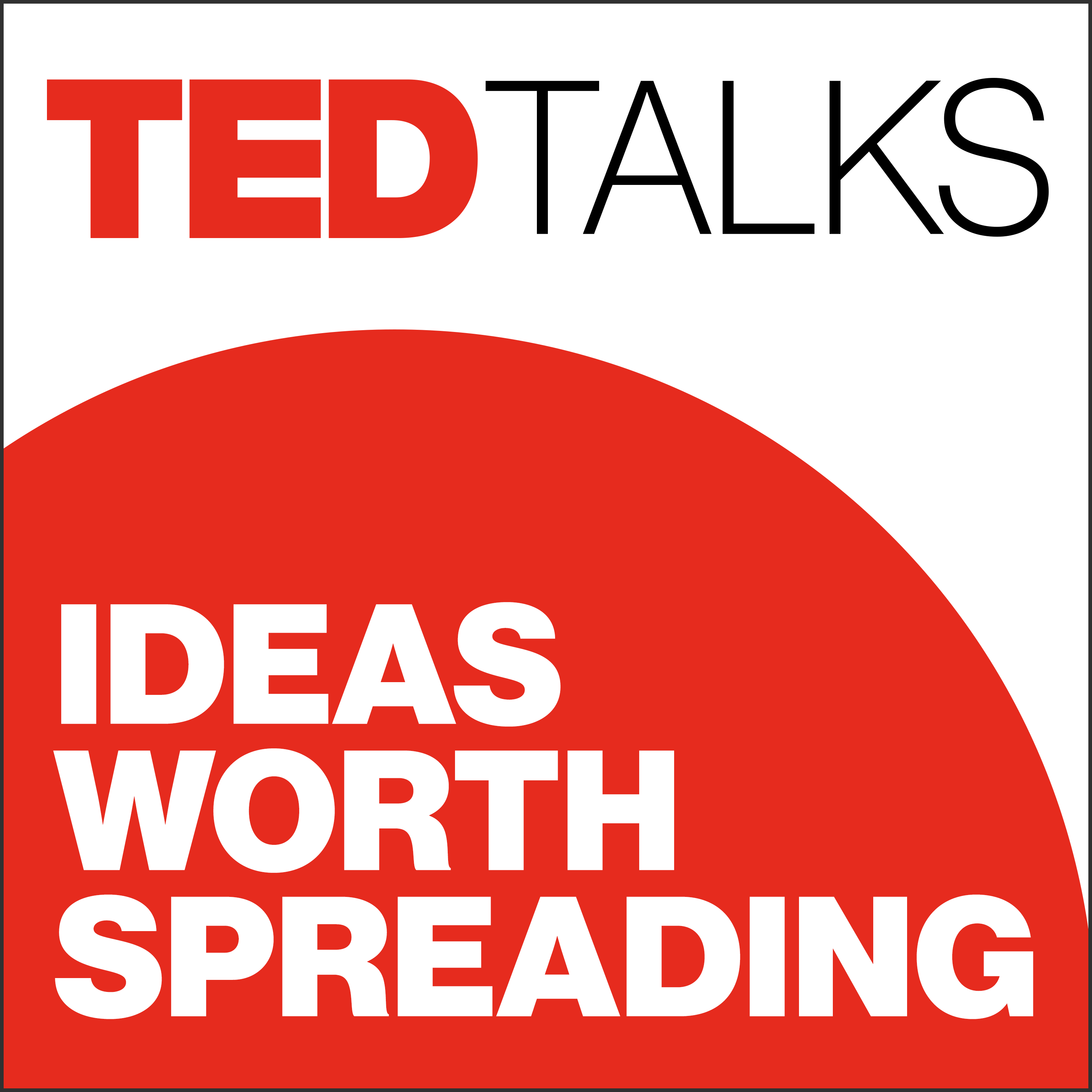
#981 - Josh Barnett
Josh Barnett is a mixed martial artist and professional wrestler who competes in the Heavyweight division of the UFC. Learn more about your ad choices. Visit podcastchoices.com/adchoices
14874 episodes from United States
Josh Barnett is a mixed martial artist and professional wrestler who competes in the Heavyweight division of the UFC. Learn more about your ad choices. Visit podcastchoices.com/adchoices
What do you want to be when you grow up? Well, if you're not sure you want to do just one thing for the rest of your life, you're not alone. In this illuminating talk, writer and artist Emilie Wapnick describes the kind of people she calls "multipotentialites" -- who have a range of interests and jobs over one lifetime. Are you one?Learn more about our flagship conference happening this April at attend.ted.com/podcast Hosted on Acast. See acast.com/privacy for more information.
If you told me a year ago that I’d be learning critical life and business lessons from the founder of a ketchup company, and that thirty to fifty thousand people would listen to our conversation, well, I’d have told you that’s impossible. But the fact that it is true proves many of the points laid out by this week’s guest Scott Norton, co-founder of Sir Kensington’s which was recently acquired by Uni-Lever. Sir Kensington’s, which makes “condiments with character” is no ordinary Ketchup company, and Scott is no ordinary founder. We talk about the most elemental aspects of business: product, relationships, sales, marketing, and culture. I love that we can do so through the lens of such a seemingly simple product, something that we use all the time with our families at a BBQ. Scott’s observations on culture, the importance of relationships in sales, and competitive edge are all memorable. But above all, I’ll remember his line: seek to learn that which cannot be taught. And I will continually return to the mental image of the Temple of Poseidon. Oh, and as a bonus we also talk about biking around Asia, which like all of Scott’s stories comes complete with thought provoking lessons. Enjoy this unique conversation with one of the most interesting people I’ve met on this journey. We begin with the history of ketchup. For comprehensive show notes on this episode go to http://investorfieldguide.com/norton For more episodes go to InvestorFieldGuide.com/podcast. Sign up for the book club, where you’ll get a full investor curriculum and then 3-4 suggestions every month at InvestorFieldGuide.com/bookclub. Follow Patrick on Twitter at @patrick_oshag Links Referenced They Call Me Supermensch: A Backstage Pass to the Amazing Worlds of Film, Food, and Rock’n’Roll (Movie) Books Referenced Getting to Yes: Negotiating Agreement Without Giving In How to Win Friends & Influence People They Call Me Supermensch: A Backstage Pass to the Amazing Worlds of Film, Food, and Rock’n’Roll (Book) Show Notes 2:40 – (First question) – A look at the history of ketchup 5:16 – The milestones of ketchup’s history in the US 10:26 – What were the early days like to compete in a market where the leaders have such a stronghold on the consumer 14:41 – Effective ways to negotiate 14:57 – Getting to Yes: Negotiating Agreement Without Giving In 16:32 – How may stages were there in the early products 19:04 – A look at kaizen and what it means to Scott 20:38 – Scandinavian business principles that they bring to the company 23:40 – As the company has grown, has Scott seen downsides to the stakeholder model especially when competing against larger companies that use the shareholder model 28:19 – How did they use outside capital in getting started 31:07 – What was the most memorable story from the early days of disrupting this legacy industry, especially as it relates to the sales of this product 33:30 – How to Win Friends & Influence People 33:58 – How do you create trust and show the benefits of your product in sales 37:48 – How culture started for the company, how it’s shifted since then and what competitive advantage the right culture creates 41:47 – Some of the best outcomes are the result of mindset and culture 43:28 – What new frontiers is Scott and the company looking at today 51:41 – The power of giving and how it will bring large returns, especially when you don’t expect them as part of the giving 53:04 – They Call Me Supermensch: A Backstage Pass to the Amazing Worlds of Film, Food, and Rock’n’Roll (Book and Movie) 55:37 – Look at Scott’s decision to bike around Asia and what he experienced during that time 1:02:49 – Best advice for someone in their early 20’s Learn More For more episodes go to InvestorFieldGuide.com/podcast. Sign up for the book club, where you’ll get a full investor curriculum and then 3-4 suggestions every month at InvestorFieldGuide.com/bookclub Follow Patrick on twitter at @patrick_oshag

When Andrés Ruzo was a young boy in Peru, his grandfather told him a story with an odd detail: There is a river, deep in the Amazon, which boils as if a fire burns below it. Twelve years later, after training as a geoscientist, he set out on a journey deep into the jungle of South America in search of this boiling river. At a time when everything seems mapped and measured, join Ruzo as he explores a river that forces us to question the line between known and unknown ... and reminds us that there are great wonders yet to be discovered.Learn more about our flagship conference happening this April at attend.ted.com/podcast Hosted on Acast. See acast.com/privacy for more information.
What is lobbying, really? Is it “white", "heavy-set" men "playing golf" and making arrangements in "smoke-filled back rooms”? It's not like that anymore, according to two lobbyists who join this episode of the a16z Podcast to pull back the curtain on...
We have seen advances in every aspect of our lives -- except our humanity," says Luma Mufleh, a Jordanian immigrant and Muslim of Syrian descent who founded the first accredited school for refugees in the United States. Mufleh shares stories of hope and resilience, explaining how she's helping young people from war-torn countries navigate the difficult process of building new homes. Get inspired to make a personal difference in the lives of refugees with this powerful talk.Learn more about our flagship conference happening this April at attend.ted.com/podcast Hosted on Acast. See acast.com/privacy for more information.
Robert Austin, a professor at Ivey Business School, and Gary Pisano, a professor at Harvard Business School, talk about the growing number of pioneering firms that are actively identifying and hiring more employees with autism spectrum disorder and other forms of neurodiversity. Global companies such as SAP and Hewlett Packard Enterprise are customizing their hiring and onboarding processes to enable highly-talented individuals, who might have eccentricities that keep them from passing a job interview — to succeed and deliver uncommon value. Austin and Pisano talk about the challenges, the lessons for managers and organizations, and the difference made in the lives of an underemployed population. Austin and Pisano are the co-authors of the article, “Neurodiversity as a Competitive Advantage” in the May-June 2017 issue of Harvard Business Review.
Cheyenne Cochrane explores the role that hair texture has played in the history of being black in America -- from the heat straightening products of the post-Civil War era to the thousands of women today who have decided to stop chasing a conventional beauty standard and start embracing their natural hair. "This is about more than a hairstyle," Cochrane says. "It's about being brave enough not to fold under the pressure of others' expectations."Learn more about our flagship conference happening this April at attend.ted.com/podcast Hosted on Acast. See acast.com/privacy for more information.
Judd Apatow is a film producer, writer, director, actor, and comedian. Look for him touring all over this summer, and check out his latest film "The Big Sick" opening June 23rd in New York & Los Angeles. Learn more about your ad choices. Visit podcastchoices.com/adchoices
Sinéad Burke is acutely aware of details that are practically invisible to many of us. At 105 centimeters (or 3’ 5”) tall, the designed world -- from the height of a lock to the range of available shoe sizes -- often inhibits her ability to do things for herself. Here she tells us what it's like to navigate the world as a little person and asks: "Who are we not designing for?"Learn more about our flagship conference happening this April at attend.ted.com/podcast Hosted on Acast. See acast.com/privacy for more information.
Ben and David are once again live on the scene, this time covering the biggest disruption in grocery since… well, sliced bread: Amazon’s $13.7B purchase of Whole Foods Market. We place this deal in context by diving deep into the long, intertwining history of grocery, tech and Amazon, from the infamous dotcom flameout Webvan (domain name now owned by Amazon) to its much more successful progeny Kiva Systems (acquired by Amazon in 2012) to current Silicon Valley unicorn Instacart (founded by former Amazon logistics engineer Apoorva Mehta). One thing is clear: for Amazon and Jeff Bezos, realizing the longterm vision of the Everything Store truly means building the everything store.Sponsors:WorkOS: https://bit.ly/workos25Sierra: https://bit.ly/acquiredsierraSentry: https://bit.ly/acquiredsentryAnthropic: https://bit.ly/acquiredclaude25More Acquired!Get email updates with hints on next episode and follow-ups from recent episodesJoin the SlackSubscribe to ACQ2Merch Store!© Copyright 2015-2025 ACQ, LLCTopics covered include:The origins of Whole Foods Market as “Saferway” in the late 70’s Austin, TX hippie scene, founded by CEO John Mackey (“the Steve Jobs of grocery stores”) and his then-girlfriend Renee Lawson HardyWhole Foods’ expansion through acquisition throughout the 80’s and 90’sThe company’s recent struggles with competition, leading to sales declines and attracting activist shareholder interest from Jana Partners Amazon’s acquisition of the company on June 16, 2017 for $13.7 billion, a 27 percent premium to the stock's previous day closing priceIn depth history and analysis of the four keys to understanding this deal: Webvan, Kiva Systems, AmazonFresh and InstacartFollowups: Walmart/Jet buys Bonobos for $310MThe Carve Out:Ben: Mark Zuckerberg’s 2005 CS50 guest lectureDavid: Exponent on Podcasting and Centralization
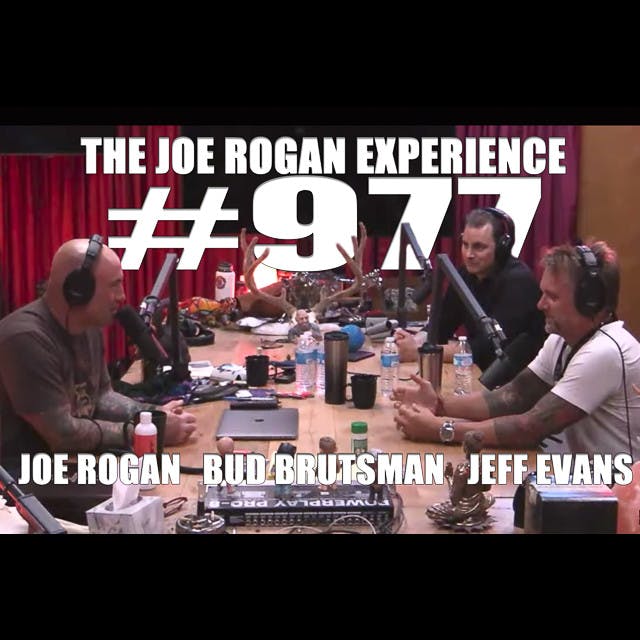
Jeff B. Evans is an adventurer, expedition leader, high-altitude medic, physician assistant, speaker, facilitator and tv personality. Bud Brutsman is a television show creator, executive producer, known for shows such as Overhaulin', Rides, and King of the Cage. Learn more about your ad choices. Visit podcastchoices.com/adchoices
Sixty-five million people were displaced from their homes by conflict and disaster in 2016. It's not just a crisis; it's a test of who we are and what we stand for, says David Miliband -- and each of us has a personal responsibility to help solve it. In this must-watch talk, Miliband gives us specific, tangible ways to help refugees and turn empathy and altruism into action.Learn more about our flagship conference happening this April at attend.ted.com/podcast Hosted on Acast. See acast.com/privacy for more information.
My guest this week is Andy Rachleff, who is the CEO of the automated investing platform Wealthfront. Andy was also a co-founder and long-time partner at Benchmark capital--one of the most interesting and successful venture capital firms in the world. We spend most of our conversation discussing venture capital investing and entrepreneurship. Andy coined the now ubiquitous term “product/market fit,” and has great insight into how investors and entrepreneurs should think about business. In that vein, we discuss both what we refer to as the value hypothesis: building a product or service that customers love, and the growth hypothesis: scaling that product or service to a large market. We finish our conversation by talking about Andy and his teams mission at Wealthfront, and this conversation is perfectly timed, as Wealthfront just released a new feature that allows investors to buy factor portfolios, similar to Smart Beta ETFs. Above all, I’ll remember Andy’s advice to “put the gun in the other person’s hand,” a strategy that we explore in the middle of our talk. For comprehensive show notes on this episode go to http://investorfieldguide.com/andy For more episodes go to InvestorFieldGuide.com/podcast. Sign up for the book club, where you’ll get a full investor curriculum and then 3-4 suggestions every month at InvestorFieldGuide.com/bookclub. Follow Patrick on Twitter at @patrick_oshag Books Referenced The Four Steps to the Epiphany The Lean Startup: How Today's Entrepreneurs Use Continuous Innovation to Create Radically Successful Businesses Millennial Money: How Young Investors Can Build a Fortune Diffusion of Innovations Crossing the Chasm: Marketing and Selling High-Tech Products to Mainstream Customers Show Notes 2:36 – (First question) – The partnership setup and how they came to be 5 equal partners 7:57 – Why benchmark would not take on the chairman role in companies they invested in 9:28 – What made John Doerr the greatest capitalist investor ever 11:59 – Looking at the venture process and what made it an attractive investment for Benchmark, using eBay as an example. 18:06 – If you are willing to help other people, without an expectation of return, it can create other opportunities 20:08 – Andy is asked to explain the idea of Product Market Fit, a term that he coined 22:18 – How does one go about finding a Product Market Fit 23:05 – The Four Steps to the Epiphany 23:19 – The Lean Startup: How Today's Entrepreneurs Use Continuous Innovation to Create Radically Successful Businesses 25:55 – What are the components of the Growth hypothesis 26:51 – Why you can learn more professionally from success vs failure 28:13 – What it’s like to shift from venture capitalist to operator/CEO 30:24 – The rate at which technology gets adopted and what will help Wealthfront 30:53 – Millennial Money: How Young Investors Can Build a Fortune 31:26 – Diffusion of Innovations 31:38 – Crossing the Chasm: Marketing and Selling High-Tech Products to Mainstream Customers 32:38 – What does it look like to innovate on top of current platforms 41:07 – Will platforms like Wealthfront help to democratize access to private markets 44:23 – Kindest thing anyone has done for Andy Learn More For more episodes go to InvestorFieldGuide.com/podcast. Sign up for the book club, where you’ll get a full investor curriculum and then 3-4 suggestions every month at InvestorFieldGuide.com/bookclub Follow Patrick on twitter at @patrick_oshag
Anab Jain brings the future to life, creating experiences where people can touch, see and feel the potential of the world we're creating. Do we want a world where intelligent machines patrol our streets, for instance, or where our genetic heritage determines our health care? Jain's projects show why it's important to fight for the world we want. Catch a glimpse of possible futures in this eye-opening talk.Learn more about our flagship conference happening this April at attend.ted.com/podcast Hosted on Acast. See acast.com/privacy for more information.
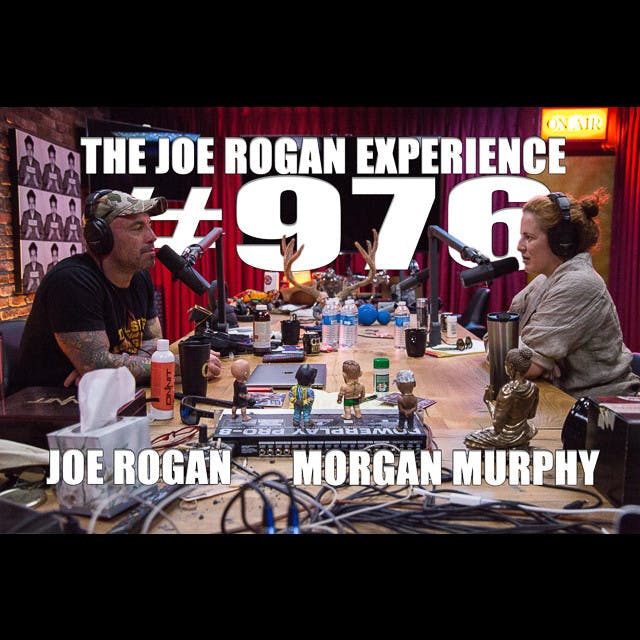
Morgan Murphy is a stand-up comic, comedy writer, and actress. Learn more about your ad choices. Visit podcastchoices.com/adchoices
"We're always fighting the last war" -- that's a phrase historians like to use because policymakers and others tend to be so focused on the threats they already know, and our mindsets and organizational structures are oriented to respond that way as ...
This episode is currently only available as audio. Joe does a podcast with friends Ben O'Brien, John Dudley, Sam Soholt and Shane Dorian while on a bow hunting trip in Hawaii. Learn more about your ad choices. Visit podcastchoices.com/adchoices
Nearly every cybersecurity discussion/presentation follows this formula: We don’t know what we’re doing; the bad guys are getting smarter; our defenses are getting worse; everything's more connected than ever; we’re heading towards a digital . But ev...
Aspirations are rising as never before across the world, thanks in large part to smartphones and the internet -- will they be met with opportunity or frustration? As President of the World Bank, Jim Yong Kim wants to end extreme poverty and boost shared prosperity for all. He shares how the World Bank is working to improve the health and financial futures of people in the poorest countries by boosting investment and de-risking development.Learn more about our flagship conference happening this April at attend.ted.com/podcast Hosted on Acast. See acast.com/privacy for more information.
Explore the diverse voices and perspectives from podcast creators in United States. Each episode offers unique insights into the culture, language, and stories from this region.