🇨🇳 China Episodes

2266 episodes from China

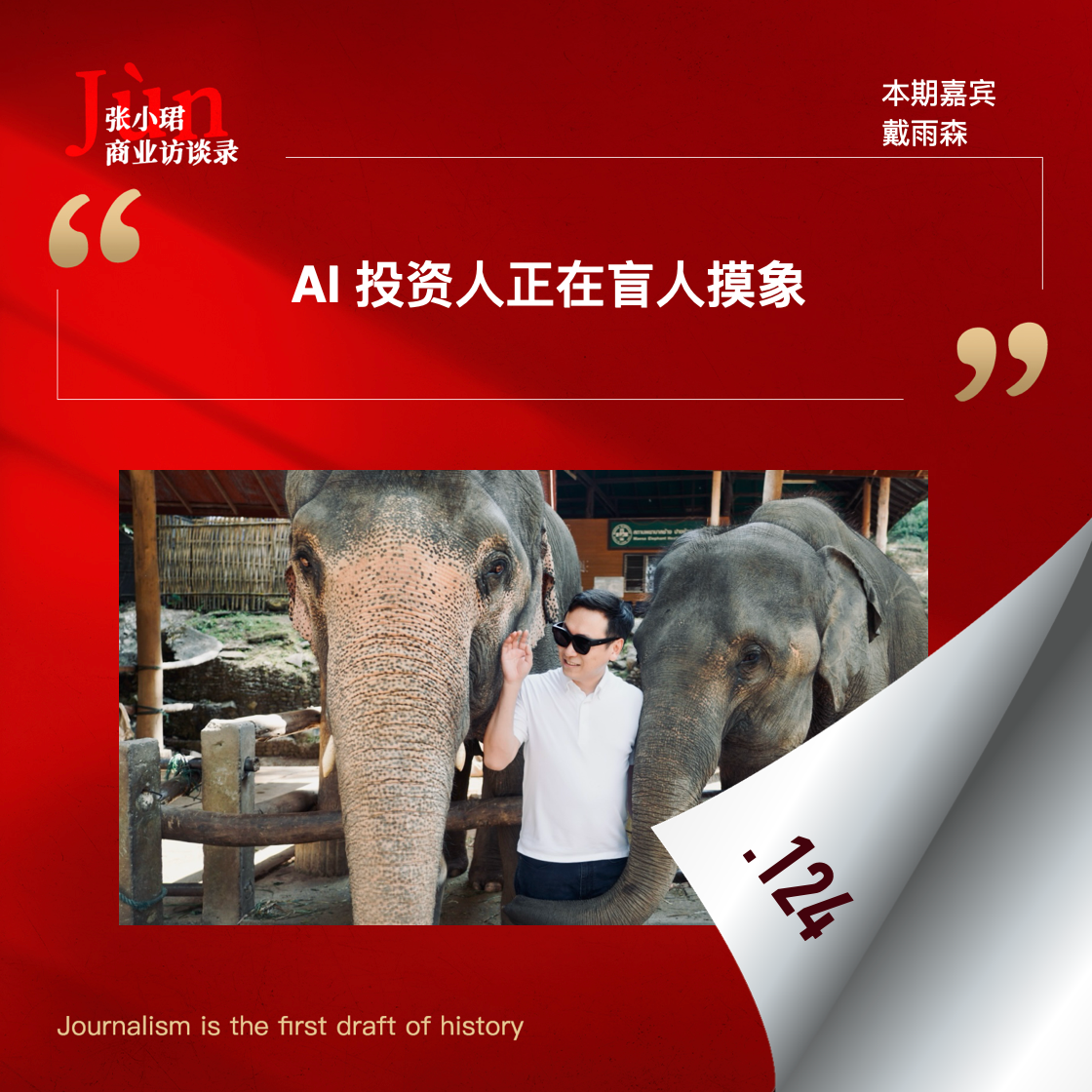
124. Year-End Review [Standing Outside of 2025] A conversation with Dai Yusen about 2026 Expectations, The Year of R, Correction, How We Bet

From 张小珺Jùn|商业访谈录

Unconsciously, we have arrived at the last month of 2025. Amidst Beijing's first snow, we hope to reflect and look forward with everyone through a series: ["Beyond 2025"]. Today's guest is Dai Yusen, Managing Partner at ZhenFund. In episode 122, **Zhu Xiaohu claimed there would be no bubble within three years, calling the bubble theory pure nonsense, and urged entrepreneurs to advance at full speed in 2026.** **Yusen brings a fresh perspective today. In his view, the keyword for 2026 is "The Year of R"—Return and Research will once again become important. In a sense, 2026 will be a year of reality and recalibration.** **02:00 Review of 2025** 02:00 Progress from the model perspective: Thinking Time Scaling, represented by o1, has led to a significant improvement in model capabilities. OpenAI, Anthropic, and Google's flagship models are closely competing, each with unique characteristics, leading to rotating expectations and narratives. Chinese model companies have dominated the open-source ecosystem over the past year. 28:13 Progress from the application perspective: The first year of Agents means the problem won't be solved in a year; it's still an Early Market, needing to cross the chasm. Agent comes from Agency; the key is autonomy, saving human time, and being able to complete novel tasks and solve unseen problems. 52:31 How many projects did ZhenFund invest in in 2025? Around 20. Comparing the valuations of Chinese and US AI companies, Chinese companies hold high option value for the global market: Thinking Machine's angel round valuation, without a product, already equals the total valuation of Chinese AI companies. Model companies: Mistral 14b, Kimi 4b. Mistral itself doesn't focus much on pre-training anymore; benchmarks are essentially against Kimi. Application companies: In the US, a company like Manus, achieving 100m ARR in a few months, with dozens of percentage points gross margin and 20% MoM growth, should be valued at 3-5bn. **01:03:15 Forecast for 2026: The Year of R** **The Year of R: Return, Research, Remember, Multimodal Reasoning** **01:03:15 Return:** Why is Return important? ROI: The past 3 years have been about investment, as everyone was attracted by potential big returns. But now, as I (investment) gets larger, there's increasing focus on the realization of R (return), because R is what drives future I. Why do we believe there will be increased focus on return in 2026? Models: Model capability improvement is the most essential driving force of this wave of AI revolution, but model capability improvement is slowing down; leading US labs have much higher investments (Capex, labor, etc.), but this cannot prevent Chinese models from low-cost follow-up. Scaling Law cannot be simply understood as "huge investment leads to miracles." Applications: Application narratives have evolved from AGI to three main current lines; dreams are shrinking. Subscription model: It's difficult to raise prices for ordinary users; the low-hanging fruit has been mostly picked, and competition is intensifying. Advertising + E-commerce: Firstly, a large part is existing market share distribution; then, for new forms of applications, the speed is not as fast. Usage models like AI Coding/Image Gen: Usage will increase, but token prices will also decrease. Non-frontier intelligence will quickly become flat rate; only the most SOTA tasks can charge by usage. Previously valuable tasks will become less valuable; replacing many programmers doesn't mean earning those programmers' salaries. Enterprise services: This early market segment is limited in size, with many early adopters but retention may not be great. Microsoft Copilot continues to underperform expectations; large companies don't adopt new technologies that quickly. Conclusion: We need to achieve the accelerated GDP growth Satya mentioned, expanding the pie is true AGI, e.g., AI creating new drugs, discovering new knowledge, etc. Investment: US infrastructure construction is slow now, computing power depreciates fast, and labor costs are high, so returns need to be seen quickly. Market setup: At the end of last year, expectations were not high, but we saw rapid growth in ChatGPT, and certainty in Coding and Agentic brought application opportunities. Now, expectations are very high, investments are huge, but revolutionary new capabilities are not seen on the model side in the short term, and new paradigms are still brewing. Implications for entrepreneurs? The time for negative margin for growth is passing; quality growth is needed. The very loose financing environment (in the US) might slow down. **01:16:13 Research:** **new paradigm:** AI history has always seen step-function improvements; new paradigms are needed to bring about large increases in AI capabilities again. Ilya: scaling and research alternate; now it's time for research again. Currently, Online Learning, world models, etc., are important research directions. **neo labs:** Thinking machines, SSI, Reflection, to recent Humans&, Periodic, Isara, etc. Because engineering and product development are very different from research, a relaxed environment, a culture of free exploration, without time and KPI constraints, is needed. Everyone hopes neo labs can explore new paths that differentiate from current leading model companies. **new benchmark:** Current benchmarks can no longer effectively reflect the differences in AI capabilities, nor are they suitable as model training targets. How to measure a model that exceeds human performance in most areas? Yao Shunyu pointed out that the second half has arrived; new benchmarks are needed. Implications for entrepreneurs: Pay attention to the progress of frontier research; breakthroughs in research may unlock new application opportunities. **01:21:00 Remember (Memory):** Memory is a key differentiator for AI applications; current Memory capabilities have significantly improved ChatGPT's retention. Current Memory is still basically retrieval-based, not achieving true understanding. This area is also a fiercely contested battleground for research; if done well, it will bring further improvements. Proactive Agent: Memory and context are needed to unlock Proactive Agent opportunities, and Proactive Agents are very important because human active use of AI has limited intent; AI actively serving people can create 10x scenario opportunities. **01:24:06 Multimodality:** Visual Reasoning may have major breakthroughs; humans are essentially Pixel Machines, understanding the world through visual input. One can pay attention to the performance improvement of Zerobench, a Visual Reasoning Benchmark; current leading models are still basically below 10 points. Nano Nanana means image generation has entered a usable era like Sonnet 3.5. So what will be the Cursor of Image-gen? GPT-3.5 unlocked ChatGPT, Sonnet 3.5 unlocked Cursor, Sonnet 3.7 unlocked Manus. What application opportunities will Nano Nanana/Veo unlock? Using Imagegen/Videogen inside ChatGPT is clearly not a comfortable experience. Voice is a very important opportunity: better, more natural interaction, understanding user context. Plaud, Granola, Wispr flow/Typeless, Suno? **01:30:29 AI Bubble** From the secondary market perspective, there might be a major correction next year, possibly in the second half. The book "Boom: Bubbles and the End of Stagnation" mentions two types of bubbles: good bubbles and bad bubbles. If a correction is expected, what will be the changes in investment strategy next year? How will the secondary market transmit to the primary market? How to view Zhu Xiaohu's statement: "No bubble for at least three years," "Their arguments are pure nonsense"? "Personally, I am completely out of the market right now." The valuation gap between China and the US is expected to narrow. **01:47:38 Entrepreneurship Changes and Advice** Based on the "Year of R" theory, what advice for entrepreneurs? How to judge founders in the AI era? What's the biggest difference from the internet era? Entrepreneurship is like F1 racing. Any projects missed in the past two years? Which directions have seen incremental growth due to AI? What are good interactions besides chatbots? This year, I personally talked to 150 projects, only invested in 2. **02:18:31 Also Talk About Life** Reflections on personal life: This year's reading, thinking, and life. Reflections on VC: Young investors need to differentiate themselves. Reflections on ordinary people: Learn to live in intelligence abundance. **02:29:50 Final Q&A** **Last question: You proposed the Year of R, and you've cleared your secondary market stocks. So, will you short them?** **02:36:10 At the end of this episode, I've included a casual chat with Yusen before the recording. We commented on some frequently discussed AI companies. If you find it interesting, you can continue listening.** **02:36:30** OpenAI 02:46:38 Google (I don't think Gemini can stop ChatGPT's growth, nor do I think Google is out of danger.) 03:06:36 Anthropic 03:11:05 Manus 03:19:47 Thinking Machines Lab, Safe Superintelligence Inc. Year-end Review ["Beyond 2025"]: 《122. Zhu Xiaohu's Third Installment of Realist Stories: The AI Feast and Bubble》 [More Information] Disclaimer: This content does not constitute investment advice.

Original title: 124. 年终对话【站在2025年之外】和戴雨森聊2026年预期、The Year of R、回调、我们如何下注

Original description: <figure><img src="https://image.xyzcdn.net/Flo18nNUSP7OUNlTf8UgCdHxio6O.jpg" /></figure><p>不知不觉,我们来…

Experience-driven Growth: Peet's, Atour, Genghis Wood

From 疯投圈

As platform traffic peaks and online growth slows, more and more brands are starting to return offline, rebuilding user trust with "tangible, hands-on" experiences. In this episode, we start with several representative case studies to analyze how brands achieve dual-wheel driven growth through deep integration of online and offline channels. Peet's Coffee: How do over 300 offline stores feed back into online retail? Mr. Savage and Chicecream: Both are high-priced ice creams, yet Chicecream ended in bankruptcy. Why can Mr. Savage rapidly expand nationwide and maintain a high premium? Does Mr. Savage's signature "made-to-order at specific times" experience create new value for the ice cream industry? Atour: Sleep products are an extremely difficult area to build a brand in. What were the key nodes for Atour to transition from "hotel experience" to "online bestseller"? Why is it said that although retail business is growing rapidly, the on-site experience remains Atour's foundation? Yuanshi Muyu: With the real estate downturn and a general decline in the furniture industry, how did a furniture brand that started on Taobao rapidly grow to surpass IKEA China, achieving ¥20 billion in annual sales? What did this low-key furniture brand get right in its core business model? Crazy Ones Here&rsquo;s to the crazy ones. The misfits. The rebels. The troublemakers. The round pegs in the square holes. The ones who see things differently. They&rsquo;re not fond of rules, and they have no respect for the status quo. You can quote them, disagree with them, glorify or vilify them. About the only thing you can&rsquo;t do is ignore them. Because they change things. They push the human race forward. While some may see them as the crazy ones, we see genius. Because the people who are crazy enough to think they can change the world, are the ones who do. Recommended Reading Atour's "Four Classics" mentioned in this episode: "Giving Your All," "Putting Your Heart Into It," "Alibaba Iron Army," and "Behavioral Design" can all be found in the product category of Crazy Capital's WeChat Video Account. Thank you for your purchase to support the Crazy Capital program. Crazy Capital 10th Anniversary Celebration We plan to hold a small New Year's Eve event in Dali, Yunnan, at the end of December to celebrate Crazy Capital's 10th anniversary. For event information and registration inquiries, please search for the "Crazy Capital" official account on WeChat and send the keyword "Dali." Membership Community Crazy Capital operates a membership community where you can meet like-minded friends and find business partners. Each year, we hold member-exclusive offline events in four cities: Beijing, Shanghai, Shenzhen, and Guangzhou. Small member dinners and gatherings are also held periodically in other cities. Through face-to-face communication, you can further deepen your understanding with other members and facilitate cooperation. Members can also read "Crazy Capital Text Selections," which are manually re-organized and edited from Crazy Capital podcast content, suitable for reading habits and convenient for looking up charts, data, views, and conclusions mentioned in the programs. Search and follow the "Crazy Capital" official account on WeChat and send the keyword "Membership" to learn more and join the community. Business Cooperation For business cooperation, please send an email to [email protected]

Original title: 体验化增长:Peet's、亚朵、源氏木语

Original description: <p>当平台流量见顶、线上增长趋缓,越来越多品牌开始重新回到线下,用「看得见、摸得着」的体验重建用户信任。 本期节目我们从几个代表性案例出发,分析品牌如何实现线上线下深度融合的双轮驱动增长。</p>…

Pei Minxin: Why Xi Jinping's emergence is a high-probability event?

From 不明白播客

For a long time, the West generally believed that China's economic development would eventually lead to political democratization. However, the reality after forty years of reform and opening-up is precisely the opposite: after Xi Jinping came to power, China not only did not continue to move towards openness but rapidly returned to a repressive totalitarian system.In his new book, "The Broken China Dream," Professor Minxin Pei puts forward an important argument: today's resurgence of totalitarianism is not accidental, but the inevitable outcome of the internal logic of forty years of reform and opening-up. In this episode, we will review with Professor Pei: Why did China's political system transformation fail? Why are Xi Jinping-style leaders almost inevitable under this system? Why did economic growth in China not promote democracy, but instead weakened the impetus for reform? How was the massive totalitarian machine gradually restarted? And how did the "China Dream," once full of high hopes, gradually fall apart?Welcome to donate to the Bumingbai Podcast by clicking here: https://www.bumingbai.net/donation/Timestamps:00:53 The journey of studying China: From cautious optimism to "The Broken China Dream"04:03 Three political reform threads in the 1980s: Party institutionalization, social loosening, and top-level design08:24 Why did the political reform blueprint die prematurely?09:48 Why was "institutionalization" within the Party just a house of cards?13:09 Why is democratic transition difficult for China's totalitarian system?19:59 How does economic development instead hinder democracy? How does the CCP use growth to feed its rule?26:03 The rise of Xi Jinping: An accidental choice or a high-probability event under the system?31:00 Deng Xiaoping didn't dismantle the "totalitarian machine"; Xi merely re-energized it35:32 From "hide your strength, bide your time" to wolf warrior and charm diplomacy: The difference between Deng Xiaoping's and Xi Jinping's foreign policy41:39 Two different "China Dreams"44:52 A reminder to American and Chinese elites: Don't be misled by the "China Model"48:01 Guest recommendationsGuest Recommendations:Ruixue Jia, Hongbin Li, Claire Cousineau "The Highest Exam" (Gaokao)Jerome Alan Cohen "Eastward Westward" (Dongxing, Xixing)Netflix series "Turning Point" (Zhuanzhedian)Related Links:Minxin Pei "The Broken China Dream: How Reform Revived Totalitarianism"EP-141 Minxin Pei: Why Does Xi Jinping's Anti-Corruption Campaign Lead to More Corruption? Hosted on Acast. See acast.com/privacy for more information.

Original title: 裴敏欣:为何习近平的出现是大概率事件?

Original description: <p>长期以来,西方普遍相信中国的经济发展终将带来政治上的民主化。然而在改革开放四十年之后的现实却截然相反:习近平上台后,中国不仅没有继续走向开放,反而快速回到重压的极权体制。</p><br /><…

123. 3-hour interview with ONE2X founder Wang Guan: Generative systems, no intermediaries earning a profit, and platform power distribution

From 张小珺Jùn|商业访谈录

Today's guest is an entrepreneur, Wang Guan, co-founder and CEO of ONE2X. Their current product is the AI video generator Medeo. Wang Guan is a product manager-turned-entrepreneur. I've known him for a long time, since he left Kimi to start his own business. Prior to that, he was Kimi's Model Product Lead. (Oh, by the way, the previous Kimi product person who left and came to our show was Ming Chaoping.) Beyond how application-oriented companies in the AI era build products and organizations, as a content creator myself, I was also very curious to discuss with him many topics concerning **new era content platforms, generative systems, and the power distribution among AI, creators, and platforms.** In 2025, we look forward to making progress together with AI! 02:00 Self-introduction, product manager experience, and the start of entrepreneurship 28:39 First time hearing "compression is intelligence," greatly impressed 32:25 The first person to leave Moonshot AI to start a business 37:11 Data is the first principle of intelligence; data determines the boundaries of intelligence 42:23 Three stages of data: public domain data > domain-specific data > product-native data 01:05:36 Why choose the video generation direction? 01:26:15 How will AI reshape the existing internet landscape? 01:30:50 Broad AGI vs. Narrow AGI 01:41:59 The boundaries between application companies and model companies will blur 02:01:44 Companies in the AI era will ultimately all be generative system companies 02:25:49 As the center of power permeates towards consumers, how will platforms and creators evolve? 02:38:11 What is the essential difference between generative systems and recommendation systems? "No middlemen earning a price difference." 02:50:34 How should AI products be made? The North Star metric is the degree of intelligence 03:05:45 A remote-first organization 03:20:18 Future platforms will evolve from distribution platforms to production and sales platforms Our past interviews with AI application companies: "95. A 3-Hour Interview with Manus Founder Xiao Hong: The World Is Not a Linear Extrapolation; Be an Important Variable in the Game" "103. Lovart Founder Chen Mian Reviews Two Years of Application Entrepreneurship: This Moment Is So Awesome!! Hahahahaha" "101. A 3-Hour Interview with YouWare Founder Ming Chaoping: Today's Agents Are Like Gorillas Who Just Picked Up a Firewood Stick" Other episodes mentioned in this episode: "59. Talking with Yang Zhilin About a Year of Large Model Entrepreneurship: The Incremental Ideal of Humanity, Probable Non-Consensus, and Sora" "113. A Conversation with Yang Zhilin After 1 Year: K2, Agentic LLM, Brain in a Vat, and "Standing at the Beginning of Infinity"" "115. A 3-Hour Interview with OpenAI's Yao Shunyu: 6 Years of Agent Research, Humans and Systems, The Boundaries of Engulfment, A World Both Unipolar and Diverse"

Original title: 123. 对ONE2X创始人王冠3小时访谈:生成系统、没有中间商赚差价、内容平台的权力分配

Original description: <figure><img src="https://image.xyzcdn.net/Flo18nNUSP7OUNlTf8UgCdHxio6O.jpg" /></figure><p>今天的嘉宾是一位…

Follow-up on the poisoned dog case: Sentencing today, defendant receives 4-year sentence | Story Replay

From 故事FM

Story FM ❜Story ReplayToday, Beijing's first criminal public prosecution case involving pet poisoning was pronounced in the first instance at the Chaoyang District People's Court in Beijing. The defendant, Zhang Mouhua, was found guilty of the crime of deploying dangerous substances and sentenced to 4 years in prison.Over the past three years, this case has undergone 9 postponements before finally reaching a verdict. Behind this outcome lies the relentless effort of the party involved, Penny, the mother of the West Highland White Terrier Papi.In 2024, we interviewed Penny, who recounted the entire case's occurrence and prosecution process. Today, we are replaying this episode for everyone to understand the full story.In modern society, pets, or companion animals, have become important members of many families. They accompany us through joy and sorrow, becoming a warm comfort in our lives. Data from the "2023 Pet Market Consumption White Paper" shows that the number of pet-owning households in China has reached 105.65 million (105,650,000 households) and continues to rise.As pets become more prevalent, conflicts surrounding them are also endless, including many cases of malicious harm, abuse, and even poisoning of pets.Today's storyteller, Penny, unfortunately encountered such an incident. Before her dog Papi, who had accompanied her for 13 years, was poisoned to death, Penny was a journalist focusing on livelihood news and a key employee at a leading domestic film and television company. Since Papi's death, Penny has had only one name: West Highland Papi's Mom.For two years, Penny almost gave up everything, with the sole aim of putting the poisoner in prison./Staff/Storyteller | Penny (West Highland Papi's Mom)Host | @StoryFM Kou AizheProducer | Jin SongScript Editor | Jin SongSound Design | Zhao LijieOperations | Ming MingUse your voice to tell your story.Story FM is an audio program featuring first-person accounts. You can listen to our program on the following channels:Apple Podcasts | NetEase Cloud Music | XimalayaQingting FM | Lizhi FM | Lazy AudioXiaoyuzhou | QQ Music | Kugou Music | Kuwo MusicSpotify | YouTube MusicBusiness Cooperation: [email protected] Official Account: Story FM (ID: story_fm)Sina Weibo: @StoryFM_StoryFMPersonal WeChat ID: gushi_fm02

Original title: 爱犬被毒死案后续:今日宣判,被告获刑 4 年 | 故事重播

Original description: <p>故事FM ❜故事重播</p><p>今天北京首例宠物中毒刑事公诉案,在北京市朝阳区人民法院一审宣判。被告人张某华构成投放危险物质罪,被判处有期徒刑 4 年。</p><p>这个案子在过去的三年里,…

122. The third installment of Zhu Xiaohu's Realism Story: The Feast and Bubble of Artificial Intelligence

From 张小珺Jùn|商业访谈录

In March 2024 and February 2025, I updated Zhu Xiaohu's Chinese Realism AIGC story twice. Now, almost a year has passed again.Standing at the tail end of 2025, **is there a bubble in the AI industry? Will the bubble burst? Are investors optimistic about expectations for 2026? Is now still a good time to invest in Nvidia and OpenAI? — This is the third installment of Zhu Xiaohu's Realism Story.**In the last month of 2025, I still want to say to everyone: We look forward to progressing together with AI!01:40 OpenAI becoming more realistic: You can tell by Sam Altman; he barely mentions AGI this year, right?05:46 The battle for AI's super entry point: It's bound to be a battle for super entry points, and a battle for daily active users, a battle for usage time.08:34 No bubble in three years: I think all the arguments they make are nonsense.13:24 Do you hold Nvidia, OpenAI?16:16 Everyone underestimates DeepSeek: Without DeepSeek, human AI might be controlled by a few private companies.19:06 Deviate 15 degrees from the consensus, and the cost-effectiveness immediately stands out, right?24:41 Three streets away from big tech, three streets away from big tech, right?30:21 As everyone knows, whether I invest or not, it takes ten minutes.38:30 Today's VC consensus is too concentrated: Every project is a Club Deal, each equity stake is very small, so how do you make money? — GPs can't make big money, and LPs are also very unhappy.40:50 Playing a mobile game like "Honor of Kings," half an hour or twenty minutes is enough for a session."62. The Zhu Xiaohu you wanted is here""90. Zhu Xiaohu is back: The 1-Year Series of Chinese Realism AIGC Stories"【More Information】This episode is jointly presented by Language is the World Studio and Weibo Finance.Disclaimer: This content does not constitute investment advice.

Original title: 122. 朱啸虎现实主义故事的第三次连载:人工智能的盛筵与泡泡

Original description: <figure><img src="https://image.xyzcdn.net/Flo18nNUSP7OUNlTf8UgCdHxio6O.jpg" /></figure><p>2024年3月、…

E869. Youth kidnapped by the "white, young, thin" aesthetic: How is the girl who developed an eating disorder for weight loss doing now?

From 故事FM

Story FM ❜ Episode 869Editor's Note by Aizhe:This year, an epidemiological survey on eating disorders conducted by Peking University, covering over 40,000 adolescents nationwide, showed that more than one-fifth (21.18%) of adolescents in China are at suspected risk of eating disorders.What are Eating Disorders (ED)? Simply put, these are mental illnesses where patients typically over-focus on their weight, body shape, and food, leading to abnormal eating behaviors such as anorexia, bulimia, or compulsive overeating.Especially anorexia nervosa, it has the highest mortality rate among all mental illnesses, reaching 10%. Patients may die from multi-organ failure due to extreme malnutrition.Disturbingly, there is a clear trend of younger ages among eating disorder patients. By 2022, minors under 18 accounted for as high as 77.6% of all diagnosed anorexia nervosa patients.Why does dieting sometimes lead to illness? How does this illness evolve? How severe can it get? And how is it treated? Today, we found 3 narrators with different experiences. After listening to their stories, perhaps you can find the answers you're looking for./Staff/Narrators | Zhangzhang, Xiaotu, ZichenHost | @StoryFM AizheProducer | Jin SongScript Editor | Jin SongSound Design | TudouOperations | MingmingUse your voice to tell your story.Story FM is an audio program featuring first-person narratives. You can listen to our program on the following channels:Apple Podcasts | NetEase Cloud Music | XimalayaQingting FM | Lizhi FM | Lanren TingshuXiaoyuzhou | QQ Music | Kugou Music | Kuwo MusicSpotify | YouTube MusicBusiness Cooperation: [email protected] Official Account: Story FM (ID: story_fm)Sina Weibo: @StoryFM_StoryFMPersonal WeChat: gushi_fm02

Original title: E869.被「白幼瘦」绑架的青春:为减肥患上进食障碍的女孩,现在怎么样了?

Original description: <p>故事FM ❜ 第 869 期</p><p>爱哲按:</p><p>今年,北京大学一项覆盖了全国 4 万多名青少年的进食障碍流行病学调查显示,中国有超过五分之一(21.18%)的青少年存在疑似进食…

Zhu Rikun: The Fantasy and Disillusionment of Chinese Independent Cinema

From 不明白播客

The first IndieChina Film Festival, originally scheduled to be held in New York this November, was abruptly canceled two days before its opening. Organizer Zhu Rikun received warnings from across the ocean: not only his father's trembling instructions over the phone, but also withdrawal requests from dozens of participating directors in China who were forced to send them. Some were threatened with career ruin, others had their families harassed, and fear spread along the internet cables from Beijing to New York. Zhu Rikun is an important promoter in the Chinese independent film scene, having founded Phenomenon Studio and the Li Xianting Film Fund, building platforms for independent directors to connect, and organizing multiple Beijing Independent Film Festivals. He witnessed the era when Chinese independent cinema grew wildly in the cracks, and also personally experienced the devastating raids by authorities on private film archives after 2014. To escape this suffocating control, he moved to New York, but never imagined that ten years later, the long arm of censorship could still precisely stifle a small screening event across the ocean. To protect the creators in China, Zhu Rikun painfully canceled the festival, but he insisted on going to the empty cinema every day to take a photo as a silent protest. Why would an independent film festival on the fringes of New York provoke such a strong reaction from the Chinese authorities? When "running" out of China no longer means safety, what dilemmas do overseas cultural diaspora communities face? In a time when Chinese independent cinema is almost withering away, what is the meaning of persisting in documentation and screening? In this episode, Zhu Rikun will share with us the absurd reality behind this canceled film festival, and his tenacious watch over the future of Chinese independent cinema. Welcome to donate to the Bumingbai Podcast: https://www.bumingbai.net/donation/ Call for Interviews: Meituan's "Starting Another Life" promotional video was taken down amidst controversy. Among the 84 million "new employment forms" workers as officially defined, the so-called "new life" is not a choice at all, but often a helpless self-rescue after white-collar unemployment and devaluation of academic credentials. We are looking for one in 84 million: if you were once a professional or a university student, and are now working as a Didi driver or food delivery person, please write to [email protected] Timeline: 00:00 intro 02:03 The ins and outs of the festival's cancellation: a late-night call from his father 06:45 Extreme panic, a wave of film withdrawals by domestic directors 11:02 Collective punishment mechanism: not just directors, but even guests, hosts, and even those just helping out were harassed 14:38 Call for submissions surprise: despite rapidly shrinking creative space, 182 submissions were still received 19:14 Encountering an anonymous letter from "New York Chinese students": spontaneous "Little Pinks" or official interference? 21:19 Silent protest: taking a photo every day at the empty cinema 28:27 A look back at twenty years of Chinese independent film festivals: never truly lenient 30:09 The 2004 Millennium Monument incident: expelled right after opening, audience locked out 39:42 The 2014 crackdown: Li Xianting Film Fund raided, precious archives missing 46:27 Reasons for leaving Beijing: surveillance at his doorstep and concern for his daughter 50:04 Original intention for organizing the festival: to create an "exile" film festival based in China, but only able to be held in New York 56:32 In an era where "continuous creation is impossible," what is the meaning of visual documentation? 01:03:14 Guest recommendations Guest Recommendations: Wang Xiaobo: The Golden Age Trilogy Edgar Allan Poe: Short Stories Collection Wolfgang Becker: Good Bye, Lenin! Related links: IndieChina Film Festival official website: https://indiechina.org/ Hosted on Acast. See acast.com/privacy for more information.

Original title: 朱日坤:中国独立电影的幻想与破灭

Original description: <p>原计划于今年11月在纽约举办的首届 IndieChina 电影节,在开幕前两天戛然而止。发起人朱日坤收到了来自大洋彼岸的警告: 不仅仅是父亲在电话里颤抖的嘱咐,更是数十位身处国内的参展导演被迫…

Tales from the Border: North Korean Casinos, Border-crossers, and the Century-Long Migration of Ethnic Koreans | Story FM Video Podcast

From 故事FM

Hello everyone, I'm Aizhe.Listeners who follow us should have already noticed that since April this year, we launched a brand new video podcast series called "Noise Reduction Zone". In each episode, I will chat with guests about a topic worth delving into. The first episode was about China in the 80s/90s through the eyes of Italian photographer Lao An, who, from a foreigner's perspective, captured life and scenes during the early days of reform and opening up. The latest guest is Professor Song Nianshen from Tsinghua University's Department of History, who chatted with me about the China-North Korea border, frontier ethnic groups, especially the story of the Korean ethnic group, providing us with a richer perspective on how we view our own identity.The "Noise Reduction Zone" video podcast will be updated independently on video platforms. We welcome everyone to follow Gushi FM!To sign up for the Shanghai open mic event on December 6th, scan below

Original title: 边境往事:朝鲜赌场、越境者与朝鲜族的百年迁徙|故事FM 视频播客

Original description: <p>大家好,我是爱哲。</p><p>关注我们的听众应该已经发现了,从今年4月开始,我们推出了全新的视频播客栏目「降噪区」。在每一期节目里,我会和嘉宾聊一个值得深入探讨的话题。第一期是意大利摄影师老…

Personal Investment Risk Management

From 疯投圈

Towards the end of each year, everyone wants to take stock of their finances: Can gold still be bought? Which stock is good to buy? How to invest the money on hand? After the release of Crazy Capital Circle Episode 120 about personal asset allocation, many friends messaged us hoping to discuss more specific directions. In this episode, we approach from the perspective of risk management, exploring how to find balance in the impossible triangle of return, risk, and liquidity. Why couldn't the management of Xibei and Arc'teryx, who recently faced troubles, see the potential risks beforehand? Why did Alibaba enjoy an almost double share price bonus because of DeepSeek? How should the "barbell strategy" for personal investment be understood? Is gold a high-risk or low-risk asset? Why are low-risk and stable-return assets so scarce? What's the deal with the recently popular Hong Kong savings insurance? Who is it suitable for? Crazy Capital Circle 10th Anniversary Celebration We plan to hold a small New Year's Eve event in Dali, Yunnan, at the end of December to celebrate the tenth anniversary of Crazy Capital Circle. For event information and registration inquiries, please search for the "疯投圈" (Crazy Capital Circle) service account on WeChat and send the keyword "大理" (Dali). Member Community Crazy Capital Circle operates a member community where you can meet like-minded friends and find business cooperation partners. Every year, we hold members-only offline events in Beijing, Shanghai, Shenzhen, and Guangzhou, and irregularly host small member dinners and gatherings in other cities. Through face-to-face communication, you can further deepen your understanding with other members and facilitate cooperation. Members can also read "Crazy Capital Circle Text Selections," which are manually reorganized and edited from the podcast content, suitable for reading habits and convenient for looking up charts, data, viewpoints, and conclusions mentioned in the episodes. Search and follow the "疯投圈" (Crazy Capital Circle) service account on WeChat and send the keyword "会员" (Member) to learn more and join the community. Business Cooperation For business cooperation, please send an email to [email protected]

Original title: 个人投资的风险管理

Original description: <p>每到年底大家总想盘一盘自己的钱袋子:黄金现在还能买吗?买哪只股票好呢?手上的钱怎么投资?<a href="https://crazy.capital/120">疯投圈第120期</a>关于个人…

81 From Wanpaoshan to Yoon Suk-yeol: How public opinion shapes hatred, and how history quietly repeats itself?

From 正文三台

-This Issue's Lineup-Phil Chang (Xiaohongshu ID: @Phil Chang)-Some Materials-Korean populace attacking Chinese StreetPyongyang Chinese Street reduced to ruinsThe Daily Shen Bao on July 5, 1931, which read "Chinese Street filled with murderous intent"The Dong-A Ilbo on July 6, 1931The Chosun Ilbo on July 7, 1931The Dong-A Ilbo on July 7, 1931, published an editorial titled "A Call to Twenty Million Compatriots": "The two hundred compatriots at Wanpaoshan are safe and sound, and our compatriots in Manchuria and other parts of China are all safe; the Chinese people have done nothing to us. The most urgent wish of our compatriots in Manchuria and other parts of China is that those at home do not commit atrocities against the Chinese. Compatriots, you must remember that what is done to the eighty thousand Chinese people who came to our Joseon (Korea) will immediately befall the one million Korean compatriots in China. Therefore, immediately stop hating the Chinese and stop committing atrocities against the Chinese!"A poster produced by China after the Wanpaoshan Incident, which read "The Japanese oppress Koreans, making them the vanguard of invading China, and the ignorant Koreans willingly allow themselves to be driven, raising their knives to stab their friends."-Produced by-Phil Chang-Listener Group-When the QR code expires, please check if the QR code below the main text of the latest episode of San Tai is up to date, or send a private message to Phil Chang's Xiaohongshu or Douyin (ID: Phil Chang) to join the listener group*This program welcomes more interesting and high-quality content. Friends with relevant experience and interest can join the listener group to contact Phil Chang. San Tai looks forward to your sharing!

Original title: 81 从万宝山到尹锡悦:舆论如何塑造仇恨,历史如何悄然重演?

Original description: <p>-本期阵容-</p><p>Phil Chang(小红书ID:@<a href="https://www.xiaohongshu.com/user/profile/608a2faf0000000…

E868. Thirty Years Suspended: A Drifting Story Between Two Classes

From 故事FM

Story FM ❜ Episode 868 Friends in Shanghai, after a year, we're back in Shanghai for an offline event! This Saturday, December 6th, we will be holding a Story Open Mic at the Shanghai Yihai Theater. The theme of this open mic is "How we plan for retirement in the AI era": I know that even though everyone wants to "lie flat" and not go to work, they are still resigned to working like beasts of burden, precisely because they are worried about future retirement issues. For this Story Open Mic, we have invited several pioneers at the forefront of eldercare technology to show us a glimpse of the future of retirement. Let's see how we can prepare for the future. Welcome to scan the QR code below to reserve your seat. Reservations are free and on a first-come, first-served basis. We look forward to seeing you there on Saturday! Editor's Note by Ai Zhe: Have you ever experienced that indescribable "sense of suspension"? Living in a city for decades, yet never truly feeling like a local; striving with all your might to keep pace with those around you, only to realize, looking back, that there has always been an insurmountable chasm between your starting points. Some have hidden these feelings for decades. Like a seedling without support, barely taking root amidst the sporadic warmth of life, while simultaneously struggling with all its might to break free from the shackles of family and class. Today's storyteller, Xiao Shuang, speaks authentic Beijing dialect. In the city of Beijing, he has always been in a tug-of-war between wandering, struggling, and striving for upward growth. /Staff/ Storyteller | Xiao Shuang Host | @StoryFM Ai Zhe Producer | Lu Dan Sound Design | Tu Dou Operations | Ming Ming Intern | Yu Keyi Tell your story with your voice. Story FM is an audio program featuring first-person accounts. Business Collaboration: [email protected] WeChat Official Account: 故事FM (ID: story_fm) Sina Weibo: @故事FM_StoryFM Personal WeChat ID: gushi_fm02

Original title: E868.悬浮三十年:两个阶层间的漂流记

Original description: <p>故事FM ❜ 第 868 期</p><p>上海的朋友,时隔一年之后,我们又来上海搞线下活动啦。</p><p>本周六也就是 12 月 6 号,我们将会在上海艺海小剧院举办一场故事开放麦,这次开放…

After the great fire: Hong Kong's 'untamed' civil society

From 不明白播客

A fire that broke out on the afternoon of November 26 at Wang Fuk Court in Tai Po, Hong Kong, touched the hearts of many. This fire, which erupted in a densely populated high-rise community, burned for two full days, only being extinguished on the evening of the 28th. As of December 2, the catastrophe claimed 156 lives, including one firefighter who died in the line of duty, with 79 injured and over 30 missing.When the fire was extinguished, the smoke on the public opinion battlefield had just begun to rise. We witnessed an absurd "bamboo scaffolding controversy": mainland official media and the Hong Kong government quickly echoed each other, attempting to transform a regulatory man-made disaster into a false proposition of "technological backwardness." We also saw how, after the promulgation of the National Security Law, the Hong Kong political sphere's obsession with "maintaining stability" far surpassed disaster relief: from the Liaison Office of the National Security Commission in Hong Kong issuing a Cultural Revolution-esque statement to the police taking away students who called for an independent investigation.But above this high-pressure wreckage, we also saw the untamed soul of Hong Kong. Citizens spontaneously developed "report safety" apps, provided overnight material support, and queued to lay flowers, with that long-lost self-organizing capacity of civil society, similar to 2019, re-emerging. Why is Beijing so afraid of this "love for fellow citizens" stemming from human nature? When "mourning" becomes "soft resistance," and "accountability" becomes "black violence," how should Hongkongers protect each other in the cracks of authoritarianism?In this episode of Un понятно Live, we invited three Hong Kong guests to take us from the vested interests behind bamboo scaffolding, to the collapse of professionalism, and then to question how Hongkongers can find a way to survive in a "politicized disaster." The first is Anna Kwok, Senior Analyst at the Inter-Parliamentary Alliance on China (IPAC), who was formerly a spokesperson for "Keyboard Frontline." The second is Sanho Chung, a postdoctoral researcher at National Taiwan Normal University, who previously served as an editorial board member for *Flow Magazine* and focuses on research into Hong Kong's political development and social change. The third is Kris Cheng, an independent journalist who previously worked for Voice of America's Cantonese service.Click to watch the full live broadcast replay:https://www.youtube.com/watch?v=pnElrMAV_dMTimeline:02:34 Guest Sharing: As Hongkongers, what are your thoughts after this major fire?06:17 The beginning and end of the "bamboo scaffolding" controversy: How did it evolve into a China-Hong Kong ideological dispute? 10:02 Systemic collapse: How have vested interests and regulatory failures persisted for so long? 12:18 The silencing of professionalism: Why is it said that Hong Kong now only has "government agents," and are professional bodies still active? 15:56 Chief Executive John Lee's "thank you list": Why was the first reaction to thank Xi Jinping? 16:51 Hong Kong's grassroots self-help and material mobilization22:08 Is queuing to lay flowers simply mourning, or a silent form of political resistance? 25:37 Official characterization: Why equate public calls for an "independent investigation" with "black violence"? 27:00 The Liaison Office of the National Security Commission in Hong Kong's "Cultural Revolution-esque" statement: Has Hong Kong's governance logic undergone a "genetic mutation"?38:07 The era of pan-politicization: Why is all criticism framed as "endangering national security"?44:50 The first disaster after the National Security Law: A true sense of "living under authoritarianism"? 48:53 Listener Question: Following the Greater Bay Area integration trend, will Hong Kong be fully "China-standardized" within ten years? 53:30 "Care Teams" enter the scene: Are they to comfort families, or are they "Chaoyang Masses"?57:48 Will any officials step down because of this fire? 01:01:12 Under the shadow of the National Security Law, what else can Hongkongers do? Is there still room for resistance?01:11:36 Recommendation: Hong Kong independent media are still speaking outRelated LinksKris Cheng's X account: https://x.com/krislcAnna Kwok's X account: https://x.com/chungchingkwongSanho Chung's X account: https://x.com/sanhochung Hosted on Acast. See acast.com/privacy for more information.

Original title: 大火之后:没有被「驯服」的香港公民社会

Original description: <p>11月26日下午发生在香港大埔宏福苑的一场火灾,牵动着许多人的心。这场在人口稠密的高层社区爆发的火灾燃烧了整整两天,直至 28日晚才被扑灭。截止12月2日,这场浩劫夺走了156条生命,包括一名…

Teacher Li: The Making of a Revolutionary

From 不明白播客

After the 2022 White Paper Movement, Li Ying, whose Twitter handle is @李老师不是你老师, transformed from an art student who originally just posted witty remarks on Weibo into one of the most influential overseas dissidents. Bumingbai Podcast interviewed him on the first anniversary of the White Paper Movement and earlier this year, and each time, host Yuan Li noticed his significant changes. Over the past three years, he seems to have grown from a reluctant rebel into an active and optimistic revolutionary.Li Ying said he started reposting simply out of a desire to return home during the pandemic, but ultimately could never go home again. Now, Teacher Li's Twitter account has over two million followers, broadcasting daily to the world about what is happening in China. Forced demolitions here, factories owing wages there, a lone brave individual appearing in yet another city. This year, some have called Teacher Li's Twitter account the overseas petition office.Besides operating the Twitter account, Li Ying has done even more in the past two years. He and his team have started more crowdsourced investigation projects, such as the 'Cattle and Horses ICU' we discussed in a previous podcast. He and his team also run a daily news channel on YouTube.How did the White Paper Movement affect Li Ying's life? What did Li Ying experience, transforming from an ordinary art student studying abroad to a dissident carefully profiled by China? How does he understand everything he has encountered? How did he transform his identity? And what are his goals?Welcome to donate to Bumingbai Podcast by clicking here: https://www.bumingbai.net/donation/Timeline:03:45 Moved four times, death threats, depression, became somewhat more cheerful — what has Teacher Li experienced in the past three years?08:22 Once encountered the mafia at his doorstep12:06 'I will most likely be assassinated in the future'16:12 Once thought about deleting his account, but his bank card was suddenly frozen18:20 Friends around him were questioned and profiled by the CCP22:23 What is Teacher Li's daily life like? Does he have an ultimate goal?25:08 Projects undertaken this year: Stars Go Home, Cattle and Horses ICU and 611, Free Walk, 'Are You Happy?'28:03 Since the White Paper Movement, fewer people are willing to submit contributions34:51 Re-discussing the cryptocurrency issuance controversy, '(If I had to choose again) I would still do it, but I would do things better'46:17 Teacher Li's belief: 'I want to truly go home, because I miss home'47:54 How does he view criticism? How does he hope the public understands this endeavor?55:26 How he views the experiences of the '89 generation and his own generation01:01:31 Guest RecommendationsGuest Recommendations:Gene Sharp, *From Dictatorship to Democracy: A Conceptual Framework for Liberation*Peter Drucker, *The Effective Executive*Ben Stiller, *The Secret Life of Walter Mitty*Related Links:'Are You Happy?' Survey on Chinese Youth Employment: https://35.wtf/questionnaire/surveyEP-074 Teacher Li: The White Paper Movement is a beginning, not an endEP-150 Teacher Li: Li Coin, ICU Model, and the Possibility of Resisting Totalitarianism Hosted on Acast. See acast.com/privacy for more information.

Original title: 李老师:一个革命者的养成

Original description: <p>2022年白纸运动之后,李颖,也就是推特账号@李老师不是你老师,从一个原本只是在微博上发发俏皮话的艺术留学生,成为了海外最有影响力的异议者之一。不明白播客曾在白纸运动一周年和今年早些时候都采访…

80 500 million RMB sky-high liquidated damages: Why must NewJeans return to HYBE for 'work'?

From 正文三台

-This Episode's Lineup-Phil Chang, Producer of podcast 'Zhengwen Santai'Zhang Zhihua, Honorary President of the Korean Chinese Lawyers Association, Standing Director of the Korean Criminal Procedure Law Association-Timeline-03:20 What is the focus of the lawsuit between HYBE and Min Hee-jin?08:37 How to interpret the outcome of this lawsuit?16:00 What is the impact of this case on Min Hee-jin and HYBE's other lawsuits?19:08 NewJeans and Min Hee-jin's compensation issues23:46 NewJeans' appearance at South Korea's parliamentary audit30:50 Where are the contracts between HYBE, NewJeans, and Min Hee-jin published?33:00 Difficulties of intellectual property disputes in this case36:02 Casual chat about this case-Produced by-Phil Chang-Listener Group-If the QR code expires, please check if the QR code below the latest episode of Zhengwen Santai is up-to-date, or private message Phil Chang's Xiaohongshu or Douyin (ID: Phil Chang) to join the listener group*This program welcomes more interesting and high-quality content. Friends with relevant experience and interest can join the listener group to contact Phil Chang. 'Zhengwen Santai' looks forward to your sharing!

Original title: 80 五亿人民币天价违约金:NewJeans为何必须回到HYBE“上班”?

Original description: <p>-本期阵容-</p><p>Phil Chang 播客「正文三台」制作人</p><p>张智华 在韩中国人法学会名誉会长、韩国刑诉法学会常务理事</p><p>-时间轴-</p><p>03:20 H…

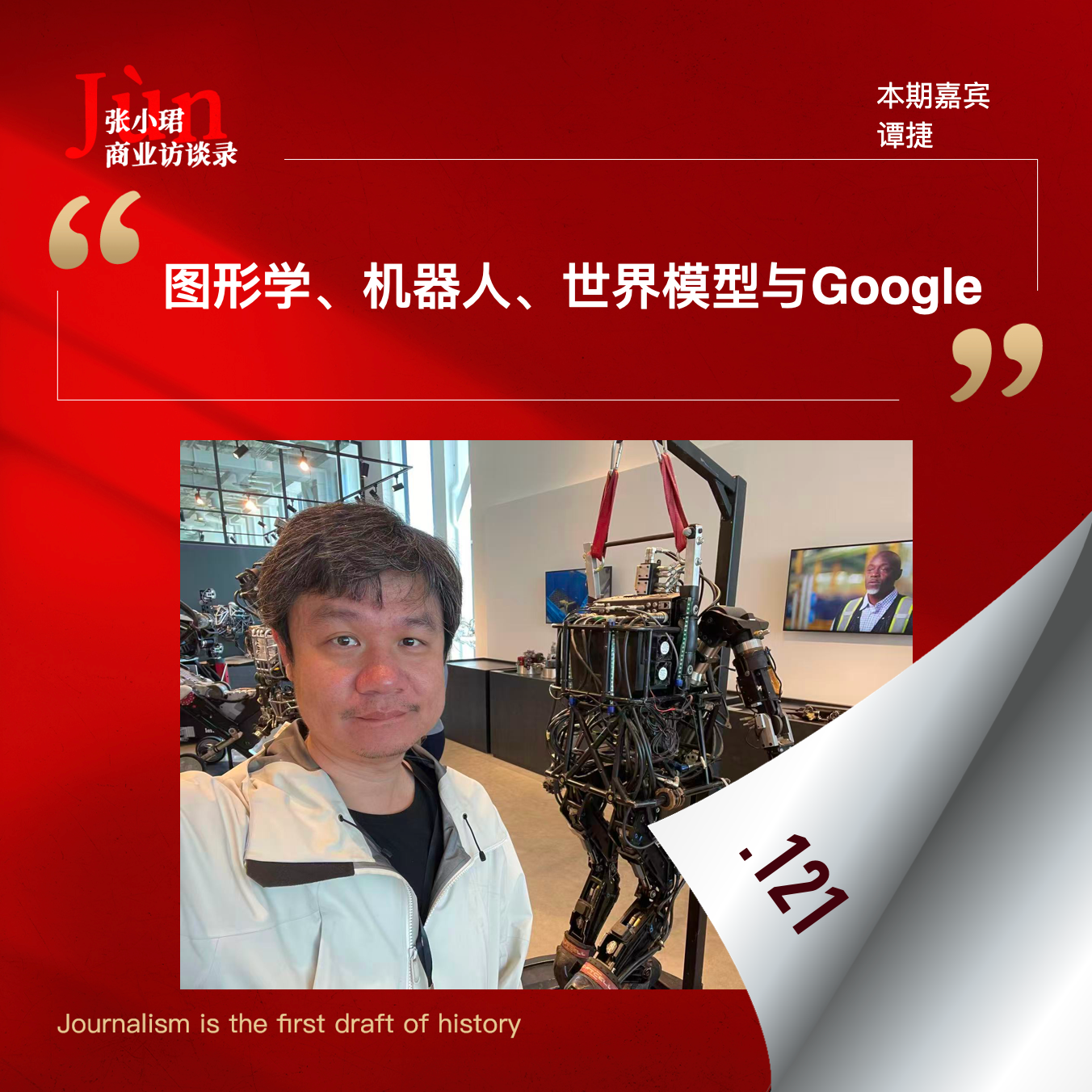
121. An interview with Tan Jie of DeepMind: Robotics, cross-ontology, World Models, Gemini Robotics 1.5, and Google

From 张小珺Jùn|商业访谈录

The guest today is **Tan Jie, Senior Research Scientist and Tech Lead at Google DeepMind Robotics Team**. His research focuses on applying foundation models and deep reinforcement learning methods to the field of robotics. There have always been two narratives in the field of robotics between China and the US: the market generally believes that China develops faster in hardware, while the US leads in robotic brain design. **In this episode, Tan Jie will offer us a glimpse into the cutting-edge narrative of robotics from a Silicon Valley perspective, especially that of Google DeepMind.** Not long ago, they just released their new work "Gemini Robotics 1.5 brings AI agents into the physical world," and we also discussed their latest findings. Due to the guest's work environment, there will be a certain degree of mixed Chinese and English, and we ask for everyone's understanding and support. > **02:00 Robotics is doing graphics in the real world; graphics is doing robotics in simulation.** Guest's brief biography: Liked playing games as a child, pursued a Ph.D. in computer graphics. The transition from graphics to robotics. My first paper at Google, "Sim-to-Real: Learning Agile Locomotion For Quadruped Robots," pioneered the application of reinforcement learning and sim-to-real in legged robots. Paradigm Shift: The first in the past decade was reinforcement learning, the second was large language models. The impact of large language models on robotics (large language models are like the cerebrum, reinforcement learning is like the cerebellum). > **13:06 Is the robotics foundation model truly a very independent discipline? So far, not yet.** What stage has robotics development reached today? It's not an exaggeration for a decade to pass from a demo to actual implementation. From my perspective, I have to admit that the development of robotics intelligence in recent years has mainly relied on multimodal large models. But what do multimodal models lack? They lack the output of robot actions. When you truly have a generalist model, specialized models simply cannot compete with it. > **23:44 The biggest problem in Robotics is data; it's in a very complex unstructured environment where anything can happen.** The biggest problem is still data. But robotics operates in a very complex unstructured environment where anything can happen. It requires an extremely large amount of very diverse data, but such data does not currently exist. There are many startups now called "data factory." What does the so-called "data pyramid" include? > **​27:52 Gemini Robotics 1.5: We have a method called motion transfer, which is our unique secret.** What are the most important discoveries of Gemini Robotics 1.5? First, we incorporated "thinking" into the VLA model. The second very important breakthrough is cross-embodiment transfer. In the Gemini Robotics 1.5 work, we made a distinction between fast and slow models. It should be a transitional approach, as it is currently constrained by computational power and model size. When you want a unify model, it must be very large. Motion Transfer? It's very secret. > **47:32 Generating a huge amount of simulated data is an important means to compensate for its shortcomings.** One point we attach great importance to is data, data, data. Teleoperation is very difficult data to acquire. We will put more effort into using, for example, simulation data, human video, data from YouTube, and even model-generated data, such as some data generated by VEO. Real data has no sim-to-real gap, but generalizability is determined by data coverage, not by whether it's real or virtual data itself. In the near future, traditional physical simulation will gradually be replaced by generative model-based simulation. I believe in scalable data. > **01:03:48 A world model is Vision-Language-Vision, vision and language in, generating the next frame of images.** The definition of a world model is: if you provide the previous frame and the robot's action, you can predict the next frame. From another perspective, VEO is a video generation model, but Genie is more like a world model. When you can have an input at each frame to change your next frame, that feeling is a world model; but if it's an already generated, static video of a few seconds, then it's not. A world model is essentially Vision-Language-Vision, with vision and language as input, it can generate the next frame of images. > **01:08:29 If you have a dexterous hand, haptics become very important. The reason I previously thought haptics were not important was limited by the hardware at the time.** If you have a dexterous hand, haptics become very important. The reason I previously thought haptics were not important was that it was actually limited by the hardware at the time. We are still in the gripper era. For all tasks that can be accomplished by grippers, I still believe vision can solve 95% of the problems. In the future, humanoid robots will not be the only form, but they will definitely be a mainstream form. If your goal is to solve AGI in the physical world, then I will be very focused on what the final form looks like; other things might be distractions. > **01:17:35 A person with a sense of mission will not tolerate saying "I'm on a wrong ship."** Have there been any changes in Google AI or robotics research culture in recent years? Whether it's promotion, performance review, incentive, or various structures, Google wants to create an environment where more people can work together to solve bigger problems. Like Gemini Robotics, it's more top-down. I found that China might not be as competitive as me; I might work 70 to 80 hours a week. Seriously, this era really can't wait, otherwise others will have already done it. A lot of AI is mathematics, and Chinese people are generally better at mathematics. 《106. Talking with Wang He about the Academic Edge History of Embodied Intelligence and the Man-made Chaos after Capital Bombardment》 《109. Robots Encountering a Data Famine? Talking with Xie Chen: Simulation and Synthetic Data, Meta's Sky-High Acquisition, and Alexandr Wang》 [More Information] The text version of this episode has been published. Please search for our studio's official public account: 语言即世界language is world

Original title: 121. 对DeepMind谭捷的访谈:机器人、跨本体、世界模型、Gemini Robotics 1.5和Google

Original description: <figure><img src="https://image.xyzcdn.net/Flo18nNUSP7OUNlTf8UgCdHxio6O.jpg" /></figure><p>今天的嘉宾是<s…

Featured: The Young Protesters: Why We Take to the Streets

From 不明白播客

Today's program is a rerun. Three years ago, on November 24, a residential building in Urumqi caught fire, and due to lockdown measures, some residents were unable to escape, ultimately resulting in 10 deaths. The authorities' callousness, indifference, and arrogance regarding this incident sparked immense public discontent. The accumulated sorrow, anger, and despair among the people gradually escalated into offline protests.First, Urumqi citizens, then Beijing citizens, followed by university students across the country, and finally on Urumqi Middle Road in Shanghai. While mourning the victims of the fire, people demanded an end to lockdowns, no transfers, no nucleic acid testing, and some even loudly shouted slogans that were unimaginable just a few days prior: they wanted freedom, democracy, press freedom, the CCP to step down, and Xi Jinping to step down.Three years ago, the Bumingbai podcast interviewed 6 young people who participated in offline demonstrations in Shanghai and other places. At that time, the voices from the scene and the protesters were so real, and our emotions were so intense. At the time, I wanted to know what drove them to the scene, to post flyers. Were they afraid? Did they think such protests were meaningful?Three years have passed since the White Paper Movement. Some young people paid a price, and many consider it a significant turning point in their lives, as it gave rise to important movements and communities. Although the enthusiasm for discussing and mentioning the White Paper Movement may wane over time, three years ago, it greatly inspired each of us, showing that resistance can yield results. Today, we are re-releasing this podcast from three years ago, to commemorate the courage of all protesters and all those who passed away in the lockdown disaster.Click to view text versionTimeline:01:58 Protester 1. Serena19:06 Protester 2. Mr. Zhang from Shanghai34:30 Protester 3. Miranda51:13 Protester 4. Bruce01:13:24 Protester 5. Echo01:35:20 Protester 6. Student Atong from NanjingRelated links:"EP-125 Two Years Later: How Do We View the White Paper Movement?""EP-029 The Young Protesters: After Being Detained" Hosted on Acast. See acast.com/privacy for more information.

Original title: 【精选】那些年轻的抗议者:我们为什么要上街

Original description: <p>今天的节目是重播。三年前的11月24日,乌鲁木齐一栋住宅楼着火,因为封控,一些居民无法逃生,最终10人死亡。官方对此事故的冷酷、漠然与傲慢引发了民间的巨大不满。人们积攒了多时的悲哀、气愤和绝望…

E867. After my husband cheated, I became the family's mainstay mother.

From 故事FM

Story FM Episode 867A quick announcement before today's program begins: This Sunday, the 30th, we will be holding a Story Open Mic in Beijing. The theme for this open mic is "Things We Never Said Out Loud": unspoken emotions and quietly hidden stories often contain the most authentic truths of life. This time, we have specially invited three guests who are deeply involved in grassroots public welfare work, to let them reveal for the first time those "unspoken" truths.You are welcome to find the free registration link in this episode's shownotes or on Story FM's official WeChat account. We look forward to seeing you there on Sunday!Aizhe's Note:Especially in rural towns and townships, some mothers, after experiencing divorce, the death of their husband, or losing their ability to work, fall into financial hardship and have no choice but to shoulder the heavy burden of the family. They rush around for a living while also taking care of children and the elderly. They have no time to break down, no way to escape. They work during the day and support the family at night. Within their seemingly fragile bodies, a backbone has grown, supporting the entire family. Today's storyteller, Wu Qinying, is such a pillar of a mother./Staff/Storytellers | Wu Qinying, Chen FangHost | @StoryFM AizheInterviewer | @StoryFM AizheProducer | XiaochengSound Designer | XiaochengOperations | MingmingUse your voice to tell your story. Story FM is an audio program featuring first-person accounts from those who experienced them. You can listen to our program on the following platforms:Apple Podcasts | NetEase Cloud Music | XimalayaQingting FM | Lizhi FM | Lanren TingshuXiaoyuzhou | QQ Music | Kugou Music | Kuwo MusicSpotify | YouTube MusicBusiness Cooperation: [email protected] Official Account: Story FM (ID: story_fm)Sina Weibo: @StoryFM_StoryFMPersonal WeChat ID: gushi_fm02

Original title: E867.丈夫出轨后,我成为了家里的顶梁柱妈妈

Original description: <p>故事FM ❜ 第 867 期</p><p>今天节目开始之前通知一下,本周日也就是 30 号,我们将会在北京举办一场故事开放麦,这次开放麦的主题是「那些我们没说出口的事」:未曾言说的情绪,悄悄藏…

79 Korean won collapse, fierce central-local struggle, Lee Jae-myung's absolute control, Han Dong-hoon's resurgence

From 正文三台

-This Episode's Lineup- Phil Chang, Producer of the podcast "Zhengwen Santai" Jiang Haoqiu, Director of the Korea-China Economic and Social Research Institute Zhang Zhihua, Honorary President of the Korean Chinese Lawyers Association -Timeline- -Produced by- Phil Chang -Listener Group- If the QR code expires, please check if the QR code below the latest episode of Zhengwen Santai is current, or send a private message to Phil Chang on Xiaohongshu or Douyin (ID: Phil Chang) to join the listener group. *This program welcomes more interesting and high-quality content. Friends with relevant experience and interest can join the listener group to contact Phil Chang. "Zhengwen Santai" looks forward to your sharing!

Original title: 79 韩币雪崩,央地激斗,李在明只手遮天,韩东勋枯木逢春

Original description: <figure><img src="https://image.xyzcdn.net/FkjglbZJQqzGeT89Y-eIp8eLcZ-s.PNG" /></figure><p>-本期阵容-</…

Yaita Akio: The Sanae Takaichi I Know and the Giant Waves of Japan-China Relations She Faces

From 不明白播客

Recently, Sino-Japanese relations have suddenly become tense, the cause being Sanae Takaichi's continuation of former Prime Minister Shinzo Abe's statement "A Taiwan contingency is a Japan contingency" during a parliamentary interpellation. The Chinese side subsequently took a series of strong reactions, with Chinese Consul General in Osaka Xue Jian using words like "beheading" in a tweet, the Chinese military announcing live-fire drills in the Yellow Sea, and the Chinese government calling on its citizens not to travel or study in Japan, and to stop importing Japanese seafood.How did Sanae Takaichi manage to become Japan's first female prime minister? What are her governing philosophies, and where do her diplomatic ideas originate? Are China's series of pressure tactics more for the Japanese audience or the Chinese audience? Under intense pressure, will Sanae Takaichi retract her statements, and will she be a short-lived prime minister or potentially become a long-serving one like Shinzo Abe?This episode's guest, Akio Yaita, is perhaps the most suitable person to discuss these issues, and we held a live broadcast with him on Sunday. Akio Yaita was born in Tianjin; his father was a Japanese national who remained in China after World War II. He immigrated to Japan with his family at the age of 15, and previously served as a China correspondent and Taipei Bureau Chief for Sankei Shimbun. He founded the "Indo-Pacific Strategy Think Tank" in Taipei. Akio Yaita has known Sanae Takaichi for nearly 30 years, and in April this year, he invited Takaichi, who was visiting Taiwan as a member of the House of Representatives at the time, to speak at a forum at the Indo-Pacific Strategy Think Tank, serving as her interpreter himself.Everyone is welcome to watch the full live broadcast replay on the "Uncommon Sense Podcast" YouTube channel: https://youtube.com/live/3bzqqKIR6ZoTimestamps:01:56 How did Sanae Takaichi become Japan's first female prime minister?08:14 Family background: working-class, preference for sons over daughters11:32 A parliamentarian who dislikes socializing14:30 Shinzo Abe's successor? Where do Takaichi's domestic and foreign policy ideas come from?20:00 Why did Takaichi visit Taiwan's National Revolutionary Martyrs' Shrine?23:45 How to interpret Takaichi's "anti-immigration" policy?30:49 China-US-Japan relations: Must Japan follow the US?36:32 Why did Takaichi continue the "Taiwan contingency theory"? Intentional or unintentional?47:24 How is Xue Jian's "beheading theory" viewed in Japan?53:44 How much economic impact does China's pressure have on Japan?56:23 Is it possible for Sanae Takaichi to retract her statements?01:03:43 Possible directions for Japan's policies towards the US and China01:07:34 What changes have occurred in the views of the Japanese public and elites towards China?01:14:51 How do Chinese residents in Japan cope with the tension in bilateral relations, and can they stay?01:21:54 Will Sanae Takaichi be a short-lived prime minister or potentially serve for a long term?Related links:Akio Yaita's Facebook PageAkio Yaita's Youtube Channel Hosted on Acast. See acast.com/privacy for more information.

Original title: 矢板明夫:我认识的高市早苗和她面对的中日关系巨浪

Original description: <p>最近,中日关系骤然紧张,起因是高市早苗在国会答辩中延续了前首相安倍晋三“台湾有事就是日本有事”的说法。中国方面随后采取了一系列的激烈反应,中国驻大阪总领事薛剑发推用了“砍头”这样的词,中国军队…

Page 3 of 114 (2266 episodes from China)

🇨🇳 About China Episodes

Explore the diverse voices and perspectives from podcast creators in China. Each episode offers unique insights into the culture, language, and stories from this region.