🇺🇸 United States Episodes

14971 episodes from United States

#119 – David Eagleman: Neuroplasticity and the Livewired Brain

From Lex Fridman Podcast

David Eagleman is a neuroscientist at Stanford. Support this podcast by supporting our sponsors: – Athletic Greens: https://athleticgreens.com/lex – BetterHelp: https://betterhelp.com/lex – Cash App: download app & use code “LexPodcast” Episode links: David’s Website: https://www.eagleman.com/ David’s Twitter: https://twitter.com/davideagleman Livewired (book): https://amzn.to/3ba4ezv If you would like to get more information about this podcast go to https://lexfridman.com/podcast or connect with @lexfridman on Twitter, LinkedIn, Facebook, Medium, or YouTube where you can watch the video versions of these conversations. If you enjoy the podcast, please rate it 5 stars on Apple Podcasts, follow on Spotify, or support it on Patreon. Here’s the outline of the episode. On some podcast players you should be able to click the timestamp to jump to that time. OUTLINE: 00:00 – Introduction 05:05 – Livewired 16:39 – Hardware vs software 25:53 – Brain-computer interfaces 35:12 – 2020 is a challenge for neuroplasticity 46:08 – Free will 50:43 – Nature of evil 58:55 – Psychiatry 1:06:28 – GPT-3 1:13:31 – Intelligence in the brain 1:21:51 – Neosensory 1:31:27 – Book recommendations 1:34:07 – Meaning of life 1:36:53 – Advice for young people

#104 - Why You Should Be Studying MLMs

From My First Million

Joined our private FB group yet? It's a page where people share each others million dollar ideas or what they're already working on: https://www.facebook.com/groups/ourfirstmillion.Sam Parr (@theSamParr) and Shaan Puri (@ShaanVP) host the pod today without a guest. In today’s episode you’ll hear: Shaan and Sam recap their previous episode with Tai Lopez and reflect on some of the feedback received from the listeners (1:08), Sam asks Shaan what he knows about trade associations (12:05), Shaan finds new ways to add value with trade associations for groups that traditionally don’t have them (18:35), both guys explore boring household products that could be made cool, like the Nest thermostat (24:40), Shaan walks through his renewed interest in licensing brands (31:05), Shaan and Sam explore brands that have the surprise effect and the genius of that mechanism (38:45), Shaan shares one of his secret tricks in mimicking MLMs (45:18), Sam talks through his next travel designation (48:05), Shaan’s fitness trainer is a force for optimism in his personal life (51:18). This episode is presented by Tempo! Check them out at tempo.fit and use code "TempoHustle" for $100 off. Joined our private FB group yet? It's a page where people share each others million dollar ideas or what they're already working on: https://www.facebook.com/groups/ourfirstmillion.  See acast.com/privacy for privacy and opt-out information.

Brené Brown: The Power of Vulnerability

From Oprah's Super Soul

Oprah is joined by New York Times best-selling author and University of Houston graduate professor Dr. Brené Brown, as they delve into the power of vulnerability. In front of a live studio audience, Brené shares the four myths of vulnerability, explains why vulnerability means being truthful to who we are and offers examples of how to integrate vulnerability into your everyday life. Brené also answers audience questions.

Eventbrite (with Julia & Kevin Hartz)

From Acquired

We're joined by two very special guests, Eventbrite CEO Julia Hartz and her cofounder, spouse and Eventbrite Chairman Kevin Hartz, to tell their story of building Eventbrite together (along with their lives and family) from the PayPal diaspora to bootstrapped business, unicorn status, IPO and now starting all over again in the wake of COVID with both a tragedy and a huge new opportunity in front of them as public company. Sponsors:WorkOS: https://bit.ly/workos25Sierra: https://bit.ly/acquiredsierraSentry: https://bit.ly/acquiredsentryAnthropic: https://bit.ly/acquiredclaude25More Acquired!Get email updates with hints on next episode and follow-ups from recent episodesJoin the SlackSubscribe to ACQ2Merch Store!© Copyright 2015-2025 ACQ, LLCNew! We're codifying our own Playbook notes and takeaways from each episode, and posting them here in the show notes and on our website. You can read them below or at: www.acquired.fm/episodes/eventbritePlaybookSeeing the next technology wave before others do is rare. It provides a roadmap for what to build and invest in if you're willing to bet on that knowledge. Kevin worked at Silicon Graphics in the mid 90's. This led him to realize that internet services like PayPal, YouTube, and many others would be possible long before others (similar to Don Valentine realizing computers would penetrate every industry from his time at Fairchild).PayPal and its subsequent "mafia" was successful in part because of rapid experimentation. They observed what got used by customers and then doubled down. PayPal's "core" use case on eBay started as an experiment. International money transfer (Xoom) and event ticketing (Eventbrite) also initially started as experiments on the PayPal API before the eBay acquisition — and went on to become large companies.Julia, Kevin, and their cofounder Renaud had a prototype of Eventbrite running and serving customers even before starting the company — which gave them the confidence to do what seemed crazy on paper, but was actually "de-risked": start a company as an engaged couple, have a remote technical cofounder, bootstrap for 2 years after being turned down by VCs, etc.When a company is experiencing explosive growth, they often need to leave other huge opportunities on the table. PayPal knew international remittances could be huge, but didn't build it internally because of the need to focus on eBay merchants.The TAM for bringing an offline behavior offline is often WAY bigger than anything you can calculate beforehand. The range and size of what were previously niche or impossible use cases will often expand dramatically with easy-to-use online tools. This is especially true in long-tail use cases that can only be aggregated by self-serve internet-based software. One early encouraging sign for Eventbrite was its use to host speed dating events in New York. Before Eventbrite, it was nearly impossible to organize, promote, and charge for something like that. Now, organizers could suddenly become entrepreneurs and make real money hosting events like this. Most VCs ignored or were confused by this data (~"Call us when you attack Ticketmaster."), but they missed that it unlocked a massive new market which previously operated only through word-of-mouth and cash transactions (if at all).All three major dislocations of the 21st century — the tech bubble bursting in 2001, the financial crisis in 2008, and now COVID in 2020 — have only accelerated offline behaviors to online. COVID is unlocking a new wave of online event entrepreneurs for Eventbrite in the same way the financial crisis unlocked a wave of in-person event entrepreneurs in 2008-10.Starting with just one niche can be incredibly powerful; often your customers will then lead you to more. Before the speed-dating in New York (which was fully inbound), Eventbrite was used to organize tech meetups in the then-smaller tech community in SF. It was even used for the first TechCrunch Disrupt!Too much capital (and too little accountability) can hurt a company much more than help it. Capital covers up problems, distracts focus from customers, and leads to poor resource allocation. Kevin: "The periods where we had raised the most money privately were the hardest and most difficult for me, because we were really fighting this gravity of overspending and creating inefficiency. And it took us away from our roots as a capital-efficient, highly-effective perpetual motion machine [that we'd had as a bootstrapped company]."Being a public company not only instills more capital allocation discipline, but can ALSO afford a degree of financial flexibility that just isn't possible as a private company. Within weeks of COVID hitting, Eventbrite dramatically shrunk the size and scope of the company AND raised $375m in new capital from new and longterm shareholders. Both actions would have been difficult to impossible as a private company with a static valuation (and associated anti-dilution, ratchet terms, etc) that no longer reflected the reality of the current situation.


The tyranny of merit | Michael Sandel

From TED Talks Daily

What accounts for our polarized public life, and how can we begin to heal it? Political philosopher Michael Sandel offers a surprising answer: those who have flourished need to look in the mirror. He explores how “meritocratic hubris” leads many to believe their success is their own doing and to look down on those who haven’t made it, provoking resentment and inflaming the divide between “winners” and “losers” in the new economy. Hear why we need to reconsider the meaning of success and recognize the role of luck in order to create a less rancorous, more generous civic life.Learn more about our flagship conference happening this April at attend.ted.com/podcast Hosted on Acast. See acast.com/privacy for more information.

Why Work Friends are Worth It

From HBR IdeaCast

Shasta Nelson, relationship expert and author, says that work friendships are critical to individual and organizational success but acknowledges that it's not always easy to build these personal -- but still professional - connections, especially when work is virtual. She explains why consistency, vulnerability, and positivity are fundamental to friendship and offers specific suggestions for how to build those things with colleagues. Nelson is the author of the book "The Business of Friendship: Making the Most of Our Relationships Where We Spend Most of Our Time."

Peloton’s John Foley – How to turn skeptics into fans

From Masters of Scale

Casual fans come and go. But converts stick with you – and spread the word. The trick is knowing how – and WHEN – to convert skeptics into super-fans. No one knows this better than Peloton co-founder and CEO John Foley, who has one of the most epic “No-to-Yes” stories in startup history. When he founded the company in 2012, skeptics abounded – especially among investors. But John pushed forward, convincing co-founders, angel investors, and then riders, one at a time. As he converted those skeptical customers – in their flagship fitness studio, in their stores, and on their at-home bikes – the feedback loops kicked in. After pedaling in place for years, Peloton rocketed up the hill to its 2019 IPO. Cameo appearances: Melanie Curtis (professional skydiver).Read a transcript of this episode at https://mastersofscale.comSubscribe to the Masters of Scale weekly newsletter at https://mastersofscale.com/subscribeSee Privacy Policy at https://art19.com/privacy and California Privacy Notice at https://art19.com/privacy#do-not-sell-my-info.

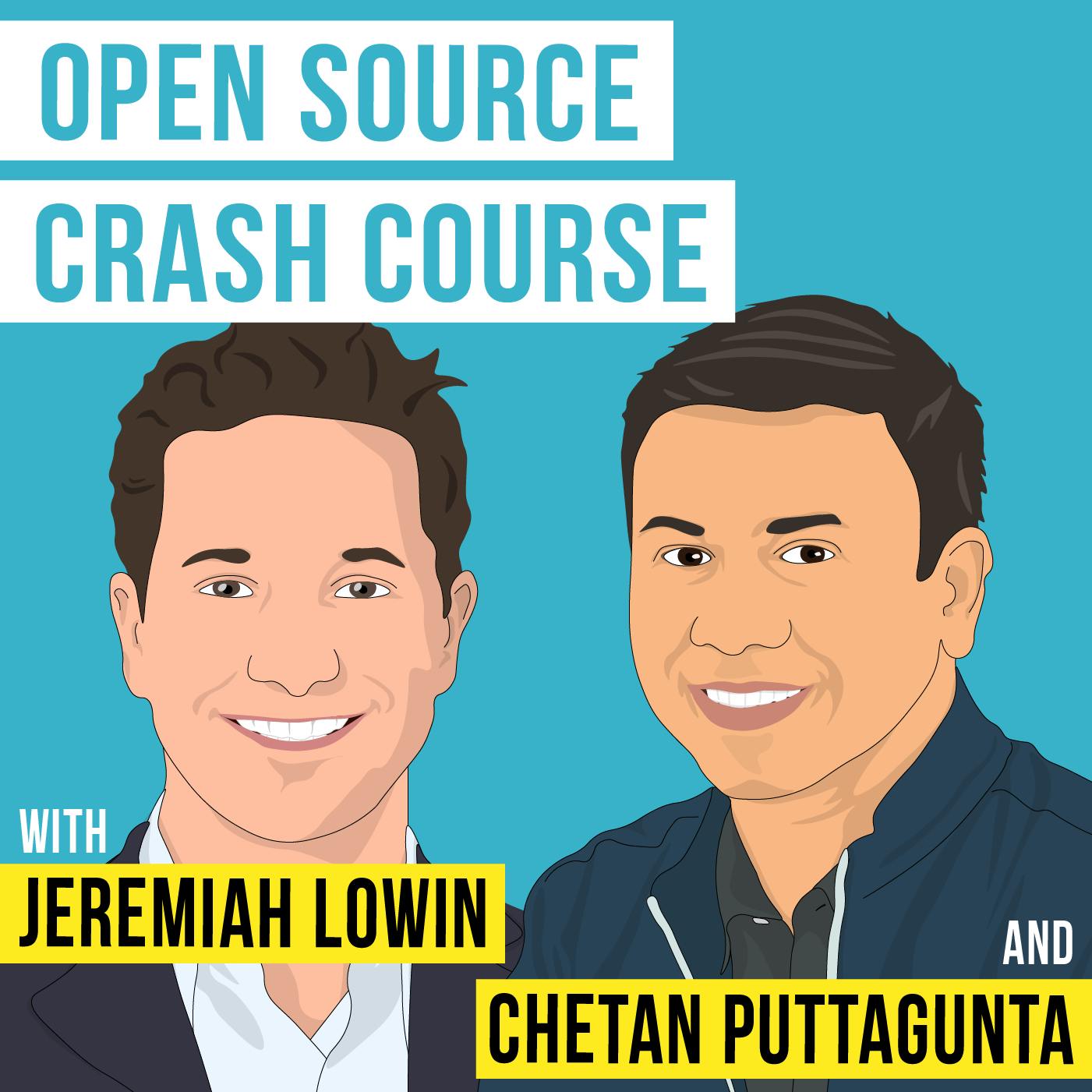
Chetan Puttagunta and Jeremiah Lowin – Open Source Crash Course

My guests this week are Jeremiah Lowin and Chetan Puttagunta. Jeremiah is the founder of Prefect.io, an open-source software company where my family and I are investors, and Chetan is a partner at Benchmark Capital. Both are past guests and good friends. I asked them on to help the audience understand the open source software business model. I’ve been fascinated with this model in which companies give a huge chunk of their work and value away for free to a community of developers, and then make money by building additional tools, functionality, and services on top of their free and open platform. While this may strike you as a wonky discussion on a niche software topic, I think it is valuable for everyone because the ideas can be applied to more than just code. I view much of my own activity as open-sourcing investment research and knowledge. It is also important because much of the world’s technology is built on top of open source projects. I hope you learn something new about this emerging category. Please enjoy.   This episode of Invest Like The Best is sponsored by Canalyst. Canalyst is the leading destination for public company data and analysis.  If you’re a professional equity investor and haven’t talked to Canalyst recently, you should give them a shout. Learn more and try Canalyst for yourself at canalyst.com/Patrick.     For more episodes go to InvestorFieldGuide.com/podcast. Sign up for the book club and new email newsletter called “Inside the Episode” at InvestorFieldGuide.com/bookclub. Follow Patrick on Twitter at @patrick_oshag   Show Notes (2:40) – (First question) – Originator business in open source software; Redhat (5:51) – Why open source is valuable in building a business (7:40) – Examples of the benefits of open source projects (10:27) – Open source business models that produce the best results (17:04) – Defensibility of open source companies (25:02) – Mentoring younger founders on using open-source (30:54) – The benefits of launching open-source (36:41) – Building a digital community (41:31) – Lessons from Open Source that can be applied to other businesses (50:04) – The opportunity sets available in the open source space (53:33) – Future of open source             (56:31) – Tobi Lutke Podcast Episode   Learn More For more episodes go to InvestorFieldGuide.com/podcast. Sign up for the book club and new email newsletter called “Inside the Episode” at InvestorFieldGuide.com/bookclub. Follow Patrick on Twitter at @patrick_oshag

New Name: Lex Fridman Podcast

From Lex Fridman Podcast

New podcast name. New Russian hitman thumbnail. Everything else stays the same. AI is still my passion, but this gives me a bit more freedom to talk to interesting folks from all over. Thanks for the support & the love. If you would like to get more information about this podcast go to https://lexfridman.com/podcast or connect with @lexfridman on Twitter, LinkedIn, Facebook, Medium, or YouTube where you can watch the video versions of these conversations. If you enjoy the podcast, please rate it 5 stars on Apple Podcasts, follow on Spotify, or support it on Patreon.

How animals, bugs and plants are evolving in cities | Menno Schilthuizen

From TED Talks Daily

In cities, evolution occurs constantly, as countless plants, animals and insects adapt to human-made habitats in spectacular ways. Evolutionary biologist Menno Schilthuizen calls on peculiar beings such as fast food-loving mice and self-cooling snails to illustrate the ever-transforming wonders of urban wildlife -- and explains how you can observe this phenomenon in real-time, thanks to a global network of enthusiastic citizen scientists.Learn more about our flagship conference happening this April at attend.ted.com/podcast Hosted on Acast. See acast.com/privacy for more information.

“Will Ferrell”

From SmartLess

The posse gets a wonderful surprise from comedy royalty Will Ferrell (Old School, Step Brothers, Talladega Nights) popping-through for some fresh kombucha. The foursome discuss formidable history with the Columbia House records club, throwing their sons’ cellphones out of moving vehicles, and other things like their careers, etc. “Keep your landlines, folks.”

#213 - James Ball - Who Owns The Internet & How It Owns Us

From Modern Wisdom

James Ball is a writer, journalist & Pulitzer Prize winner. The internet is more than the website you browse... it's real wires under the Atlantic, humans who have a big red button that can turn everything off, superbuildings with server centres, and a philosophy of freedom of information that we're moving further away from. Sponsor: Shop Tailored Athlete’s full range at https://link.tailoredathlete.co.uk/modernwisdom (FREE shipping automatically applied at checkout) Extra Stuff: Buy The System - https://amzn.to/30MgfHB Follow James on Twitter - https://twitter.com/jamesrbuk Get my free Ultimate Life Hacks List to 10x your daily productivity → https://chriswillx.com/lifehacks/ To support me on Patreon (thank you): https://www.patreon.com/modernwisdom - Get in touch. Join the discussion with me and other like minded listeners in the episode comments on the MW YouTube Channel or message me... Instagram: https://www.instagram.com/chriswillx Twitter: https://www.twitter.com/chriswillx YouTube: https://www.youtube.com/ModernWisdomPodcast Email: https://www.chriswillx.com/contact  Learn more about your ad choices. Visit megaphone.fm/adchoices

#118 – Grant Sanderson: Math, Manim, Neural Networks & Teaching with 3Blue1Brown

From Lex Fridman Podcast

Grant Sanderson is a math educator and creator of 3Blue1Brown. Support this podcast by supporting our sponsors: – Dollar Shave Club: https://dollarshaveclub.com/lex – DoorDash: download app & use code LEX – Cash App: download app & use code “LexPodcast” Episode links: 3Blue1Brown: http://youtube.com/3blue1brown Grant’s Twitter: https://twitter.com/3blue1brown If you would like to get more information about this podcast go to https://lexfridman.com/podcast or connect with @lexfridman on Twitter, LinkedIn, Facebook, Medium, or YouTube where you can watch the video versions of these conversations. If you enjoy the podcast, please rate it 5 stars on Apple Podcasts, follow on Spotify, or support it on Patreon. Here’s the outline of the episode. On some podcast players you should be able to click the timestamp to jump to that time. OUTLINE: 00:00 – Introduction 05:13 – Richard Feynman 09:41 – Learning deeply vs broadly 13:56 – Telling a story with visualizations 18:43 – Topology 23:52 – Intuition about exponential growth 32:28 – Elon Musk’s exponential view of the world 40:09 – SpaceX and space exploration 45:28 – Origins of the Internet 49:50 – Does teaching on YouTube get lonely? 54:31 – Daily routine 1:00:20 – Social media 1:10:38 – Online education in a time of COVID 1:27:03 – Joe Rogan moving to Spotify 1:32:09 – Neural networks 1:38:30 – GPT-3 1:46:52 – Manim 1:51:01 – Python 1:56:21 – Theory of everything 2:03:53 – Meaning of life

Stop dancing to the sound of your oppression | Madame Gandhi

From TED Talks Daily

Popular music is often riddled with misogynistic lyrics that objectify and demean women ... so why are we listening and dancing to it? Performing a sample of her original song "Top Knot Turn Up" and sharing clips from her female-directed music video of "See Me Thru," activist and musician Madame Gandhi explains why she's making sex-positive music that doesn't contribute to anyone's oppression -- and calls on music lovers to get down to tunes that empower everyone.Learn more about our flagship conference happening this April at attend.ted.com/podcast Hosted on Acast. See acast.com/privacy for more information.

#1529 - Whitney Cummings & Annie Lederman

From Joe Rogan Experience

Whitney Cummings is a stand up comedian, actress, writer, and producer. Check out her new podcast “Good For You” on Spotify.  Annie Lederman is a stand up comedian. She is also the host of “MEANSPIRATION” podcast on All Things Comedy. Learn more about your ad choices. Visit podcastchoices.com/adchoices

Reining in Complexity: Data Science & Future of AI/ML Businesses

From a16z Podcast

with @pwang @martin_casado AI/ML development is like reining in the natural world, more like physics and even metaphysics, where data and models are fluid. But this not just a philosophical observation; it has real implications for the margins, organizational structures, and building of such businesses. Especially as we’re in a tricky time of transition, where customers don’t even know what they’re asking for, yet are looking for AI/ML help or know it’s the future. So what does this all mean for the software value chain; for open source collaboration and commodification; for a new type of AI/ML company; and for the future of software businesses?

#103 with Tai Lopez - Tai Lopez Opens Up About His Past and Addresses Critics

From My First Million

Sam Parr (@theSamParr) and Shaan Puri (@ShaanVP) bring on Tai Lopez (@tailopez). In today’s episode they chat about: (4:25-22:20) Tai addresses the haters, (22:58-36:44) what businesses are Tai buying and how is he paying for them?, (36:20-42:02) Tai fires shots at Silicon Valley, (42:13-47:14) How did Tai originally make his money? (47:30-52:03) Tai explains the origins of his infamous ad, (56:42-1:08:30) what business would Tai get into right now? This episode is presented by Tempo! Check them out at tempo.fit and use code "TempoHustle" for $100 off. Joined our private FB group yet? It's a page where people share each others million dollar ideas or what they're already working on: https://www.facebook.com/groups/ourfirstmillion.  See acast.com/privacy for privacy and opt-out information.

#117 – Sheldon Solomon: Death and Meaning

From Lex Fridman Podcast

Sheldon Solomon is a social psychologist, a philosopher, co-developer of Terror Management Theory, co-author of The Worm at the Core. Please support this channel by supporting our sponsors: – Blinkist: https://blinkist.com/lex – ExpressVPN at https://www.expressvpn.com/lexpod – Cash App: download app & use code “LexPodcast” Episode links: Sheldon’s Website: https://www.skidmore.edu/psychology/faculty/solomon.php The Worm at the Core (book): https://amzn.to/31hQAXH Denial of Death (book): https://amzn.to/329Zxl4 If you would like to get more information about this podcast go to https://lexfridman.com/podcast or connect with @lexfridman on Twitter, LinkedIn, Facebook, Medium, or YouTube where you can watch the video versions of these conversations. If you enjoy the podcast, please rate it 5 stars on Apple Podcasts, follow on Spotify, or support it on Patreon. Here’s the outline of the episode. On some podcast players you should be able to click the timestamp to jump to that time. OUTLINE: 00:00 – Introduction 05:34 – Role of death in life 22:57 – Jordan Peterson 53:02 – Humans are both selfish and cooperative 56:57 – Civilization collapse 1:10:07 – Meditating on your mortality 1:16:10 – Kierkegaard and Heidegger 1:33:25 – Elon Musk 1:36:56 – Thinking deeply about death 1:45:53 – Religion 1:56:59 – Consciousness 2:03:39 – Why is Ernest Becker not better known 2:07:09 – AI and mortality 2:21:07 – Academia should welcome renegade thinkers 2:36:33 – Book recommendations 2:43:23 – Advice for young people 2:48:17 – Meaning of life

Big data, small farms and a tale of two tomatoes | Erin Baumgartner

From TED Talks Daily

The path to better food is paved with data, says entrepreneur Erin Baumgartner. Drawing from her experience running a farm-to-table business, she outlines her plan to help create a healthier, zero-waste food system that values the quality and taste of small, local farm harvests over factory-farmed produce.Learn more about our flagship conference happening this April at attend.ted.com/podcast Hosted on Acast. See acast.com/privacy for more information.

Page 511 of 749 (14971 episodes from United States)

🇺🇸 About United States Episodes

Explore the diverse voices and perspectives from podcast creators in United States. Each episode offers unique insights into the culture, language, and stories from this region.